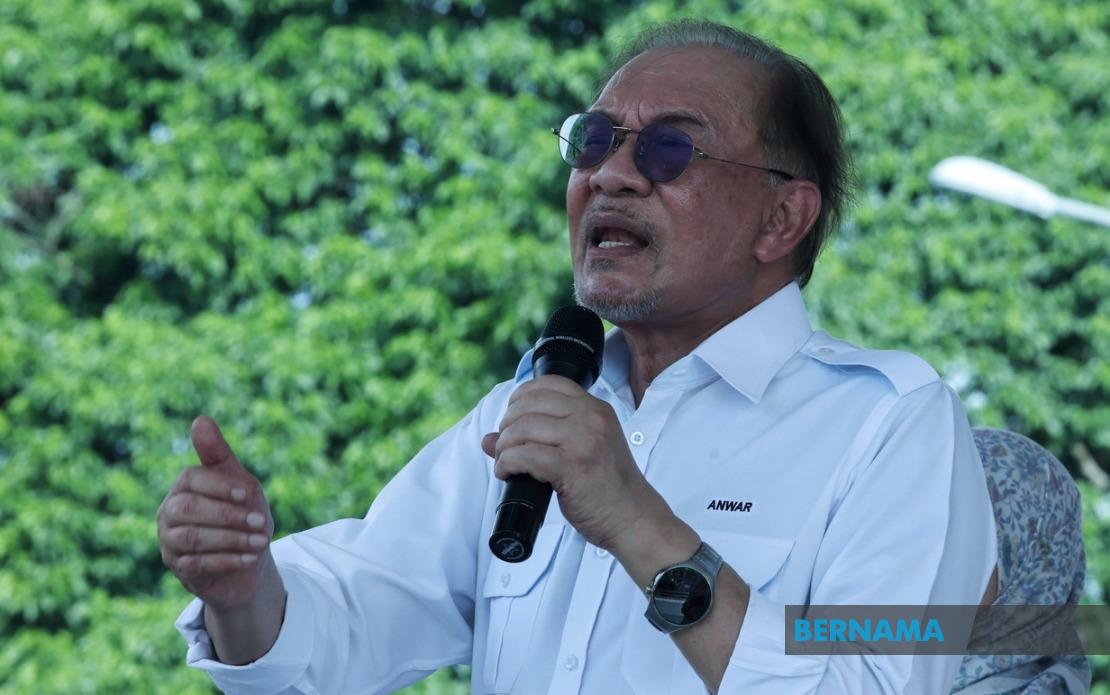
Prime Minister Datuk Seri Anwar Ibrahim has reassured the civil service workforce that the federal administration remains firmly dedicated to expanding access to affordable housing, recognising this as a critical component of protecting public sector employees' financial wellbeing amid escalating property costs. Speaking during a campaign event in Segamat, Anwar emphasised that the housing initiative addresses a fundamental challenge facing Malaysia's workforce—the widening gap between incomes and property prices—while simultaneously fulfilling the government's responsibility to ensure those in public service can achieve home ownership without excessive financial strain.
The Prime Minister outlined a strategic approach that leverages underutilised assets within the government's extensive property portfolio. According to Anwar, various federal agencies control parcels of land that remain idle or insufficiently developed, presenting an opportunity to redirect these resources towards constructing residential units specifically targeting civil servants. The government has identified multiple potential sources, including properties held by the customs and immigration departments, as well as surplus land holdings controlled by educational institutions that could be repurposed for low-cost housing developments.
Anwar stressed that this initiative transcends theoretical planning stages, with tangible progress already evident across multiple states. In Johor specifically, the programme has gained significant momentum, with approximately 1,700 housing units receiving approval and currently progressing through construction phases. This concentration of development activity demonstrates the government's commitment to translating policy announcements into concrete residential units that civil servants can access in the near term, rather than indefinitely deferring implementation.
The affordable housing programme carries particular significance for Malaysia's civil service, which encompasses hundreds of thousands of employees across federal, state, and local government structures. These professionals—ranging from teachers and nurses to administrative officers and law enforcement personnel—form the backbone of public service delivery but frequently encounter obstacles when attempting to purchase homes at market rates. By targeting this demographic, the government addresses both an equity concern and a workforce retention challenge, as affordable homeownership can enhance job satisfaction and reduce attrition among skilled public employees.
The scheme also responds to broader economic pressures affecting Malaysia's middle-income households. Property price escalation has outpaced wage growth across numerous sectors, creating a structural affordability crisis that extends beyond civil servants but affects this segment acutely. Anwar's emphasis on offsetting rising property values through government-facilitated development suggests recognition that market mechanisms alone have failed to deliver adequate affordable options, necessitating direct state intervention.
The announcement coincided with Anwar's campaign activities for the 16th Johor State Election, where Pakatan Harapan fielded candidates across all 56 seats. The coalition allocated 20 positions to PKR, 19 to Amanah, and 17 to DAP, representing a comprehensive contest across the state's electoral landscape. While the housing announcement served partially as campaign messaging, the underlying policy represents a continuity of earlier Pakatan Harapan commitments regarding public sector welfare and urban affordable housing development.
Johor's prominence in the housing programme reflects both its large civil service population and its status as Malaysia's economically significant southern state. The state hosts major federal installations and considerable numbers of government employees across various departments, making it a natural focus for implementation efforts. The 1,700-unit pipeline suggests substantial ongoing investment, though scaling this model across all Malaysian states would require proportionately larger resource allocation and land identification efforts.
The initiative raises important questions about implementation timelines, unit pricing structures, and eligibility criteria that remain partially undefined in public communications. Details regarding whether these units will be offered at subsidised rates, what repayment terms apply, and what income thresholds determine eligibility would significantly affect programme effectiveness. Additionally, the sustainability of utilising government-owned land requires careful examination of opportunity costs and whether alternative uses might generate greater economic value.
For Malaysian civil servants and their families, particularly younger government employees attempting to establish homes, such programmes represent potential relief from years of accumulating housing debt burdens. However, programme success ultimately depends on construction pace, final unit costs relative to civil service salaries, and geographic accessibility to employment centres. Concentrating development in specific states like Johor may inadvertently disadvantage civil servants in other regions unless similar initiatives expand nationwide.
The government's approach also signals acknowledgment that housing affordability constitutes a fundamental policy challenge requiring direct intervention rather than reliance on private developers responding to market signals. This represents a notable commitment of capital and administrative resources to solving what many developed and developing nations recognise as a persistent structural issue affecting workforce stability and economic opportunity.
As polling for Johor's state election approaches on July 11, with early voting scheduled for July 7, housing affordability will likely feature prominently in PH's campaign messaging to constituencies containing substantial civil service populations. The tangible progress in Johor provides concrete evidence for campaign claims, though broader national implementation remains incomplete.

