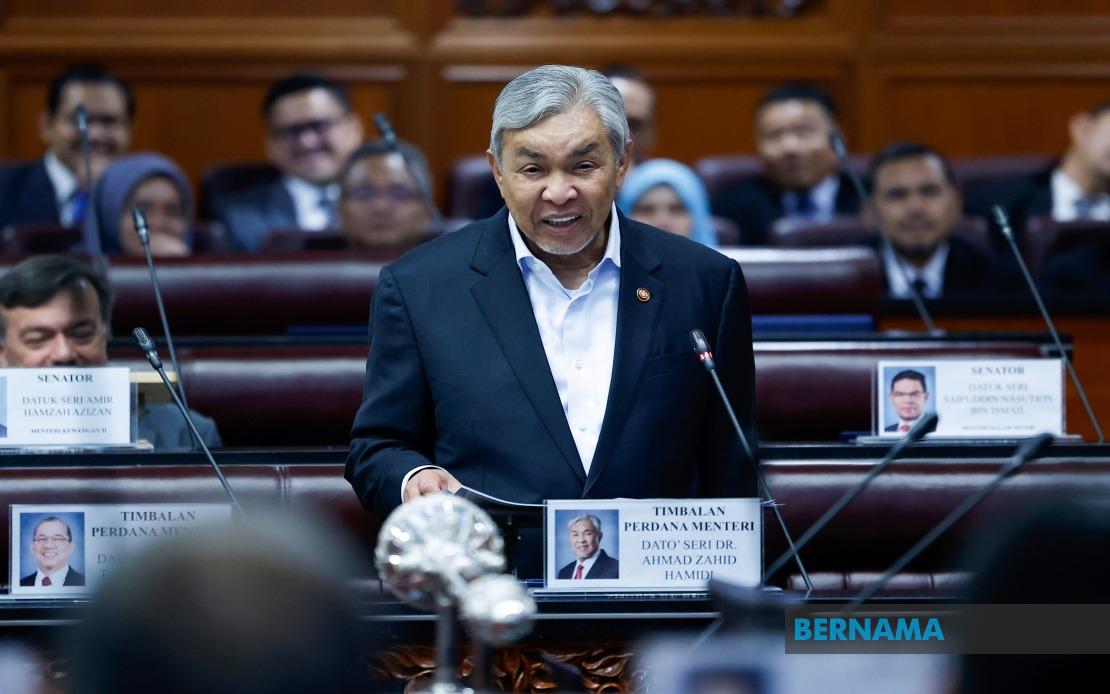
The government has initiated a comprehensive review of land administration mechanisms governing Federal Land Development Authority (FELDA) settlers, with Deputy Prime Minister Datuk Seri Dr Ahmad Zahid Hamidi outlining several proposed amendments to modernise the system. Speaking through a parliamentary written reply, Ahmad Zahid indicated that authorities are examining structural changes to the Land (Group Settlement Areas) Act 1960 that could reshape how property rights and inheritance arrangements function within the FELDA framework.
Among the key proposals under consideration is a significant restructuring of heir registration procedures. The government is evaluating proposals that would restrict the number of registered heirs to two nominees, a departure from existing practice that could streamline administrative processes and reduce complexity in succession matters. Complementing this change is a plan to establish a single representative responsible for handling administrative affairs, effectively centralising decision-making authority within FELDA settlements and potentially accelerating bureaucratic procedures that have historically created bottlenecks for settlers.
The initiative reflects broader government recognition that FELDA settlements must adapt to evolving demographic and economic pressures. Ahmad Zahid specifically acknowledged the mounting housing needs of younger Malaysians, particularly the second and third generations of FELDA families who have grown up on settlement land but face constraints in establishing independent households. The government is exploring flexible approaches that would permit the construction of multiple residential units on a single residential lot, subject to stringent conditions, adherence to planning regulations, and explicit approval from relevant state and local authorities.
This potential liberalisation of building regulations represents a significant departure from traditional FELDA policy, which has maintained strict controls over land use to preserve settlement cohesion and agricultural viability. By allowing multiple units under defined circumstances, policymakers appear to be balancing the competing interests of established settlers seeking to maintain traditional arrangements with younger residents requiring affordable housing options close to their family land holdings. The government has emphasised that any amendments must strike an equilibrium between settler interests, the concerns of heirs navigating inheritance complexities, the legitimate aspirations of next-generation FELDA members, the constitutional prerogatives of state governments, and the broader national development agenda.
Progress on land title distribution provides a concrete metric of government commitment to establishing secure property rights for FELDA settlers. According to official statistics released by Ahmad Zahid, who also serves as Rural and Regional Development Minister, approximately 96.86 per cent of the FELDA population has now received formal land titles. Specifically, 109,104 settlers out of a total population of 112,638 have obtained their titles, representing substantial progress in what has been a persistent administrative challenge. This achievement reflects sustained coordination between FELDA, state governments, State Land and Mines Offices, and District Land Offices, all working to expedite the documentation process.
The government has committed to completing the issuance of remaining land titles in stages, a phased approach designed to ensure quality documentation while managing administrative capacity constraints. Securing formal land titles remains foundational to establishing unambiguous legal ownership rights and protecting both current settlers and their heirs from potential property disputes. Without clear title documentation, many FELDA families remain vulnerable to claims and cannot confidently utilise their land as collateral for development or commercial purposes.
Parallel progress is occurring within FELCRA Berhad, the separate federal land development entity serving as an alternative model to FELDA. As of June 2026, FELCRA has issued land titles for 4,274 house site lots out of a total of 6,025 house site lots distributed across 43 nationwide projects. This figure indicates that approximately 71 per cent of FELCRA participants have received formal titles for their residential sites. The remaining 1,751 lots are currently navigating the title issuance process through State Land and Mines Offices, which typically handle the final documentation stages. FELCRA has framed this effort as integral to its mission of guaranteeing legal ownership rights for all participants.
The distinction between FELDA and FELCRA operations reflects Malaysia's dual-track approach to rural land settlement. While FELDA traditionally emphasised agricultural development with structured settlements, FELCRA has operated with somewhat greater flexibility in project design and participant demographics. Both entities now face similar pressures to formalise land titles and modernise administrative systems, suggesting that land tenure insecurity remains a significant challenge across Malaysia's settlement sector. The government's emphasis on this issue indicates awareness that without clear titles, development potential remains constrained and settlers lack the security necessary for long-term economic planning.
The proposed amendments must navigate complex institutional and political terrain. State governments retain substantial authority over land matters under Malaysia's constitutional framework, requiring their cooperation for legislative changes. The plantation economy legacy, which shaped FELDA's original design, continues to influence policy considerations, with some stakeholders concerned that liberalising building regulations might undermine agricultural productivity. Younger settlers and their advocates, conversely, argue that existing restrictions unfairly constrain economic opportunity and intergenerational wealth transfer.
These land administration reforms carry implications extending beyond FELDA communities themselves. As Malaysia urbanises and agricultural viability faces long-term pressure from labour shortages and commodity market volatility, policymakers must decide whether traditional settlement models remain sustainable. Allowing multiple residential units on FELDA land effectively converts some agricultural property into residential real estate, a shift that could provide income opportunities for settlers while reducing overall agricultural output. Southeast Asian observers note that similar tensions between agricultural preservation and residential development pressures are emerging across the region as land values appreciate and generational attitudes toward farming shift.
The government's emphasis on balancing multiple stakeholder interests reflects pragmatic recognition that no single approach satisfies everyone. Settlers who have invested decades establishing household economies on their lots may resist changes that dilute their exclusive rights or alter settlement character. Meanwhile, younger Malaysians struggling with housing affordability see FELDA land as potential opportunity for homeownership. State governments worry about tax implications and development planning. These competing interests suggest that final legislative amendments, when they emerge, will likely represent carefully calibrated compromises rather than comprehensive transformations.
For Malaysian readers, these developments signal that FELDA and FELCRA reform remains a live policy issue, with concrete proposals under active government consideration. The substantial progress in title issuance demonstrates tangible commitment to resolving long-standing documentation backlogs, though the remaining 3-4 per cent of settlers still awaiting titles deserve continued attention. The proposed amendments to heir registration and building permissions, while not yet enacted, indicate government willingness to modernise systems established over six decades ago, potentially creating new opportunities for FELDA families while introducing new complexities in land administration that will require careful implementation and monitoring.

