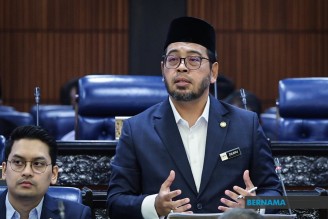
The Malaysian government has pledged decisive action to prevent future crises at Lembaga Tabung Haji through rigorous financial and investment controls, drawing commitments during an extended parliamentary session that examined the institution's near-collapse and pathway to recovery. The special sitting of Dewan Rakyat, which stretched beyond ten hours, became a forum for detailing how amendments to the Tabung Haji Act 1955 will reshape governance at one of the nation's most significant financial institutions, particularly for the Muslim population reliant on it for hajj savings and investment returns.
Minister in the Prime Minister's Department (Religious Affairs) Dr Zulkifli Hasan outlined a structural separation of responsibilities that fundamentally reorders TH's supervisory architecture. A dedicated task force, anchored by TH chairman Tan Sri Abdul Rashid Hussain and including Bank Negara Governor Datuk Seri Abdul Rasheed Ghaffour and Securities Commission (SC) chairman Datuk Mohammad Faiz Azmi, has examined the Royal Commission of Inquiry's findings and formulated recommendations for Cabinet consideration. The core proposal divides TH's operations into two distinct regulatory domains: the Securities Commission will oversee investment management, while the Minister in the Prime Minister's Department (Religious Affairs) will supervise hajj pilgrimage arrangements, preserving TH as a unified institution despite this functional bifurcation.
The scale of TH's financial deterioration underscores the urgency of these reforms. Accumulated losses approached RM13 billion, while the government confronted a potential liability exposure of approximately RM74.5 billion in 2018 had depositor panic withdrawals spiralled into large-scale fund redemptions. Finance Minister II Datuk Seri Amir Hamzah Azizan revealed that seven of fourteen troubled investments suffered complete losses, while another investment in Putrajaya Perdana Bhd inadvertently entangled TH with 1Malaysia Development Bhd (1MDB), illustrating how institutional lapses intertwined with broader national scandals. The bailout prevented catastrophic outcomes, but the proximity to systemic collapse demonstrates how institutional mismanagement threatened depositors' life savings.
The government's proposed amendments to Act 535 introduce explicit prohibitions targeting a governance weakness identified in the inquiry. Active politicians will be legally barred from serving as board directors, a straightforward measure addressing the conflict-of-interest risks that contributed to TH's difficulties. Simultaneously, hibah distributions—profit payouts essential to depositor returns—will henceforth be calculated exclusively from audited financial accounts, eliminating discretionary allocations that lacked transparent accounting foundations. Every institutional decision will be evaluated against a singular criterion: the interests of the Muslim community (ummah), reflecting the original purpose that TH's crisis had compromised.
Amir Hamzah emphasised that the MADANI administration would neither conceal uncomfortable realities nor shield wrongdoers from accountability. Investigations would proceed comprehensively, with no preferential treatment for any implicated party regardless of status or political affiliation. This commitment to transparency and consequence addresses public perception that TH's travails had been mismanaged without sufficient sanction, a sentiment that eroded confidence in the institution and precipitated the panic withdrawals that nearly triggered collapse.
Parliament's debate revealed broader concerns about Malaysia's financial sector architecture. Aminolhuda Hassan from Sri Gading proposed consolidating supervision of large non-bank financial institutions under a unified regulator, citing the absence of a single authority responsible for prudential oversight, systemic risk assessment, and governance standards across institutions like the Employees Provident Fund (EPF/KWSP), Permodalan Nasional Bhd (PNB), Retirement Fund Incorporated (KWAP), the Armed Forces Fund Board (LTAT), and TH. This fragmented regulatory landscape had enabled TH's mismanagement to continue unchecked, illustrating how institutional silos created supervision gaps. The proposal resonates with international best practices and addresses a structural vulnerability that extends beyond TH alone.
Parallel concerns centred on TH's revenue concentration. Bentong MP Young Syefura Othman highlighted dangerous dependency on UJSB sukuk income, which provided nearly 26 per cent of annual revenue according to the RCI, creating vulnerability to sukuk market disruptions. Diversifying income streams would insulate TH from this concentration risk while reducing pressure to pursue riskier investments in pursuit of returns necessary to sustain dividend expectations. This dependency reflected the institution's growth strategy, which had prioritised expansion over prudent risk management.
The 211-page RCI report, released publicly on July 29 after being presented to the Yang di-Pertuan Agong on August 30, 2022, documented systematic weaknesses spanning 2014 to 2020, identifying governance failures, investment oversight lapses, and management inadequacies that accumulated to produce the financial debacle. The inquiry formulated 25 recommendations for institutional rehabilitation, of which TH had implemented 75 per cent by July 30, demonstrating movement toward compliance even before parliamentary endorsement of additional legal amendments. This partial implementation timeline reveals how the institution has begun self-correction, though comprehensive statutory reform remains essential.
The government's announcement of the RCI in 2021, followed by member appointments on January 20, 2022, represented official acknowledgement of institutional dysfunction requiring external scrutiny. The inquiry process itself, spanning approximately eighteen months to completion, allowed detailed investigation of multiple failed investments, governance breakdowns, and systemic vulnerabilities that internal mechanisms had failed to arrest. Public disclosure of the complete report, rather than selective compartmentalisation, reflected official commitment to transparent accountability.
For Malaysian depositors and the broader Muslim investment community, these reforms address fundamental concerns about institutional trustworthiness. TH holds unique significance as a state-backed entity combining religious obligation (hajj preparation) with financial intermediation, making its stability essential for national social cohesion. The proposed controls—Securities Commission investment oversight, politician exclusion from boards, audited-account-based hibah calculations, and unified decision-making benchmarks—establish clearer accountability and reduce discretionary decision-making that had previously enabled misallocation of resources.
Regionally, Malaysia's experience with TH's crisis and subsequent regulatory response offers instructive lessons for other Muslim-majority Southeast Asian nations managing similar pilgrim-focused financial institutions. Singapore's Hajj Scholarship Fund and Indonesia's handling of comparable institutions might draw insights from the RCI's findings regarding investment governance, political insulation, and regulatory bifurcation between operational and investment functions. Malaysia's transparent post-crisis reforms, while domestically costly politically, position the nation as addressing institutional failures systematically rather than allowing them to fester unresolved.
The path forward requires sustained political will to implement statutory amendments and establish the regulatory structures outlined during parliament's special session. Cabinet approval of the task force recommendations remains pending, along with drafting of the amended Act 535. TH's recovery trajectory—from near-collapse in 2018 to partial implementation of RCI recommendations—demonstrates institutional resilience, though comprehensive legal reform remains essential to prevent recurrence of the mismanagement patterns that nearly destroyed Malaysia's most significant Islamic financial institution.

