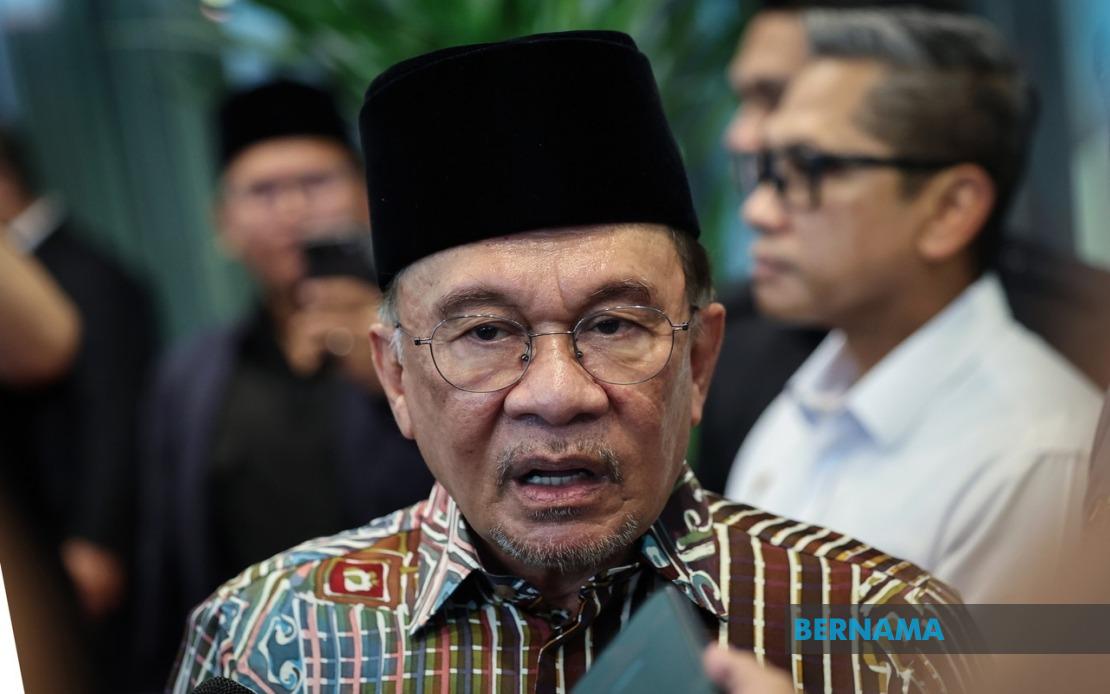
Prime Minister Datuk Seri Anwar Ibrahim has signalled an uncompromising stance on refugees who breach domestic laws or create public disturbances, instructing enforcement agencies to apply penalties swiftly and without exception. Speaking on July 27 following a large Rohingya gathering outside the United Nations High Commissioner for Refugees office at Jalan Bukit Petaling, Anwar made clear that Malaysia's legal framework applies universally, regardless of humanitarian status or circumstances that may have brought refugee populations to the country.
The directive encompasses multiple enforcement arms, with the Royal Malaysia Police, Immigration Department and local municipal authorities all receiving instructions to pursue violators through established legal channels. Anwar's remarks underscore growing tension between the government's obligation to manage refugee populations humanely and its responsibility to maintain order and ensure that urban spaces remain functional and safe for resident populations. The incident that prompted his statement involved hundreds of Rohingya refugees who had arrived in Kuala Lumpur by coach from Penang, gathering outside the UNHCR office in what appeared to be a demonstration or petition related to their protection status.
The Prime Minister was explicit about the categories of enforcement action his administration envisaged. Those unable to produce valid permits or documentation would be directed to immigration authorities for processing and potential removal, whilst individuals possessing legitimate papers would receive formal warnings before escalation to legal proceedings. This tiered approach suggests the government recognises distinctions between documented and undocumented refugee populations, though both remain subject to the same legal obligations regarding public conduct and spatial use. Anwar emphasised that traffic disruption and unauthorised assembly, particularly in central business districts and near government facilities, would not be tolerated as a price of humanitarian accommodation.
Crucially, Anwar acknowledged that many refugees do seek legitimate protection through UNHCR channels and that the government understands this reality. However, he drew a sharp line between accepting asylum seekers within the legal framework and permitting them to operate outside that framework or to impose costs on the broader public. This formulation reflects a delicate political balancing act: maintaining Malaysia's unofficial position as a significant host for displaced populations from Myanmar and Bangladesh whilst simultaneously asserting state sovereignty and the primacy of domestic law. The statement suggests officials are concerned about setting precedents whereby large public gatherings by refugee communities could become routine or normalised.
The backdrop to this intervention includes Malaysia's complex and sensitive relationship with refugee management. The country hosts substantial populations from Myanmar, including Rohingya, many of whom remain undocumented or only partially registered with UNHCR. Penang, from which this convoy originated, has become a focal point for refugee settlement and community activism. Public incidents involving refugees—whether protests, labour disputes or criminal cases—periodically test the tolerance of local Malaysian communities and have occasionally triggered xenophobic reactions from nationalist political factions. By reasserting firm enforcement, Anwar appears to be signalling that the government will not allow refugee issues to spiral into broader social friction.
The gathering at the UNHCR office itself warrants examination. UNHCR operates in Malaysia without a formal bilateral agreement with the government, existing in a liminal diplomatic space where its mandate is acknowledged but not formally enshrined in law. Large refugee assemblies outside its premises place the office in an awkward position, potentially drawing unwanted official scrutiny whilst simultaneously highlighting the desperation of populations seeking international protection. Anwar's response suggests the government wants to prevent such gatherings from becoming a routine feature of Kuala Lumpur's streetscape, particularly in high-traffic areas where they disrupt commerce and everyday movement.
The implications of this hardening position extend across Southeast Asia. Malaysia's approach to refugee management has long influenced regional attitudes, with other countries observing whether generous humanitarian policies persist or whether states progressively tighten restrictions. Anwar's comments signal that even under a government perceived as relatively progressive on human rights, operational tolerance for refugee activism has limits. This carries significance for advocacy organisations, international humanitarian bodies, and refugee communities themselves, all of whom must now operate within narrower parameters.
From a domestic political perspective, Anwar's stance serves multiple audiences. It reassures voters concerned about unauthorised gatherings and public order whilst demonstrating to law enforcement agencies that the administration backs firm implementation. Equally, it addresses potential criticism from hardline political voices that might otherwise characterise the government as soft on refugee management. The timing—delivered at a public event and directly to media—ensures maximum visibility of the government's commitment to enforcement.
Looking ahead, the practical implementation of these instructions will determine whether this represents a genuine shift in refugee policy or primarily rhetorical boundary-setting. How immigration and police departments translate Anwar's directives into enforcement patterns, whether UNHCR operations become subject to heightened scrutiny, and how refugee communities and advocacy bodies respond will all shape the actual trajectory of refugee policy over coming months. The government faces the challenge of maintaining functional humanitarian arrangements whilst preventing public incidents that erode social consent for hosting displaced populations—a balance that requires consistent but proportionate enforcement rather than blanket restrictions.

