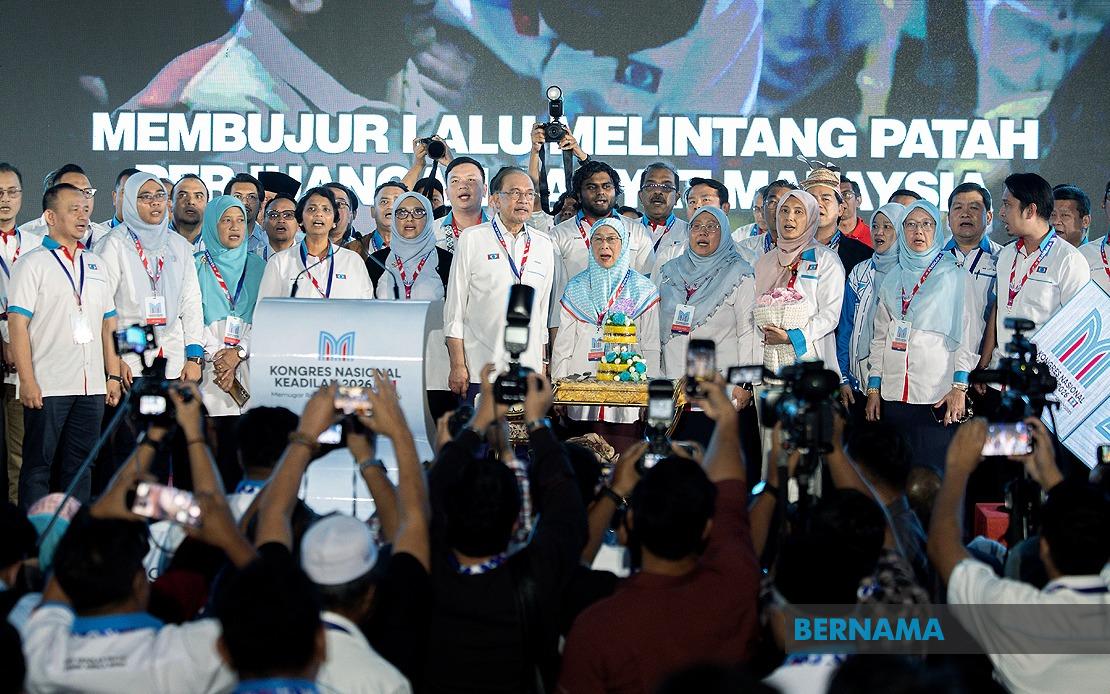
Prime Minister Datuk Seri Anwar Ibrahim has signalled the government's determination to overhaul the legislative framework governing Tabung Haji, Malaysia's pilgrimage savings institution, announcing plans to amend the Tabung Haji Act 1995 to bolster institutional integrity and restore public confidence among the Muslim community. Speaking in his capacity as both premier and Finance Minister, Anwar framed the proposed legislative revision as a cornerstone initiative within the MADANI Government's comprehensive governance reform agenda, underscoring the administration's commitment to dismantling structural deficiencies that have compromised institutional credibility.
The announcement arrives amid longstanding concerns regarding Tabung Haji's operational transparency and financial stewardship. As the premier national repository for Muslim pilgrims' savings—a role deeply embedded in Malaysia's social fabric—the institution faces mounting pressure to demonstrate enhanced accountability mechanisms and prudent asset management. By signalling legislative amendment rather than ad-hoc administrative corrections, Anwar's intervention suggests recognition that systemic reform requires substantive legal reconstruction, not merely procedural tinkering. The move reflects the administration's broader doctrine that institutional weakness cannot be addressed through superficial adjustments but demands rigorous, foundational examination.
Anwar's positioning of the Tabung Haji reform within a wider institutional housekeeping initiative reveals the MADANI Government's philosophical approach to state apparatus modernisation. The Finance Minister emphasised that governance strengthening must extend across all institutional domains, with particular emphasis on eliminating structural vulnerabilities wherever they emerge. This holistic framework suggests the government perceives interconnected weaknesses across multiple agencies and believes comprehensive institutional auditing will establish a more resilient administrative architecture. For Malaysian Muslims, whose savings with Tabung Haji represent not merely financial assets but expressions of religious commitment and family planning for the Hajj pilgrimage, the amendment promises enhanced protections for accumulated capital.
Simultaneously, Anwar announced the complete repeal of the Universities and University Colleges Act 1971 without replacement by successor legislation, a move he presented as essential to liberating student voices from bureaucratic constraints. This dual reform initiative—addressing both a financial institution critical to Muslim welfare and an educational statute governing student expression—demonstrates the government's intent to recalibrate power relationships within state institutions. The AUKU repeal specifically targets restrictions on student political participation and advocacy, positioning educational liberalisation as complementary to broader governance reform. The juxtaposition of these two legislative interventions suggests the administration views institutional reform as spanning both fiduciary and democratic dimensions.
Addressing the 2026 Parti Keadilan Rakyat National Congress that concluded on the day of his announcement, Anwar, as PKR president, articulated a party narrative centred on principled governance and resistance to corruption. He underscored that PKR has deliberately chosen ideological consistency over expedient political accommodation, rejecting the temptation to compromise reformist principles in defence of electoral power. This framing carries significance for institutional reform initiatives, as it suggests the government's governance reforms reflect substantive ideological commitments rather than reactive political calculations. Anwar's emphasis on principle-driven leadership establishes a rhetorical foundation for explaining why Tabung Haji amendment and AUKU repeal constitute moral imperatives rather than merely administrative preferences.
The Prime Minister's invocation of justice as a guiding principle proved particularly relevant when considering Tabung Haji's institutional predicament. For millions of Malaysian Muslims who entrust the organisation with savings accumulated over years or decades, the promise of reformed governance directly translates into material protection of their assets and assurance that pilgrimage funds remain secure from mismanagement or diversion. Anwar's articulation of justice as demonstrated through concrete policies rather than mere rhetoric provides analytical ground for evaluating whether the proposed amendments will substantively enhance Tabung Haji's operational integrity or represent cosmetic legislative adjustments. The effectiveness of any amendment depends substantially on whether revised statutory provisions create enforceable accountability mechanisms and independent oversight mechanisms.
Anwar's declaration that government responsibility extends equally to opposition-led states and communities beyond the government's electoral base introduces a redistributive dimension to the institutional reform agenda. This assertion carries implications for how Tabung Haji reforms will be administered and whether resources devoted to institutional improvement will be allocated equitably across all states regardless of partisan governance. For Malaysian Muslims in opposition-governed territories, this commitment suggests that Tabung Haji reforms will not be weaponised as mechanisms for political advantage but rather implemented as nationwide improvements benefiting all community members. The statement reflects apparent concern within government leadership that institutional reform could be perceived as politically motivated rather than technically necessary.
The timing of these announcements—at a party congress emphasising renewal and reform—suggests the government perceives momentum for institutional reconstruction and wishes to consolidate political support for substantive legislative revisions. Tabung Haji amendment requires parliamentary passage, implying the government views its legislative coalition as sufficiently stable to advance potentially controversial institutional reorganisation. Opposition parties or stakeholders concerned about Tabung Haji's existing operational structure may mobilise parliamentary resistance, particularly if amendment details suggest diminished institutional autonomy or increased executive oversight. The success of amendment proposals will depend substantially on legislative coalition stability and whether opposition parties perceive reforms as beneficial or threatening to institutional independence.
For the broader Southeast Asian context, Malaysia's approach to reforming a major religious financial institution holds instructive dimensions. The region encompasses multiple Muslim-majority and Muslim-minority nations where religious endowments, pilgrimage funds, and faith-based financial institutions operate with varying degrees of transparency and accountability. Malaysia's explicit commitment to legislative reform and public articulation of governance priorities through parliamentary amendment demonstrates an institutional approach contrasting with opaque administrative adjustments. Whether the Tabung Haji amendments substantively enhance institutional performance or represent largely ceremonial legislative revision will influence perceptions across Southeast Asia regarding Malaysia's capacity to execute meaningful institutional reform in sensitive religious and financial domains.
Looking forward, the practical implications of Tabung Haji amendment will determine whether Anwar's governance reform agenda achieves substantive institutional transformation or remains confined to rhetorical commitment. The specific provisions introduced through amendment—whether addressing investment practices, governance structure, oversight mechanisms, or transparency requirements—will establish whether reforms genuinely strengthen institutional safeguards for Muslim savings or merely redistribute administrative authority. For Malaysian Muslims and broader civil society constituencies invested in institutional integrity, the coming months of legislative deliberation and amendment specification will prove decisive in determining whether governance reform promises translate into material institutional improvement.

