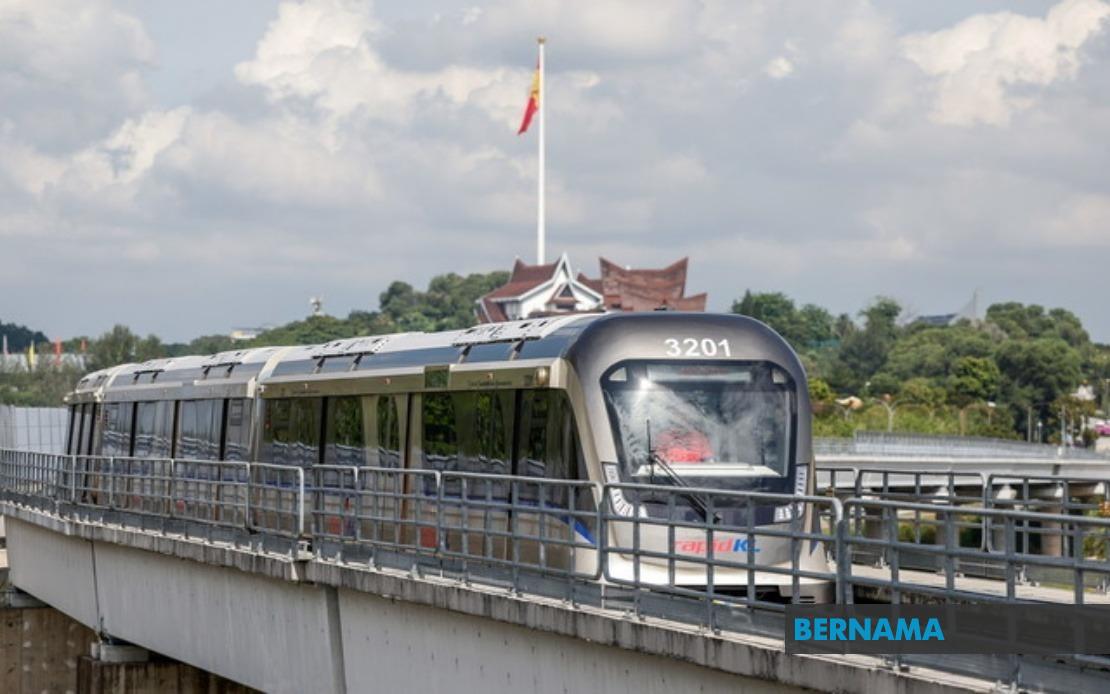
The federal government has committed to seeking a formal audience with Sultan Sharafuddin Idris Shah, the Ruler of Selangor, to address mounting concerns about the troubled LRT3 Shah Alam Line project. Transport Minister Anthony Loke made the announcement on July 2, signalling the administration's willingness to engage directly with state leadership over infrastructure challenges that have accumulated over nearly a decade. The decision reflects broader efforts to maintain cooperative relations between Putrajaya and the Selangor palace, a relationship that carries significant weight given the state's economic importance and population density.
The Sultan's intervention on the matter underscores the gravity with which Selangor's monarchy views the project's trajectory. Sultan Sharafuddin had recently highlighted how the LRT3 initiative, originally envisioned as a transformative transit corridor serving the Shah Alam region, has been substantially reduced in scope. When the MADANI Government assumed office in 2022 following the 2018 political transition, the project entered a hiatus lasting eighteen months, marking a critical juncture that disrupted construction momentum and continuity. The subsequent nineteen-month disruption caused by the COVID-19 pandemic further compounded delays, pushing completion timelines well beyond original schedules.
What particularly troubled Sultan Sharafuddin was the cascade of design compromises implemented to manage spiralling costs and extended timelines. The palace noted that proposed station dimensions were systematically reduced, a decision with long-term implications for passenger capacity and operational efficiency. The number of train carriages allocated to the line was similarly cut, constraining the service's ability to accommodate peak-hour ridership demand. Most significantly, five stations previously planned along the alignment were entirely cancelled, eliminating transport connectivity from several communities in Shah Alam's suburban and semi-urban areas. These modifications represent a substantial departure from the original vision of comprehensive coverage.
The Sultan's remarks carried an implicit rebuke of the project's management, particularly his emphasis that LRT3 exists to serve public welfare rather than function as a prestige infrastructure project. This framing is significant within Malaysia's political context, where major transit investments often face scrutiny over whether they genuinely address commuter needs or primarily serve developmental agendas. By recentring the discussion on citizen benefit, Sultan Sharafuddin positioned himself as an advocate for ordinary Selangor residents dependent on functional public transport. Loke's acceptance of these remarks and commitment to provide clarification suggests the government views the royal perspective as legitimate and requiring substantive response rather than dismissal.
The timing of this engagement is noteworthy given Malaysia's contemporary political dynamics. As a Malay-Muslim majority nation with constitutional monarchies holding significant symbolic and occasionally constitutional authority, direct communication between federal executive leadership and state rulers on major projects reflects protocols deeply embedded in the Malaysian system. The willingness to schedule an audience demonstrates respect for these institutions and recognition that major infrastructure decisions affecting a state warrant palatial awareness and input. For Selangor, where population pressures and traffic congestion perpetually strain existing transit networks, the LRT3 project remains a critical component of medium-term transport planning.
Beyond the LRT3 discussion, Loke highlighted parallel government initiatives aimed at strengthening electoral participation. The Transport Ministry coordinated with Keretapi Tanah Melayu Berhad (KTMB) to expand Electric Train Service (ETS) frequencies along the Kuala Lumpur–Johor Bahru corridor in advance of the 16th Johor State Election scheduled for July 11. This measure specifically targets outstation voters unable to remain in their constituencies, removing transport barriers that might otherwise prevent them from exercising voting rights. The additional ETS services benefit not only direct passengers but also those arriving from Singapore who can continue onward through intermediate stations at Segamat and Labis.
The expansion of public transport services for electoral purposes reflects a broader appreciation within government for how infrastructure accessibility directly influences democratic participation. Northern-region voters similarly gained enhanced options to return to Johor for polling day, improving the democratic franchise's practical reach. These operational adjustments, whilst modest compared to major capital projects, carry symbolic weight in demonstrating how routine government functions can facilitate civic engagement. The Johor election itself represents an important electoral contest, with 172 candidates contending across 56 state seats, making voter turnout particularly consequential.
The LRT3 saga itself encapsulates common challenges confronting Malaysian infrastructure development. Projects launched with ambitious specifications frequently encounter modification pressures stemming from cost escalation, political transitions, and external crises. The transition between different federal administrations introduces discontinuities in project management and funding prioritization, phenomena evident in the eighteen-month suspension following the 2018 government change. For stakeholders and communities expecting transport infrastructure delivery, such disruptions create frustration and uncertainty about project viability. The pandemic-induced delays further illustrated how external shocks can cascade through implementation schedules, particularly for projects dependent on imported components or specialized technical expertise.
The Sultan's engagement on this matter also reflects broader state-level concern about developmental equity. Selangor, whilst economically vital, houses sprawling suburban communities often underserved by premium transit infrastructure concentrated in central Kuala Lumpur. The LRT3 project was conceptualized specifically to redress this imbalance by extending rapid transit into the Shah Alam metropolitan zone. Its reduction in scope thus disadvantages precisely those communities it was designed to serve. By voicing these concerns through the palace, Sultan Sharafuddin positioned himself as protector of Selangor's developmental interests against what might be perceived as centralized Kuala Lumpur-centric prioritization of resources.
Looking forward, the proposed audience between Loke and Sultan Sharafuddin will likely involve detailed discussions about revised implementation timelines, funding mechanisms, and whether further design modifications remain unavoidable. The government's willingness to engage directly suggests recognition that completing the project in some form remains preferable to indefinite suspension. For Malaysian observers tracking infrastructure development, this dynamic demonstrates how constitutional monarchies continue influencing major state-level projects through formal and informal channels. Whilst ultimate decision-making authority remains with the federal government, the imperative to maintain cooperative relations with state rulers ensures that palatial perspectives cannot be entirely disregarded in significant developmental matters.
The convergence of these developments—LRT3 clarifications coupled with election-related transport improvements—reveals how infrastructure and electoral systems interconnect within Malaysia's political economy. Voters expecting functional public services often factor infrastructure quality into electoral calculations, creating incentives for governments to demonstrate commitment to transport accessibility. The MADANI administration's proactive efforts on both fronts suggest awareness that these parallel tracks reinforce broader legitimacy objectives. Whether these measures translate into sustained infrastructure improvement or represent temporary electoral-cycle responses remains to be seen in subsequent budgetary allocations and project delivery records.

