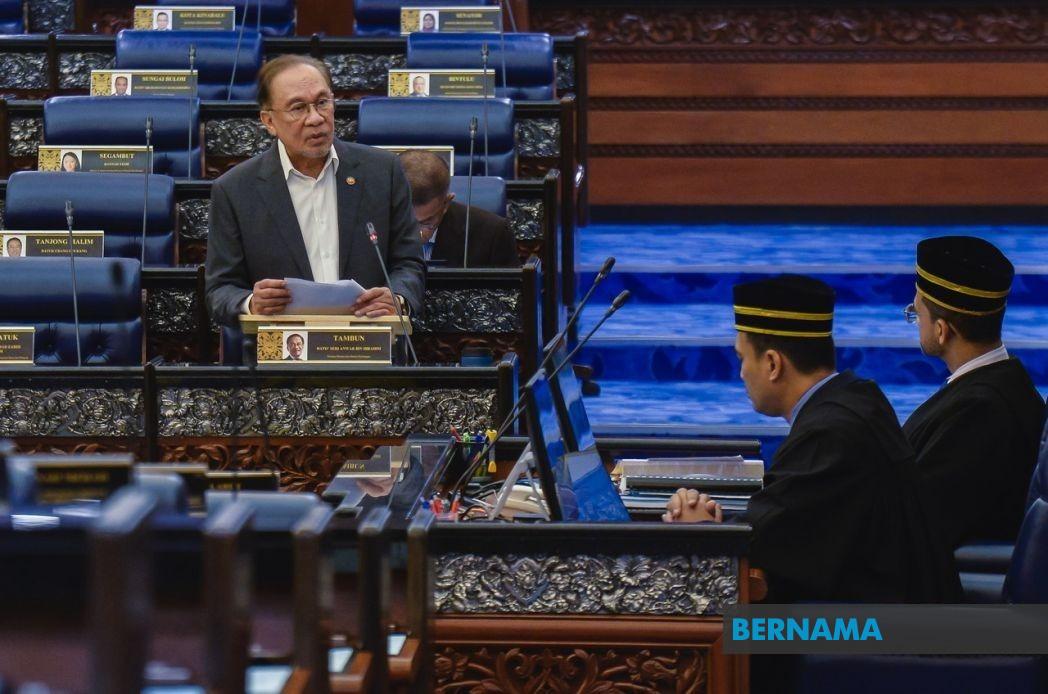
Prime Minister Anwar Ibrahim has committed to launching a formal inquiry into claims that petrol station operators suffered substantial financial losses during the government's shift to its new fuel subsidy framework. Speaking in Parliament on July 7, Anwar indicated that the administration would engage directly with petroleum companies and operators to gather comprehensive data on the matter and explore potential remedies for any documented hardships encountered during the transition period.
The issue surfaced when Ipoh Timur Member of Parliament Howard Lee Chuan How raised concerns during Minister's Question Time, citing reports that petrol station operators lost between RM40,000 and RM50,000 each as the government restructured its approach to fuel pricing. The shift toward targeted subsidies for RON95 petrol and diesel represented a significant policy change designed to better direct government support toward eligible consumers while managing fiscal sustainability. However, the operational complexities of implementing this new mechanism across thousands of retail outlets nationwide appear to have generated unexpected costs for some business owners.
Anwar, who concurrently serves as Finance Minister, acknowledged the productive relationship the government has maintained with petroleum corporations and independent petrol station operators throughout the implementation process. He emphasised that without the demonstrated cooperation of industry stakeholders, the execution of the targeted subsidy programme would have faced considerable difficulties. This recognition suggests that while some operational friction has emerged, broader compliance and goodwill remain intact within the petroleum retail sector.
The Prime Minister indicated that he would delegate responsibility for conducting detailed investigations to Second Finance Minister Datuk Seri Amir Hamzah Azizan, signalling administrative seriousness about resolving the matter. By assigning the task to the Second Finance Minister rather than handling it entirely through oil companies or industry associations, the government has elevated the issue to a formal governmental level, suggesting a commitment to independent fact-finding beyond industry self-reporting. This approach reflects recognition that legitimate concerns about financial impacts require structured examination and potential policy response.
The targeted RON95 petrol and diesel subsidy programme represents Malaysia's latest attempt to balance several competing objectives: containing government expenditure on fuel price support, directing assistance toward those most in need, and maintaining operational viability for the petroleum retail network upon which millions of motorists depend. The mechanism differs from the previous universal subsidy approach by restricting access to subsidised fuel through registration systems and eligibility criteria. While this targeting improves fiscal efficiency, the transition period requires petrol stations to manage dual systems, verify customer eligibility, and absorb operational costs during the changeover phase.
Petrol station operators occupy a particularly vulnerable position within Malaysia's fuel supply chain. Unlike petroleum retailers in vertically integrated corporations, independent station owners typically operate on razor-thin profit margins dependent on high transaction volumes and minimal operational disruption. The implementation of a new subsidy system requiring customer verification, system upgrades, and modified accounting procedures can generate unexpected capital expenditures and reduced throughput during transition periods. Claims of RM40,000 to RM50,000 in losses per station, while potentially representing a significant but temporary impact, nonetheless deserve investigation given the cumulative effect across the nation's estimated 2,500 petrol stations.
The government's willingness to examine these claims reflects broader policy learning within Malaysia's administration regarding the implementation challenges associated with targeted welfare and subsidy programmes. Previous experiences with targeted subsidy schemes have occasionally produced unintended consequences for intermediary businesses and frontline service providers, even when the overall policy intent remains sound. By proactively investigating and engaging industry stakeholders, the current administration demonstrates awareness that sustainable policy implementation requires attention to both macroeconomic objectives and microeconomic realities facing businesses.
For Malaysian consumers, petrol station operator losses during transition periods can indirectly translate into service degradation if financial stress forces closures or reduced operating hours in less profitable locations. Ensuring the long-term viability of the petrol retail network, particularly in rural and semi-urban areas, requires attention to the commercial sustainability of individual operators. The government's commitment to examining losses and discussing potential solutions thus serves consumer interests beyond merely addressing operator grievances.
The investigation promised by Anwar also carries implications for future subsidy reforms and targeted welfare programme implementation across Malaysia's economy. If comprehensive analysis reveals significant operator losses during the fuel subsidy transition, policymakers may consider transition support mechanisms, extended phase-in periods, or direct compensation schemes when implementing future programmes. The lessons learned could improve policy design for electricity subsidy targeting, food price support programmes, or other government assistance initiatives expected in coming years.
From a regional perspective, Malaysia's experience managing this fuel subsidy transition offers relevant lessons for other Southeast Asian nations navigating similar fiscal and social policy challenges. Countries including Indonesia, Thailand, and Vietnam have grappled with subsidy reform for energy and essential commodities, encountering comparable tensions between fiscal sustainability and social protection. How Malaysia resolves the petrol station operator losses issue may provide a template for constructive engagement between governments and retail sector stakeholders during major subsidy restructuring efforts.
Anwar's parliamentary remarks suggest the government views legitimate operator concerns as manageable challenges rather than fatal flaws requiring policy reversal. His framing—acknowledging concerns while emphasising the programme's broader success and the industry's demonstrated cooperation—indicates confidence that workable solutions exist. Whether these solutions involve direct compensation, extended margin adjustments, or system improvements remains to be determined through the investigation led by the Second Finance Minister.

