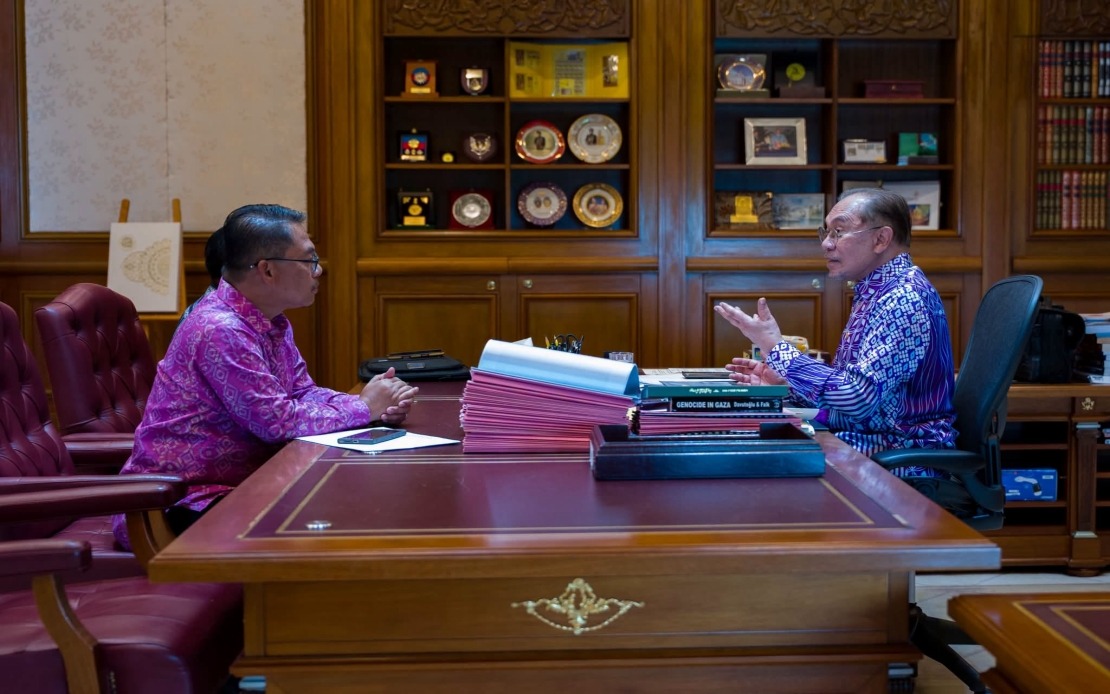
The Malaysian government is committed to recalibrating its targeted fuel subsidy scheme in Sabah and Sarawak in response to concerns raised by communities across both states. Datuk Mustapha Sakmud, the Minister in the Prime Minister's Department overseeing the East Malaysian states, announced that the administration would systematically incorporate grassroots input into how the initiative operates on the ground, ensuring that policy adjustments reflect the lived experiences of ordinary Malaysians rather than assumptions made in federal offices.
The BUDI Diesel programme, which commenced nationwide on July 1, represents a significant shift in how Malaysia approaches fuel cost management. Rather than blanket price controls affecting all consumers equally, the scheme targets support to eligible private diesel vehicle owners, who receive a monthly allocation of 200 litres at the subsidised rate of RM2.10 per litre. This represents a departure from previous fuel subsidy models and reflects the government's effort to balance fiscal sustainability with affordability concerns in an inflationary environment.
Owners of sports utility vehicles and pickup trucks—categories often used for commercial purposes—face stricter eligibility criteria but may qualify for an additional 100 litres monthly if they meet specified thresholds. This tiered approach aims to prevent subsidy leakage to higher-income brackets whilst supporting rural communities and small business operators who depend on diesel-powered vehicles for livelihoods. However, the implementation has exposed complexities that policymakers did not fully anticipate, particularly in remote areas where vehicle ownership patterns and usage differ markedly from urban contexts.
Mustapha emphasised that consultations involving multiple stakeholder groups would remain ongoing, drawing together representatives from state governments, federal agencies, and community organisations. This inclusive approach signals recognition that top-down policy implementation frequently encounters friction when applied to diverse geographic and demographic contexts. The minister stressed that the government's priority was ensuring the initiative proceeded smoothly whilst maintaining living standards, especially for populations in peripheral regions where alternative transport options remain limited.
Prime Minister Datuk Seri Anwar Ibrahim has personally engaged with residents grappling with the scheme's practical challenges, particularly in Sabah, demonstrating executive-level attention to implementation issues. This direct engagement reflects a broader governance philosophy within the MADANI administration, which has positioned itself as responsive to constituent concerns rather than dogmatically defending initial policy designs. The willingness to adjust course based on feedback distinguishes this approach from previous administrations that often resisted revisions once programmes launched.
The challenges facing the BUDI Diesel initiative in Sabah and Sarawak deserve careful examination. Residents in areas with limited banking infrastructure have encountered difficulties verifying eligibility and accessing subsidised fuel allocations, whilst vehicle owners relying on diesel for agricultural or small-scale commercial activities have found the monthly quota insufficient for their operational needs. Rural petrol station operators have also raised concerns about inventory management and pricing compliance when serving dispersed customer bases across vast distances.
For Malaysian policymakers, the BUDI Diesel experience underscores a critical lesson: fuel subsidy schemes cannot be uniformly designed without accounting for regional variations in economic activity, infrastructure development, and population density. Sabah and Sarawak, together comprising approximately 40 percent of Malaysia's land area but only around 10 percent of the population, present distinct challenges compared to Peninsular Malaysia. The sparsity of urban centres, reliance on road transport across considerable distances, and economic dependence on extractive industries mean that blanket policies frequently generate unintended consequences.
The government's commitment to refinement based on feedback mechanisms also addresses broader governance concerns about policy legitimacy. When citizens perceive that their concerns are heard and acted upon, compliance with regulatory changes improves and political alienation diminishes. Conversely, communities that feel ignored when facing genuine implementation difficulties develop cynicism toward government initiatives, regardless of their underlying merit. By establishing channels for grassroots input, the administration is investing in long-term policy credibility.
From a Southeast Asian perspective, Malaysia's experience with targeted fuel subsidies carries relevance for neighbouring countries navigating similar pressures. Indonesia, Thailand, and the Philippines have all grappled with fuel subsidy reform, and Malaysia's emphasis on geographic differentiation and community consultation offers a potential model for balancing fiscal consolidation with social protection. The approach acknowledges that one-size-fits-all austerity measures frequently generate political blowback in regions feeling disproportionately affected.
The refinement process will likely result in modified eligibility criteria, adjusted quota levels for specific vehicle categories, or streamlined verification procedures that accommodate limited digital infrastructure in remote areas. Whether these adjustments will fully address underlying tensions between fiscal sustainability and affordability remains uncertain, but the government's receptiveness to revision demonstrates pragmatism. The BUDI Diesel initiative represents an important experiment in conditional subsidisation that future policy cycles will either build upon or abandon based on coming months' outcomes.
Looking forward, the success of this refinement exercise will partly determine how Malaysian governments approach subsidy reform in other sectors. If BUDI Diesel ultimately achieves its dual objectives of reducing fiscal expenditure whilst maintaining living standards in peripheral communities, it could serve as a template for targeted support schemes across energy, food, and transportation. Conversely, if adjustments fail to resolve fundamental implementation challenges, it may prompt reconsideration of whether targeted subsidies represent the optimal policy tool or whether alternative mechanisms—such as cash transfers or targeted tax relief—offer superior outcomes.

