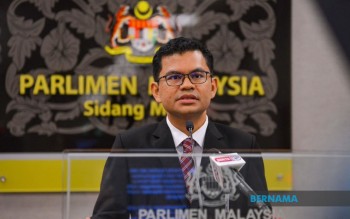
The National Economic Action Council has signalled its commitment to addressing structural difficulties within Malaysia's plastics manufacturing sector by directing the Ministry of Investment, Trade and Industry and the Economy Ministry to scrutinise a slate of proposals brought forward by the Malaysian Plastics Manufacturers Association. Economy Minister Akmal Nasrullah Mohd Nasir underscored the administration's recognition that the industry confronts genuine hardship stemming from international supply chain volatility and surging costs for raw materials, matters that warrant serious policy consideration.
During formal NEAC deliberations, industry representatives laid out their case regarding cost dynamics and competitive positioning, with particular emphasis on the disparity between input prices faced by Malaysian downstream manufacturers and those enjoyed by producers in rival economies. This cost disadvantage has emerged as a central concern for a sector that plays a foundational role in supporting multiple industries across the economy. The ministry's decision to convene a formal review reflects acknowledgment that blanket solutions will not suffice, given the complex interdependencies within the broader manufacturing ecosystem.
The plastics industry's economic significance to Malaysia extends well beyond its direct output. In 2025, the sector generated RM62.69 billion in sales revenue, a modest decline from RM64.78 billion recorded in 2024, signalling emerging pressures on profitability and market share. Packaging applications dominate the market, accounting for nearly half of all demand, whilst the electrical and electronics segment claims roughly 29 percent. This dual orientation—serving both consumer-facing packaging requirements and the high-value electronics manufacturing chain—means that deteriorating plastics competitiveness could ripple across multiple downstream industries critical to Malaysia's export performance.
Beyond immediate cost concerns, the government is examining implementation pathways for Extended Producer Responsibility frameworks, examining whether a voluntary approach might suit Malaysia's industrial maturity and capabilities. The EPR mechanism, which allocates environmental stewardship obligations to manufacturers, presents both opportunity and risk. If designed thoughtfully, it could strengthen the domestic recycling infrastructure, reduce reliance on virgin raw material imports, and construct a more geopolitically resilient supply ecosystem. However, the ministry recognises that EPR imposes compliance burdens particularly acute for small and medium-sized enterprises that often lack the capital and operational sophistication to absorb additional regulatory costs.
The transition toward circular economy models holds genuine promise for Malaysian manufacturing. Enhanced utilisation of recycled plastics could diminish dependence on imported virgin materials, insulating the sector from commodity price shocks and supply disruptions originating from geopolitical tensions or logistical failures. For a nation heavily reliant on imported feedstocks, this shift toward material self-sufficiency represents a strategic opportunity. Yet the review process must weigh these long-term benefits against near-term competitiveness impacts, particularly for firms already struggling with margin compression.
The government's examination of these proposals occurs against a backdrop of generally robust macroeconomic performance. Malaysia's economy expanded by 5.4 percent during the opening quarter of 2026, a tempo driven by domestic consumption patterns, resilient services and manufacturing output, and sustained strength in electrical and electronics shipments. The second-quarter GDP estimate, due for release on July 17, will offer updated insight into whether this growth trajectory has been sustained or whether emerging headwinds have begun to slow the economy.
Inflationary pressures remain well-anchored, with the May 2026 consumer price index rising just 2.0 percent compared to 1.9 percent the preceding month, indicating that price stability remains intact despite global commodity volatility. This price stability creates fiscal space for policymakers to consider sector-specific interventions without triggering broader inflationary spillovers. The government maintains confidence in achieving its 4.0 to 5.0 percent annual growth target, predicated on maintained momentum across current economic drivers and the continued resilience of external demand for Malaysian exports.
Trade data underscores this export dynamism. From January through May 2026, merchandise trade expanded by 18.3 percent, reaching approximately RM1.5 trillion, with exports surging 24.3 percent to RM793.8 billion whilst imports climbed 11.8 percent to RM661.1 billion. This asymmetric growth generated a trade surplus of RM132.8 billion, demonstrating that global demand for Malaysian goods remains robust. Notably, electrical and electronics products—sectors heavily reliant on plastic components—drove much of this export acceleration, underscoring the criticality of maintaining plastics sector competitiveness.
For Malaysian policymakers, the plastics industry review represents an important case study in sectoral problem-solving within a complex global economy. The sector embodies quintessential Southeast Asian manufacturing challenges: high dependence on imported inputs, competitive positioning against lower-cost producers, environmental imperatives, and the need to support labour-intensive employment. The proposals being evaluated likely reflect industry demands for targeted fiscal support, tariff adjustments, infrastructure investment in recycling capabilities, or regulatory harmonisation with international standards.
The interplay between environmental objectives and economic competitiveness demands sophisticated policy architecture. A voluntary EPR framework could demonstrate Malaysia's environmental credentials whilst affording manufacturers flexibility in compliance pathways. Such an approach might prove more palatable to domestic producers than mandated approaches adopted in more developed economies. The ministry's deliberate consideration of implementation capacity and infrastructure readiness suggests a pragmatic policy-making process attuned to Malaysia's industrial realities rather than simple importation of foreign models.
Looking forward, the detailed examination of MPMA proposals will likely explore whether government intervention should focus on demand-side stimulus for plastic products, supply-side cost reduction initiatives, or structural reforms enhancing long-term competitiveness. Each pathway carries distinct fiscal and regulatory implications. Demand-side approaches might entail government procurement preferences or subsidies, whilst supply-side interventions could target raw material import duties or investment incentives. Structural reforms might emphasise skills development, technology adoption, or supply chain consolidation. The government's decision to lodge this review within MITI and the Economy Ministry suggests a preference for integrated industrial policy rather than siloed sectoral interventions.

