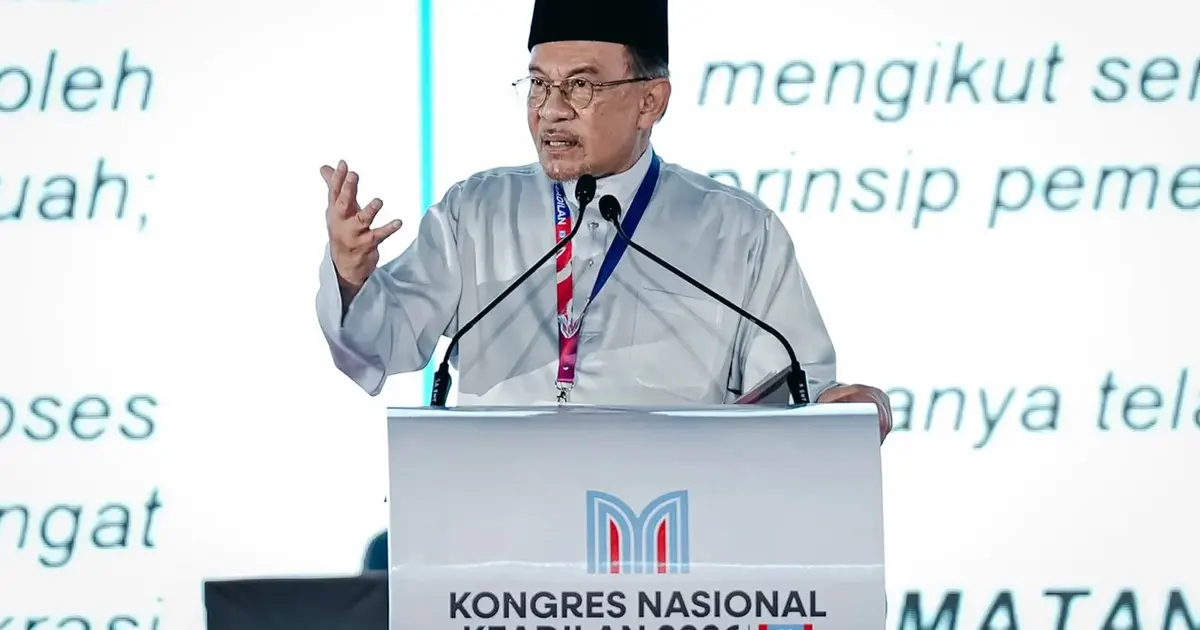
Prime Minister Anwar Ibrahim has indicated that the government's probe into governance failings at statutory bodies will extend beyond Tabung Haji to encompass the Federal Land Development Authority (Felda), with the Yang di-Pertuan Agong reportedly insisting that institutional scrutiny should not conclude with the pilgrim fund alone.
The announcement reflects a broader recognition within Malaysia's highest political circles that governance deficiencies uncovered at Tabung Haji may represent systemic rather than isolated problems. By framing the royal directive as guidance rather than mere preference, Anwar underscores the significance the monarch has attached to comprehensive institutional accountability. This signals that the government views the Tabung Haji crisis not as a contained crisis but as a window into wider governance vulnerabilities across Malaysia's statutory sector.
Felda, established in 1956 to facilitate land settlement and agricultural development, has long been central to Malaysia's economic and social policy. The authority oversees vast tracts of agricultural land and manages programmes affecting hundreds of thousands of Malays and Bumiputera beneficiaries. Historically, Felda has served as both an economic institution and a pillar of the government's rural development agenda, making any governance failures particularly consequential for the rural communities that depend on it.
The decision to extend investigations reflects accumulating concerns about transparency and accountability within state-linked enterprises. Tabung Haji's difficulties, which have included controversies over fund management and investment decisions, prompted wider questions about whether similar governance weaknesses afflict other large government-controlled institutions. Rather than treating each crisis in isolation, the government appears poised to adopt a more systematic approach to institutional reform.
For Felda specifically, the announcement may trigger reviews of land management practices, investment portfolios, and the distribution of benefits to settlers and beneficiaries. The authority manages one of Malaysia's largest government asset bases, making any examination particularly significant from a financial and fiduciary perspective. Questions about how effectively Felda has deployed resources to support its constituency, and whether governance structures adequately protect beneficiary interests, are likely to feature prominently in any formal inquiry.
The royal involvement in directing this investigative agenda carries considerable symbolic weight. The Yang di-Pertuan Agong's expressed preference for comprehensive institutional oversight suggests that governance accountability is being elevated as a matter of constitutional importance rather than mere administrative convenience. This framing may lend momentum to investigations that might otherwise face resistance from entrenched interests within statutory bodies.
The expansion of scrutiny also reflects evolving expectations around institutional transparency among Malaysian civil society and policymakers. Recent years have witnessed increased public discourse about governance standards, with citizens and observers questioning whether state-linked institutions adequately serve the public interest. By responding to royal guidance to broaden investigations, the government positions itself as responsive to both formal constitutional voices and emergent democratic demands for accountability.
For Southeast Asian observers, Malaysia's willingness to subject major statutory bodies to systematic review offers lessons about institutional governance. The region hosts numerous similar state-linked enterprises managing significant assets and serving crucial social functions. How Malaysia addresses governance deficiencies at Felda and comparable institutions may influence approaches to institutional accountability across Southeast Asia more broadly.
The implications for Felda beneficiaries are potentially substantial. A comprehensive governance review could result in structural reforms affecting land distribution, settler support programmes, or the administration of cooperative arrangements. Beneficiaries have long depended on Felda for land access, agricultural training, and market linkages, making any institutional overhaul a matter of direct concern to rural communities across Malaysia.
The government's commitment to extending investigations also carries potential political dimensions. Demonstrating responsiveness to the Yang di-Pertuan Agong's expressed preferences signals deference to the constitutional monarchy and may enhance the administration's legitimacy among constituencies that value institutional hierarchy and royal authority. Conversely, any perception that investigations are selective or politically motivated could undermine public confidence in the review process itself.
Moving forward, the success of expanded inquiries will depend substantially on the independence of investigative mechanisms, the transparency of findings, and the government's willingness to act on uncomfortable conclusions. Institutional reform often encounters resistance from beneficiaries of existing arrangements, meaning that converting investigative findings into meaningful change will require sustained political commitment.
The initiative also reflects acknowledgment that Malaysia's development model, built substantially on state-directed institutions managing resources for specific constituencies, requires periodic re-examination to ensure continued efficacy and integrity. As Malaysia evolves economically and socially, expectations about how state-linked enterprises should operate have shifted correspondingly, necessitating governance frameworks that reflect contemporary standards of accountability and transparency.

