Prime Minister Datuk Seri Anwar Ibrahim has moved to address mounting challenges facing Malaysia's manufacturing sector by directing key government agencies to directly engage with industry players grappling with the fallout from ongoing global supply chain disruptions. The intervention, announced through a social media post on Monday, represents the government's recognition that manufacturers across multiple sectors are facing intensifying cost pressures that threaten production competitiveness and economic resilience.
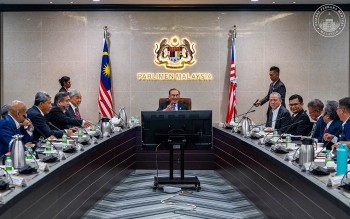
Anwar, who simultaneously holds the finance ministry portfolio, made the directive following a meeting of the National Economic Action Council (MTEN) held earlier that day. The council's discussion centred on formulating strategies to shield Malaysia's manufacturing base from the cascading effects of international supply constraints while maintaining long-term sectoral stability. The focus on this issue underscores growing awareness within the government that external supply shocks are transmitting rapidly through interconnected domestic industries.
The plastics industry has emerged as a critical priority in the government's response strategy. This sector occupies a pivotal position within Malaysia's industrial ecosystem, functioning as a crucial input supplier to several high-value manufacturing segments. The industry anchors production chains spanning food packaging, electrical and electronics components, automotive manufacturing, and medical device production—sectors that collectively generate substantial employment and export revenue for the nation.
Economy Minister Akmal Nasrullah Mohd Nasir provided quantitative context during a public briefing, revealing that the plastics sector's sales value contracted to RM62.69 billion in 2025 from RM64.78 billion in 2024, signalling the economic strain already visible in the data. Packaging applications represent the industry's largest market segment at 45 per cent of total sales, with electrical and electronics components accounting for a further 29 per cent. This concentration means that stress on the plastics industry rapidly propagates downstream, affecting dependent manufacturers whose own production timelines and cost structures become destabilised.
The interconnected nature of Malaysia's manufacturing network means that pressure on the plastics sector carries implications extending far beyond that single industry. Construction, agriculture, and the broader manufactured export base all depend on stable and affordable polymer inputs. When supply chain frictions inflate plastics costs, manufacturers across these downstream sectors must either absorb additional expenses—squeezing margins—or risk losing price competitiveness in global markets where Malaysian products compete against offerings from other producing nations.
Akmal's remarks during the ministry's streamed briefing highlighted this multiplier effect explicitly, noting that sectoral stress reverberates through food packaging supply chains, electronics manufacturing, component sourcing for the automotive industry, medical device production, and ultimately the nation's export performance. This perspective frames the government's intervention not merely as sectoral support but as an exercise in protecting interconnected value chains that underpin Malaysia's position as a manufacturing hub within regional and global trade networks.
The directive from the Prime Minister to both MITI and the Ministry of Economy reflects a two-ministry approach designed to coordinate trade policy responses with broader economic support measures. MITI's engagement capacity traditionally focuses on trade relationships, industry development, and market access advocacy, while the Economy Ministry handles fiscal measures, industrial policy, and domestic market mechanisms. The joint instruction suggests the government intends to deploy both trade diplomacy and domestic economic tools to address manufacturer concerns.
The phrase "formulate solutions that can ease cost pressures" remains sufficiently open-ended to encompass multiple potential interventions. These could include tariff reviews, targeted subsidies for critical inputs, accelerated infrastructure investment to reduce logistics costs, regulatory streamlining to improve operational efficiency, or negotiated trade arrangements with key supplier nations. The stated goal of maintaining long-term sectoral resilience indicates the government views this as a structural challenge requiring more than temporary relief measures.
For Malaysian manufacturers currently absorbing elevated input costs, the government's engagement initiative signals responsiveness to industry concerns while the underlying supply chain vulnerabilities persist. The timing also reflects broader regional anxieties about manufacturing competitiveness as Southeast Asian producers increasingly compete with one another for market share in global value chains. Countries that can stabilise costs and production conditions more effectively may attract or retain manufacturing operations seeking supply chain diversification away from higher-cost or geopolitically volatile regions.
The plastics industry's particular prominence in this government response underscores recognition that sectoral resilience requires addressing bottlenecks at critical upstream points in production networks. Supporting the plastics sector generates downstream benefits across dependent industries, making it a strategically efficient focus for policy intervention. However, the government's broader framing of the issue suggests awareness that sectoral interdependencies mean isolated support for single industries may prove insufficient without complementary measures addressing transportation, energy, labour, and financing constraints affecting manufacturers more broadly.
As MITI and the Economy Ministry move forward with industry engagements, their effectiveness will likely depend on the specificity and scalability of solutions ultimately proposed. Manufacturers require not merely consultation but concrete measures that demonstrably reduce cost burdens or improve operational predictability. The government's stated commitment to ensuring the manufacturing ecosystem remains resilient over the long term indicates this initiative extends beyond short-term crisis management toward more fundamental structural adjustments in how Malaysia's production base manages global supply relationships and cost volatility.

