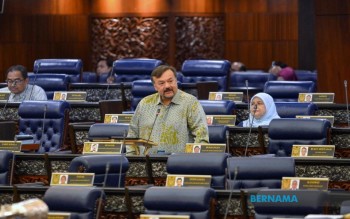
The Malaysian government has channelled more than RM500 million in micro-financing approvals to over 30,000 entrepreneurs over a seven-week period, Finance Minister II Datuk Seri Amir Hamzah Azizan announced in Parliament on July 2. The disbursements, spanning from mid-May through late June, represent a significant deployment of resources aimed at sustaining Malaysia's grassroots business sector during a period of mounting economic headwinds.
These approvals constitute a meaningful portion of the government's broader RM5 billion Micro Financing Facility Programme, a comprehensive initiative crafted to address the acute cash-flow pressures facing micro enterprises across the nation. The escalating cost environment—encompassing labour, utilities, raw materials, and rental expenses—has created a critical juncture for Malaysia's vast ecosystem of small traders, street vendors, and proprietors who collectively form the backbone of the informal economy and contribute substantially to employment and community resilience.
The financing distribution operated through an established network of government-backed financial institutions, each bringing specialised expertise and reach to underserved borrower segments. Amanah Ikhtiar Malaysia (AIM) and TEKUN Nasional, both microfinance specialists with deep rural networks, worked alongside traditional banking channels including Bank Simpanan Nasional (BSN), Bank Rakyat, and MARA to ensure funds reached entrepreneurs across urban and peripheral areas. This multi-channel approach reflects recognition that effective financial inclusion requires tailored delivery mechanisms suited to differing client profiles and geographic contexts.
Parallel to the direct micro-financing stream, the government has mobilised the RM5 billion MADANI Government Assistance Guarantee Scheme, administered through Syarikat Jaminan Pembiayaan Perniagaan Bhd (SJPP), to unlock additional commercial credit availability for small and medium enterprises. During the equivalent May-to-June window, SJPP approved RM219 million in financing guarantees benefiting over 300 MSMEs, concentrating support on agriculture, construction, logistics, and tourism sectors—areas particularly vulnerable to external shocks and seasonal demand fluctuations. By assuming credit risk on behalf of participating banks, the guarantee structure lowers borrowing barriers for enterprises lacking extensive collateral or credit histories.
Beyond fresh financing, SJPP has concurrently engaged commercial banking partners in restructuring existing obligations, offering rescheduling flexibility and targeted repayment assistance programmes to enterprises already burdened by outstanding debts. This dual approach—simultaneously opening new credit channels while easing pressure on existing liabilities—acknowledges that many MSMEs face solvency risks not solely from capital scarcity but from mismatched debt maturity profiles and payment schedules incompatible with actual cash generation patterns.
The government's support architecture has been further reinforced through Bank Negara Malaysia's May 2026 launch of the RM5 billion SME Stabilisation Relief Facility (SME SRF), a dedicated programme targeting the slightly larger enterprise segment. Nearly RM1 billion had already been approved under this facility for more than 1,500 qualifying SMEs by early July, suggesting strong uptake and tangible evidence of demand among businesses genuinely struggling with sustainability amid external pressures. The SME SRF complements the micro-financing programmes by addressing the financing requirements of enterprises that have outgrown the micro-finance category but remain too small or specialised to access conventional capital markets.
Cumulative fund deployment across these three mechanisms—the RM500 million in direct micro-financing, the RM219 million in SJPP guarantees, and the RM1 billion under SME SRF—totalled approximately RM1.7 billion across the seven-week evaluation period. This velocity of deployment indicates both genuine business demand and functional delivery infrastructure capable of processing applications, conducting assessments, and disbursing funds at meaningful scale. For Malaysia's approximately 907,000 registered MSMEs, representing the vast majority of all enterprises nationally, these programmes represent the most substantial fiscal support intervention in the past two years.
Critically, Amir Hamzah stressed that financing capacity remained robust, with approximately RM4 billion in unallocated funds across the various facilities remaining available for subsequent applications. This messaging carries significant implications for business confidence, signalling that the government has neither exhausted its micro-finance budget nor closed the window for new applicants. For entrepreneurs operating with thin margins and considering whether engagement with formal financing institutions justifies application costs and administrative burden, the assurance of available funds and continuing programme accessibility removes a key disincentive to participation.
The announcement arrived in response to parliamentary questions from Datuk Andi Muhammad Suryady Bandy (BN-Kalabakan) concerning concrete government measures to preserve resilience among street traders, hawkers, and MSMEs confronting the compound pressures of global economic volatility, elevated input costs, and shifting consumer demand patterns. The questioning itself reflected broader parliamentary and public anxiety regarding whether Malaysia's business base—particularly its informal and micro-enterprise segments—possessed adequate policy support to withstand the succession of external shocks that have characterised the post-pandemic macroeconomic environment.
For regional observers, Malaysia's sustained emphasis on micro-financing as a strategic policy instrument carries broader implications for ASEAN's development model. While larger Southeast Asian economies have occasionally relegated micro-enterprise support to secondary policy status, Malaysia's deployment of such substantial fiscal resources underscores persistent political commitment to inclusive growth and maintenance of a broad-based entrepreneurial culture. As competing regional economies increasingly compete for foreign direct investment and technology-intensive sectors, Malaysia's deliberate cultivation of its micro and small-enterprise ecosystem represents a complementary strategy ensuring that prosperity diffuses beyond a concentrated set of multinational and large-scale domestic corporations.
The financing initiatives also reflect evolving Malaysian policy recognition that the pandemic disrupted traditional credit relationships and working-capital management patterns for countless proprietors, and that recovery required not merely passive market forces but active fiscal intervention to restore business viability and restart income generation. By deploying guarantee mechanisms, restructuring support, and direct financing simultaneously across multiple institutional channels, the government has constructed a comprehensive rather than piecemeal response architecture—an important distinction given that isolated interventions often prove ineffective when addressing systemic credit market failures affecting large, fragmented borrower populations.

