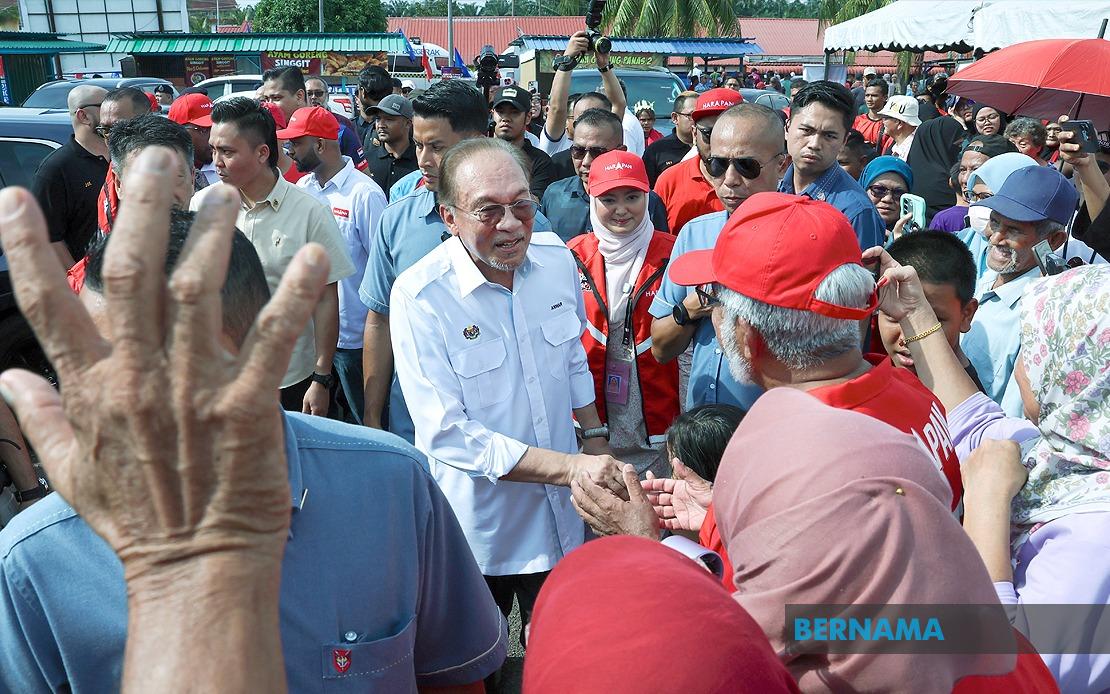
A 58-year-old grandmother from Kampung Pudu in Segamat went to remarkable lengths to fulfil her grandson's cherished ambition, riding a motorcycle through an oil palm estate to bring the boy face-to-face with Prime Minister Datuk Seri Anwar Ibrahim. What began as a simple journey to attend a public event in Felda Palong Timur evolved into a defining memory for nine-year-old Muhammad Afif Ikhwan, whose admiration for the nation's leader had become the focus of his thoughts and dreams.
Rosimah Mohammad, the determined grandmother, described the intensity of her grandson's anticipation in the days leading up to the event. Muhammad Afif had been unable to sleep properly, his mind consumed by the prospect of seeing his idol in person. For a child growing up in a rural Johor setting, the opportunity to meet the Prime Minister represented something far beyond a typical public appearance—it was a validation of his youthful interests and a chance to connect with a figure he had come to admire deeply. Rosimah's decision to undertake the motorcycle journey through the challenging terrain of the oil palm estate demonstrated the lengths rural families will go to create meaningful experiences for their children, even when resources and logistics present significant obstacles.
Upon arriving at the venue where Anwar was scheduled to deliver a speech, Rosimah and Muhammad Afif positioned themselves strategically near the pathway to the stage, calculating where they might gain the clearest view of the Prime Minister. The grandmother's foresight proved invaluable when Anwar began moving through the crowd to greet members of the public. Sensing the moment, Muhammad Afif seized the opportunity, pushing through the throng of people to extend his hand towards the Prime Minister. In that brief encounter, something extraordinary occurred—Anwar not only shook the young boy's hand but made the spontaneous decision to invite him onto the stage to stand beside him during his address to the assembled crowd.
The moment proved transformative for both child and grandmother. Rosimah watched her grandson experience a surge of emotions—surprise, joy, and validation all at once. The nine-year-old boy found himself standing on stage alongside the nation's leader, a position he had likely imagined countless times but never truly believed would materialise. For Rosimah, witnessing this outcome justified every effort expended to make the journey possible. The emotional weight of seeing her grandson's dream realised in such an unexpectedly magnificent way created a bond between grandmother and grandchild that transcended the typical family relationship, becoming instead a shared adventure and triumph.
The encounter resonated beyond the immediate family circle. When news of Muhammad Afif's story reached Anwar through his staff, the Prime Minister determined that he wished to extend the gesture further. Rather than allowing the moment to fade as merely another public appearance, Anwar requested that his office make a personal follow-up visit to the boy's home. This decision underscored an appreciation for the effort and determination that Rosimah and her grandson had demonstrated, as well as recognition of the value such encounters hold for young people in Malaysian communities.
On the following day, PKR deputy information chief Siti Aishah Shaik Ismail arrived at Kampung Pudu representing the Prime Minister and bringing gifts selected specifically for Muhammad Afif. The presentation included a bicycle, a school bag, and a pair of shoes—practical items that would serve the boy's daily needs while carrying the symbolic weight of the Prime Minister's personal attention and gratitude. These gifts transcended their material value, functioning instead as tangible reminders of an extraordinary achievement and a gesture of encouragement for a young person's future endeavours.
What distinguishes this story within the broader landscape of Malaysian political engagement is the authenticity of the connection it reveals. Muhammad Afif's admiration for the Prime Minister emerged not from orchestrated political messaging but from genuine, youthful interest in a national figure. His dream was uncomplicated and earnest—simply to meet the person he respected. The grandmother's willingness to facilitate this aspiration through practical action, navigating the challenges of rural infrastructure and geography, reflects the values of determination and familial support that characterise many Malaysian communities, particularly in Peninsular Malaysia's agricultural regions.
The subsequent weeks and months following the event have demonstrated the enduring significance of this brief encounter. Rosimah shared with officials that Muhammad Afif continues to preserve the shirt he wore on that momentous day, holding it close each evening as he reflects on his experience. This nightly ritual—an embrace of a garment that carries the residue of an extraordinary moment—illustrates how profoundly the meeting affected the boy's sense of self and possibility. For a nine-year-old from a modest background in rural Johor, the interaction provided tangible evidence that dreams, however ambitious they may seem, can be realised through determination and serendipitous timing.
The story also carries implications for understanding how political figures are perceived at the grassroots level across Malaysia. Muhammad Afif's admiration for Anwar Ibrahim reflects the broader appeal the Prime Minister has cultivated among younger demographic groups and in communities beyond urban centres. The boy's dream was not politically cynical but rather inspired by a genuine respect for leadership and public service. Anwar's decision to amplify the moment by inviting the child onto stage and subsequently sending official representatives to his home demonstrated political acumen intertwined with apparent genuine compassion.
For Malaysian readers, particularly those in rural and agricultural communities, this narrative speaks to the accessibility of national leadership and the possibilities available to ordinary families willing to invest effort and determination into meaningful pursuits. Rosimah Mohammad's motorcycle journey through the oil palm estate represents more than a logistical challenge overcome—it embodies the entrepreneurial spirit and resourcefulness that characterises rural Malaysian family life. The grandmother transformed what might have been merely a missed opportunity into an unforgettable experience through sheer determination and strategic thinking.
The implications of this story extend beyond the immediate protagonists to broader questions about representation and connection in Malaysian governance. In an era where political engagement is increasingly mediated through digital platforms and mass communications, the direct, personal interaction between a young citizen and the Prime Minister carries particular resonance. Muhammad Afif's encounter demonstrates that such connections remain possible and profoundly meaningful, even in the twenty-first century. His experience may inspire other young Malaysians to pursue their own aspirations, understanding that dedication and timing can sometimes align to create transformative moments.

