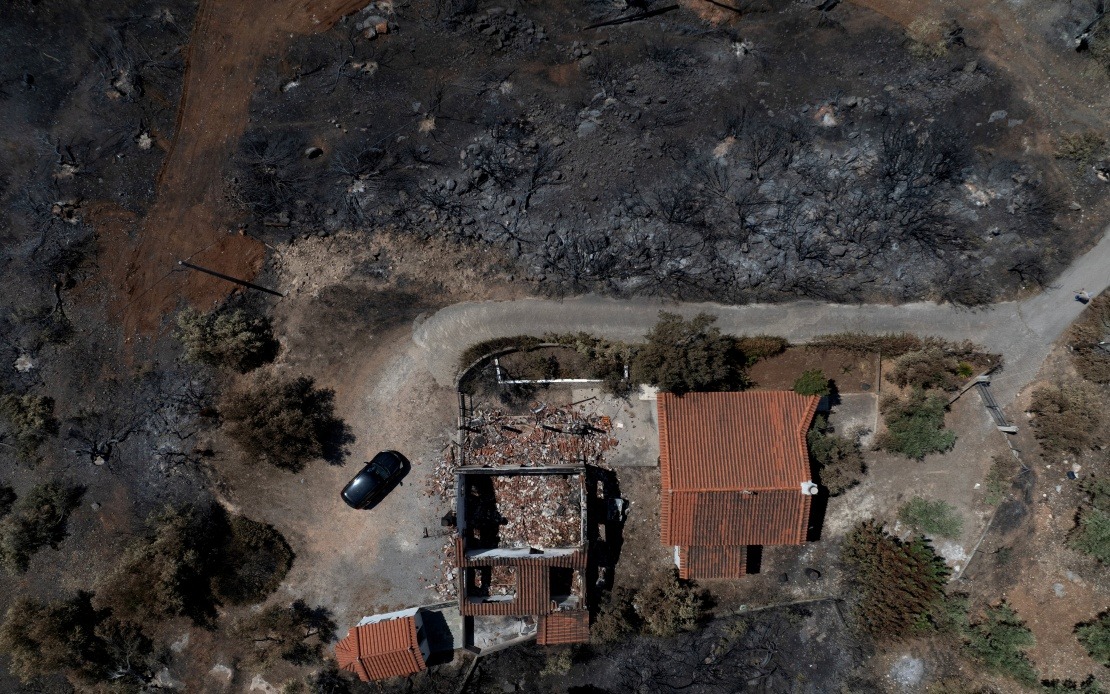
Greece has escalated its wildfire preparedness to the highest level, issuing a red alert for three critical regions—Attica, Viotia, and Evia—as meteorological conditions create an exceptionally dangerous environment for uncontrolled blazes. The General Secretariat for Civil Protection, which operates under the Climate Crisis and Civil Protection Ministry, elevated the wildfire risk classification to Category 4 for Thursday, the most severe rating on the national scale. This unprecedented step reflects growing concerns about the intersection of climate volatility and seasonal fire hazards that have increasingly tested Greece's emergency response infrastructure in recent years.
The escalation triggers comprehensive emergency protocols designed to mobilise the nation's entire crisis management apparatus. Under the red alert designation, the National Civil Protection Mechanism shifts into maximum operational readiness, positioning personnel and equipment to respond immediately to any ignition. Ground and aerial patrols conducted jointly by fire service units, police forces, and armed forces personnel will maintain constant surveillance over vulnerable zones, while preventive traffic restrictions and access limitations will be imposed on forests and other high-risk areas. These preventive measures aim to minimise human activity that could accidentally or intentionally spark fires during the peak danger period.
The timing of this alert arrives as Greece continues grappling with an already significant wildfire that began in Viotia last week and has since expanded into western Attica. Satellite data from the European Union's Copernicus monitoring system indicates the ongoing blaze has consumed approximately 14,424 hectares, equivalent to roughly 35,642 acres of vegetation and forestland. The scale of this conflagration underscores the severity that Greek wildfires can reach when conditions align unfavourably. The incident has claimed lives among those fighting it—a Danish pilot and Greek aerial coordinator died on Sunday when two firefighting helicopters collided during operations, highlighting the inherent risks faced by personnel engaged in aerial firefighting operations under challenging conditions.
The vulnerability of the Attica region, which encompasses Greece's capital city Athens and its surrounding metropolitan area, presents particular administrative and logistical challenges. With millions of residents concentrated in this densely populated zone, any significant wildfire threatens not merely natural ecosystems but also urban infrastructure, residential communities, and critical facilities. The historical pattern of summer wildfires affecting the greater Athens area has prompted increasingly sophisticated emergency protocols, yet the unpredictability of weather patterns and fire behaviour continues to test response capabilities. The threat extends beyond immediate fire dangers to include smoke-related air quality degradation, which poses health risks particularly for vulnerable populations including children, elderly residents, and those with respiratory conditions.
A separate incident on Wednesday demonstrated the ongoing operational demands confronting Greek fire services. Firefighters successfully controlled a wildfire that erupted near Koropi, located southeast of Athens, in the low vegetation surrounding the Driggia area. The blaze ignited around 1:45 pm local time and required mobilisation of at least 52 firefighting personnel, including three specialised forest commando units trained for terrain-intensive operations, supported by 14 ground vehicles. The air response component proved equally substantial, with four helicopters and two water-dropping aircraft participating in the suppression effort, while an additional helicopter coordinated the aerial campaign. Operations control utilised advanced thermal and optical drone camera technology to monitor fire progression and direct suppression efforts more effectively. Local municipal authorities contributed water tankers to supplement the fire service's resources, ensuring adequate water supply for ground-based suppression teams.
The investigation into the Koropi fire's origin underscores an important dimension of Greek wildfire management—determining whether ignition resulted from natural causes such as lightning, unintentional human activity including abandoned campfires or unextinguished cigarettes, or deliberate arson. An arson investigation team was immediately dispatched to examine evidence at the fire site. Understanding causation patterns informs prevention strategies and helps authorities calibrate public messaging and enforcement activities. The substantial commitment of resources to suppress what ultimately proved a manageable incident illustrates the resource-intensive nature of wildfire response, even when blazes are contained relatively quickly.
For Malaysian and Southeast Asian observers, the Greek experience offers instructive parallels to regional wildfire challenges. Countries throughout Southeast Asia, including Indonesia, Malaysia, and Brunei, experience seasonal fire episodes exacerbated by drought conditions, agricultural burning practices, and climate variability. The Greek approach of implementing maximum-alert protocols before catastrophic fires develop, rather than reacting after ignition, represents a proactive governance model emphasising prevention over response. Greece's integration of satellite monitoring systems, aerial firefighting capabilities, multi-agency coordination, and public communication strategies provides a comparative reference point for regional fire management frameworks.
The role of technology in contemporary wildfire management emerges clearly from the Greek response. Copernicus satellite data enabling precise quantification of burned areas, thermal and optical drone surveillance guiding suppression operations, and real-time coordination systems linking multiple response agencies represent technological sophistication that enhances situational awareness and operational effectiveness. Developing nations in Southeast Asia increasingly recognise similar investments in monitoring and coordination infrastructure as essential components of climate resilience strategies. The Greek experience demonstrates that even technologically advanced European nations face significant challenges managing wildfires under extreme conditions, suggesting that regional governments must combine technological investment with adequate personnel training, equipment maintenance, and cross-border cooperation frameworks.
The human cost of Greek wildfire operations gained tragic prominence through Sunday's helicopter collision, which claimed two lives among those defending communities and ecosystems. This tragedy underscores the genuine hazards confronting emergency personnel engaged in aerial firefighting, where poor visibility, turbulent conditions, and coordination challenges create collision risks even among experienced pilots and crews. Such incidents prompt ongoing review of aerial firefighting protocols, particularly regarding spacing requirements between aircraft, communication procedures, and decision criteria for suspending operations when conditions deteriorate. Regional nations adopting aerial firefighting capabilities must build safety cultures emphasising personnel protection even as they prioritise community defence.
Greece's declaration of maximum alert status reflects sophisticated understanding that wildfire preparedness operates along a temporal spectrum—conditions either favour prevention through reduced human activity and heightened vigilance, or they necessitate rapid suppression of inevitable ignitions. By declaring red alert status before major fires develop, rather than waiting for catastrophic incidents to trigger response, Greek authorities attempt to shift the balance toward prevention. This prospective stance contrasts with reactive approaches that mobilise resources only after fires reach unmanageable scales. The strategic logic appeals to any jurisdiction experiencing seasonal fire vulnerability, suggesting that governments must develop early-warning systems and alert frameworks enabling proactive resource positioning before disaster strikes.

