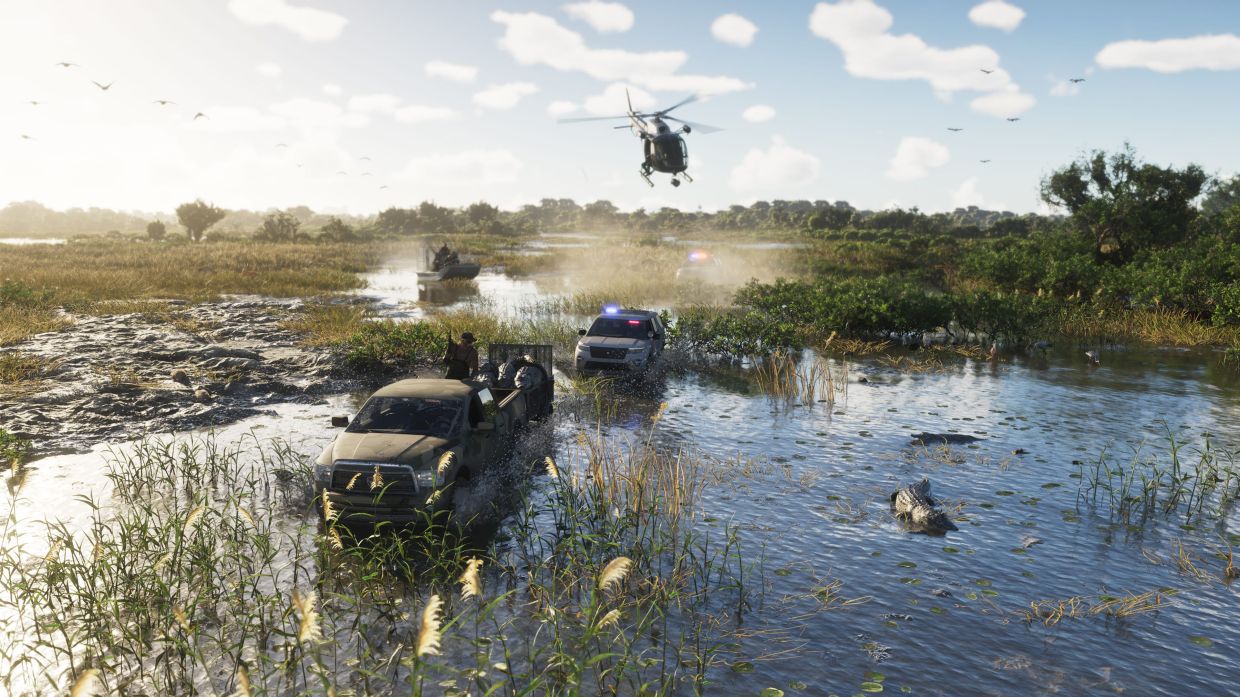
The long-awaited Grand Theft Auto VI finally received its official public reveal when Rockstar Games dropped a comprehensive preview on Netflix on August 27, attempting to regain control of a narrative that had spiralled beyond the studio's grasp following months of unauthorized leaks. The preview showcases the game's two lead characters, Jason and Lucia, engineered as a modern reimagining of the outlaw archetype popularized by Bonnie and Clyde, the early 20th-century American bank robbers whose crime spree ended in a police ambush. Rather than presenting a sanitized version of gameplay, the preview delivers exactly what the Grand Theft Auto franchise has always promised: high-octane sequences involving vehicle chases through urban landscapes, confrontations in establishments like strip clubs, tactical rooftop negotiations, and multiple gun battles that demonstrate the game's commitment to action-heavy storytelling.
The official release arrives as damage control following a catastrophic loss of confidentiality that began on August 18 when extensive gameplay footage materialized across online platforms without authorization. Rockstar's response was characteristically candid, issuing a public statement describing the situation as "heartbreaking" and acknowledging that this exposure represented a fundamentally different experience from how the company had envisioned introducing its creation to the world. The company expressed genuine frustration with the uncontrolled narrative that had developed, recognizing that months of careful marketing strategy had been derailed by circumstances beyond its management. Interestingly, the Netflix platform experienced widespread service disruptions at midday on August 27 as the preview rolled out globally, suggesting either technical strain from unprecedented viewership or an indication of just how eagerly audiences have anticipated this release.
The leaks themselves originated from an account operating under the pseudonym Cyberleek, whose operator or operators have framed their actions as an attempt to expose what they characterize as problematic business practices within the gaming industry. This framing introduces an ideological dimension to what might otherwise appear to be simple copyright infringement, positioning the leaker as a whistleblower of sorts rather than a common criminal. The perpetrator's stated motivation reflects broader industry tensions regarding corporate transparency, pricing structures, and the relationship between developers and their consumer base. Rockstar's aggressive legal response demonstrates the company's determination to identify and pursue whoever is responsible, with the studio obtaining court orders on August 21 requiring both Microsoft and Discord to surrender user data that might lead to identification. Two federal judges in New York approved these subpoena requests filed a day earlier, illustrating how seriously the entertainment and gaming sectors treat intellectual property protection in the digital age.
The leaked gameplay also highlighted something beyond the action sequences themselves: an interactive mechanic allowing players to make Jason and Lucia hold hands, a seemingly minor detail that underscores Rockstar's attempt to develop emotional depth between its protagonist characters. This design choice suggests the developer intends to balance the franchise's historically testosterone-driven gameplay with relationship-building mechanics that might appeal to a broader demographic. The preview's curation carefully balances visceral action sequences with quieter character moments, attempting to demonstrate that GTA VI has evolved beyond pure mayhem into something approximating narrative complexity.
The controversy surrounding GTA VI extends beyond unauthorized leaks into broader criticism of Rockstar's commercial decisions. Take-Two Interactive, Rockstar's parent company, generated substantial fan backlash earlier this year when announcing that no physical copies would be manufactured for release, forcing all players into digital distribution. This decision, combined with the company's pricing strategy that includes a premium tier offering additional in-game content at elevated cost, has created perception among portions of the gaming community that the studio prioritizes maximum revenue extraction over consumer accessibility. Such pricing tiering has become increasingly contentious in an industry where microtransactions and cosmetic purchases already burden players post-launch.
Perhaps most peculiar among the circumstances surrounding GTA VI's development is the revelation that a unit of the United States Army actively promoted the game to military personnel through an unconventional incentive program. According to information reported by Task & Purpose, a military news publication, the Army offered soldiers four days of leave as motivation to extend their service commitments by additional years, with the caveat that such leave would ostensibly be used for gaming. The program, communicated through official military memoranda, succeeded in attracting twenty reenlistments among one hundred thirty eligible soldiers, suggesting the game's cultural penetration extends into unexpected demographic segments. This military angle provides peculiar context for a franchise historically built around criminality and law-breaking, creating an odd juxtaposition between state institutions and outlaw narratives.
For Malaysian and Southeast Asian readers, the GTA VI phenomenon reflects broader dynamics within the global gaming industry that increasingly influence regional markets. As gaming becomes culturally mainstream across Asia, major releases like Grand Theft Auto shape entertainment consumption patterns and generate significant retail activity. The decision to release exclusively through digital distribution carries particular implications for regions where internet infrastructure remains inconsistent and where physical media maintains stronger cultural preference. Additionally, the pricing strategies Rockstar employs establish precedent that other major publishers may follow, potentially affecting affordability across Southeast Asian markets where purchasing power varies significantly from Western economies.
The Netflix distribution strategy itself represents an intriguing departure from traditional game marketing, suggesting that cinematic preview content has become integral to driving anticipation within increasingly crowded entertainment landscapes. By selecting Netflix as the platform for official revelation, Rockstar gains access to the streaming service's global subscriber base while leveraging the platform's prestige and reach. This approach also represents implicit acknowledgment that video game marketing must now compete for attention within broader entertainment categories rather than remaining siloed within gaming-specific channels and publications.
Looking forward, GTA VI's eventual full release promises to be among the most closely watched gaming launches in recent memory, carrying weight both commercially and culturally. The unauthorized leaks have paradoxically intensified anticipation rather than diminishing it, transforming what might have been routine franchise enthusiasm into genuine cultural moment. Whether Rockstar's aggressive legal pursuit of the source ultimately succeeds remains uncertain, but the company's determined response signals that intellectual property protection will remain contentious within entertainment industries where digital distribution has rendered traditional security barriers increasingly porous.

