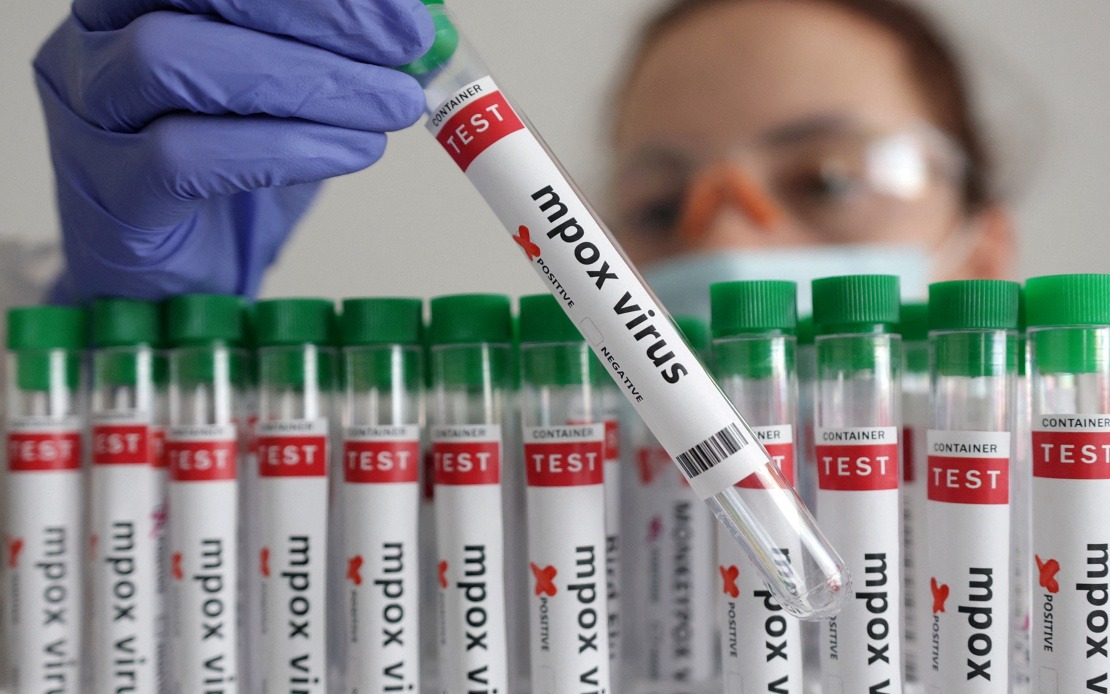
Guinea-Bissau has officially registered its first case of mpox, marking a significant public health development for the West African nation. Public Health Minister Quinhin Nantote made the announcement on Saturday evening, revealing that a 27-year-old woman tested positive for the virus following medical consultation on June 24. The confirmation came after diagnostic samples underwent rigorous laboratory testing first at Guinea-Bissau's National Institute of Public Health, then were validated through further analysis at the Institut Pasteur in Dakar, Senegal, establishing beyond doubt the presence of mpox infection.
The case highlights the expanding geographic footprint of mpox across Africa, a concern that resonates throughout the region as nations grapple with containing disease transmission. Guinea-Bissau's detection underscores the vulnerability of health systems in smaller West African nations where disease surveillance and laboratory capacity remain constrained by resource limitations. For Malaysia and Southeast Asian nations with growing commercial and diplomatic ties to West Africa, this development serves as a reminder of evolving infectious disease threats that can have global implications, particularly as international travel and trade patterns intensify.
In immediate response to the confirmation, Guinea-Bissau's health ministry has activated comprehensive national response mechanisms aligned with the International Health Regulations and World Health Organisation guidelines. These activation protocols represent a structured approach to disease containment that includes epidemiological investigations designed to identify, locate, and monitor individuals who came into contact with the confirmed patient. Such contact tracing operations are labour-intensive and time-sensitive, requiring coordination across multiple health facilities and community networks to prevent further transmission chains.
Surveillance capacity has been substantially reinforced throughout Guinea-Bissau's territory, with particular emphasis placed on border checkpoints and crossing points. This geographical targeting reflects understanding that mpox, like many infectious diseases, can spread across borders through human movement, making frontier regions critical defence lines. For a nation sharing land and maritime boundaries with several neighbours, effective border surveillance demands coordination with neighbouring health authorities and consistent application of screening protocols that balance disease control with facilitating legitimate travel and commerce.
Minister Nantote has made explicit appeals to the general population to adopt foundational preventive behaviours that reduce transmission risk. These recommendations include frequent handwashing with soap and clean water, a simple yet effective measure that interrupts transmission chains when practiced consistently. Citizens are equally urged to minimise close physical contact with individuals presenting symptoms such as fever or visible skin rashes characteristic of mpox infection. Public cooperation with these guidelines forms the cornerstone of community-level disease containment, particularly in settings where healthcare infrastructure may be dispersed or less accessible.
Mpox transmission occurs through multiple pathways that demand public understanding to enable effective self-protection. The virus spreads via direct contact with bodily fluids, respiratory droplets expelled during breathing or coughing, and contaminated materials including clothing or bedding that have contacted infected individuals' lesions. The disease's clinical presentation combines fever, muscular discomfort, characteristic skin lesions that progress through distinct stages, and lymph node enlargement. These symptoms typically appear within days of exposure, creating a window for early identification and isolation of cases to prevent onward transmission.
For Southeast Asian nations including Malaysia, Guinea-Bissau's case carries several implications worth monitoring. Regional health authorities may strengthen screening protocols for travellers arriving from West Africa, although the assessment of actual risk depends on transmission intensity within Guinea-Bissau and broader African regions. The case reinforces the value of robust disease surveillance systems that enable rapid detection and response, a capability that Malaysian health institutions have increasingly invested in following lessons from previous coronavirus and other emerging disease episodes.
The containment approach being deployed in Guinea-Bissau reflects established infectious disease management principles that have been refined through experience with mpox outbreaks elsewhere in Africa and globally. Rapid diagnostic confirmation, epidemiological investigation, contact tracing, and community engagement form an integrated strategy designed to interrupt transmission before secondary cases multiply. The involvement of the Institut Pasteur in Dakar demonstrates how regional laboratory networks support smaller nations' diagnostic capacity, a model that underscores the importance of cross-border health cooperation.
Guinea-Bissau's health system faces considerable challenges in implementing this response framework. The nation has limited healthcare infrastructure, constrained financial resources, and competing health priorities that strain attention and funding. Despite these obstacles, the swift confirmation and public announcement of the case demonstrate commitment to transparent disease reporting, a prerequisite for regional and international trust in disease surveillance data. Such transparency, while sometimes politically inconvenient, ultimately serves public health interests by enabling neighbouring nations and international partners to calibrate their own preparedness measures appropriately.
Looking ahead, the evolution of this outbreak in Guinea-Bissau will likely inform policy discussions across West Africa and potentially beyond. If the case remains isolated and contact tracing succeeds in preventing secondary transmission, it may represent a contained incident. However, if transmission chains become established or additional cases emerge, the situation could escalate, affecting regional economies through travel restrictions or trade disruptions. Malaysian policymakers and health officials should maintain situational awareness of the outbreak's trajectory while ensuring domestic preparedness mechanisms remain primed for potential mpox detection within our own borders.

