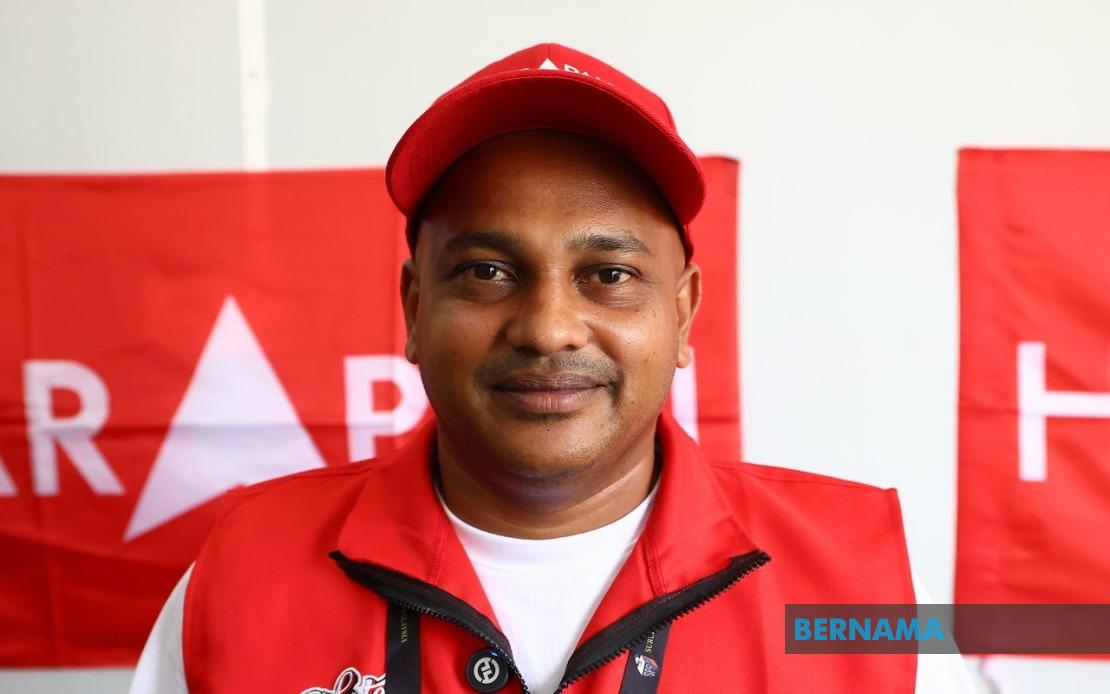
Guna Balakrishnan, the Pakatan Harapan candidate contesting for the Layang-Layang state seat in the forthcoming Johor election, has articulated a focused agenda addressing constituent concerns he has encountered throughout his campaign trail. Speaking at the PH command centre in Kluang on July 6, the candidate outlined a programme centred on delivering tangible improvements across four distinct areas that have emerged as priorities from grassroots engagement with voters in the 25,181-strong constituency.
The first plank of Guna's action plan targets the enhancement of street lighting infrastructure across Layang-Layang. Rather than promising comprehensive overnight transformation, he has adopted a measured approach, aiming to resolve between 50 and 60 per cent of the complaints accumulated by residents during his community consultations within the initial 100 days of assuming office should he win the seat. This realistic framing demonstrates an understanding of the administrative complexities involved in executing municipal improvements while establishing early momentum to build voter confidence.
The second priority centres on expanding internet and telecommunications connectivity, a concern that reflects the increasing digital divide affecting rural and semi-rural Malaysian constituencies. Guna's confidence in rapid resolution stems from existing infrastructure foundations already in place across the area. His team has identified that the basic feeders and networking architecture are operational, requiring only the strategic installation of additional transmission equipment in specific zones with coverage gaps. This targeted approach suggests focused problem-solving rather than wholesale infrastructure overhaul, potentially enabling deployment within the promised 100-day timeframe.
Wildlife encroachment represents the third commitment, reflecting the persistent friction between rural expansion and natural habitats in Malaysia's agricultural regions. Multiple residents have reported encounters with wild animals affecting their safety and livelihoods, a recurring issue in constituencies bordering forested areas or game reserves. Guna's pledge to prioritise this concern demonstrates responsiveness to an often-overlooked dimension of rural governance that directly impacts daily quality of life and economic productivity in affected communities.
The fourth priority addresses the systematic theft of oil palm fruit, an economic crime that directly undermines the prosperity of farmers and agricultural workers dependent on palm cultivation. The prevalence of this grievance during Guna's engagement suggests it represents either a growing criminal problem or intensifying frustration among producers unable to secure their harvests effectively. Tackling agricultural crime addresses both security and economic development simultaneously, positioning intervention in this area as foundational to rural prosperity.
Beyond the immediate 100-day commitments, Guna's broader manifesto for Layang-Layang encompasses a wider development vision presented in early July. The document encompasses flood mitigation, essential in a country where monsoon-driven inundation regularly disrupts communities and damages agricultural output. Road infrastructure upgrading forms another plank, recognising that connectivity underpins economic activity and service delivery across dispersed rural populations. Digital access expansion extends the telecommunications commitment into a holistic vision of technological integration within community life.
Human capital development receives substantial emphasis within the manifesto's architecture. Support for women's entrepreneurship programmes addresses gender-based economic disparities while tapping underutilised human resources within the constituency. The expansion of Technical and Vocational Education and Training opportunities reflects the acknowledged gap between formal education trajectories and employment realities faced by youth in regions where tertiary education access remains limited. These interventions position skills development as central to competitive regional advancement.
The manifesto also encompasses welfare provision for senior citizens through the establishment of a senior citizen activity centre, known locally as PAWE. This commitment recognises the social isolation and healthcare vulnerabilities increasingly affecting elderly populations in rural areas where children have migrated to urban centres for employment. Creating dedicated spaces for elder engagement addresses both physical and psychological wellbeing while reducing the burden on overstretched public health infrastructure.
The electoral contest for Layang-Layang reflects the fragmented political landscape characterising contemporary Johor politics. The three-way battle between Guna representing Pakatan Harapan, Chua Jian Boon of Barisan Nasional, and incumbent Abd Mutalip Abd Rahim representing Perikatan Nasional demonstrates the erosion of two-party dominance in Malaysian state elections. This configuration creates complex dynamics where no single coalition can assume voter loyalty, instead requiring candidates to build personal credibility through specific pledges and demonstrated competence.
The July 11 polling date for the comprehensive Johor state election carries broader implications for national political trajectories. Johor's electoral verdict will provide crucial signals regarding voter sentiment toward competing coalitions at a moment when Malaysia's political alignments remain fluid and state-level contests increasingly serve as referenda on national governance directions. The Layang-Layang constituency, though representing one of multiple seats contested across the state, embodies the specific governance challenges that voters across Johor expect incoming representatives to address.
Guna's emphasis on practical, time-bound deliverables reflects a pragmatic campaign approach distinguishing his candidacy within a crowded field. Rather than abstract ideological positioning, his strategy emphasises concrete problem-solving directed at tangible constituent concerns. Whether these commitments prove achievable will substantially influence not merely Layang-Layang's electoral outcome but also the broader credibility of Pakatan Harapan's governance model during this consequential electoral cycle.

