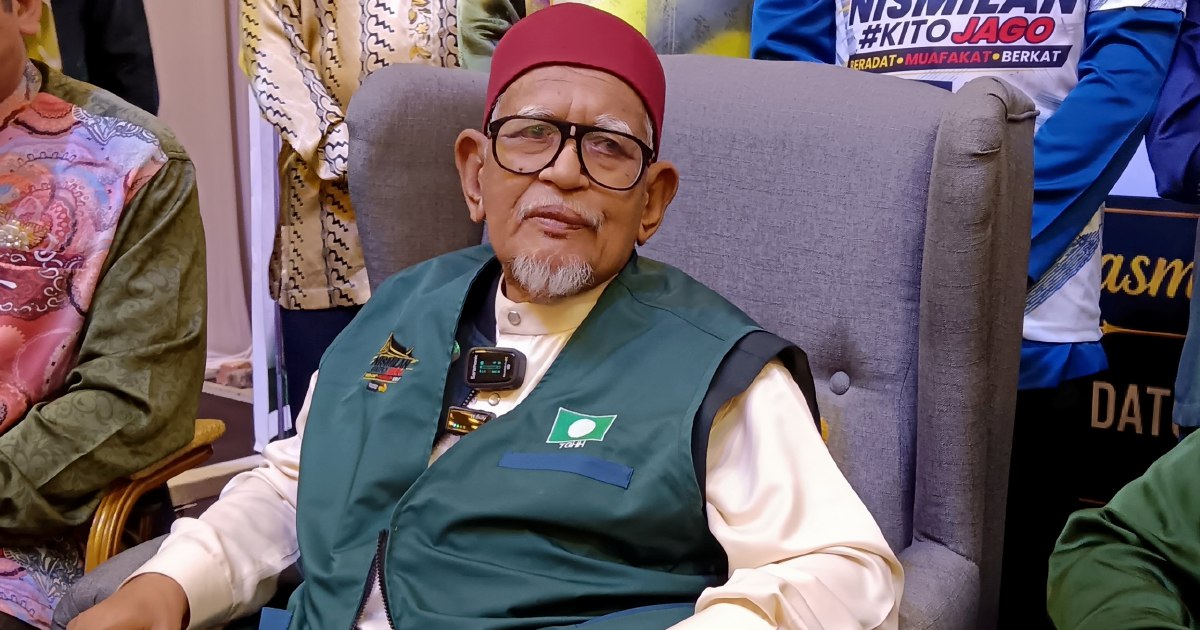
PAS president Tan Sri Abdul Hadi Awang has firmly rejected accusations from former Prime Minister Tan Sri Muhyiddin Yassin that Perikatan Nasional (PN) has become 'toxic' under the Islamist party's stewardship. Speaking in Jempol, Hadi countered that the coalition's challenges do not stem from PAS leadership but rather from the behaviour and decisions of coalition partner Bersatu, effectively shifting the narrative of blame within the fractious opposition alliance.
The public disagreement between two of PN's most senior figures underscores the considerable strain within the coalition, which has struggled to maintain unity and cohesion since its formation prior to the 2020 general election. The timing of the dispute carries significance for Malaysian politics, as it reveals deepening fractures at a moment when the opposition alliance needs to present a consolidated front ahead of future electoral contests. The accusation of toxicity—a term laden with implications about governance standards and internal relationships—signals fundamental disagreement over who bears responsibility for PN's perceived difficulties.
Hadi's defensive response emphasises that PAS, as the coalition's largest component party by membership and electoral reach, should not be held accountable for systemic problems that he attributes to Bersatu's management and strategy. By redirecting criticism toward the party founded by Muhyiddin himself, Hadi implicitly contests the former premier's authority to make judgments about the coalition's direction and health. This rhetorical manoeuvre reflects the complex power dynamics within PN, where questions of dominance and decision-making authority have remained contested since the alliance's inception.
The exchange carries particular resonance in Malaysia's political ecosystem, where coalition stability has become increasingly fragile across the political spectrum. PN's internal tensions mirror broader challenges facing opposition alliances globally—the difficulty of maintaining discipline and unity among parties with distinct ideological orientations and organizational cultures. For Malaysian voters and political observers, these public disagreements raise questions about the coalition's viability as a governing alternative and its capacity to address the divisions that have plagued its operations.
Bersatu, the party Hadi singles out for criticism, has undergone significant transformation since Muhyiddin's departure from the Prime Minister's office. The party's trajectory and positioning within PN have become subjects of considerable debate, with questions about its strategic direction and influence within the broader alliance structure. Hadi's willingness to openly blame Bersatu suggests that PAS leadership has determined that defending its own record and criticizing the party of its coalition partner serves its organizational interests better than maintaining facade of unity.
The allegation of toxicity requires contextual understanding within Malaysia's recent political history. PN's formation in 2020 represented a significant realignment in Malaysian opposition politics, bringing together PAS, Bersatu, and smaller components including PAN. However, the coalition has faced persistent challenges in maintaining coherent messaging, coordinating electoral strategies, and resolving disputes over representation and resource allocation. These practical difficulties have compounded fundamental disagreements about policy direction and governance philosophy.
Hadi's counter-accusation gains traction when considered against the backdrop of internal disputes that have periodically surfaced within PN's ranks. The coalition has struggled with questions of party autonomy, decision-making authority, and resource distribution—issues that Muhyiddin's characterization as toxic arguably oversimplifies. From PAS's perspective, Hadi's response attempts to reframe these disputes not as systemic coalition problems but as specific failures attributable to Bersatu's particular approach to collaboration and coalition politics.
For Southeast Asian political analysts and Malaysian stakeholders, this public disagreement illustrates the challenges inherent in opposition coalition-building in Westminster-influenced parliamentary systems. The necessity of maintaining multiple parties within a single electoral and legislative alliance frequently creates tensions between organizational autonomy and collective discipline, between ideological distinctiveness and strategic compromise. PN's difficulties in managing these tensions parallel similar challenges observed in other regional opposition alliances.
The practical implications extend beyond immediate political theatre. Should internal conflicts within PN intensify, Malaysian electoral dynamics could shift significantly, potentially affecting outcomes in crucial parliamentary contests and state-level elections. Voters and political analysts are closely monitoring whether these public disagreements presage deeper fractures that might splinter the coalition, or whether mechanisms for internal dispute resolution might ultimately restore functional cooperation among the alliance's component parties.
Muhyiddin's characterization of PN as toxic and Hadi's robust rejection of this assessment represent fundamental divergence in how coalition leaders assess their alliance's condition and prospects. The dispute also reflects competing visions for PN's future orientation and which voices should exercise primary influence over strategic direction. As Malaysia's political landscape continues evolving, the resolution or escalation of such disagreements may substantially influence the broader competitive dynamics between governing and opposition forces at national and subnational levels.

