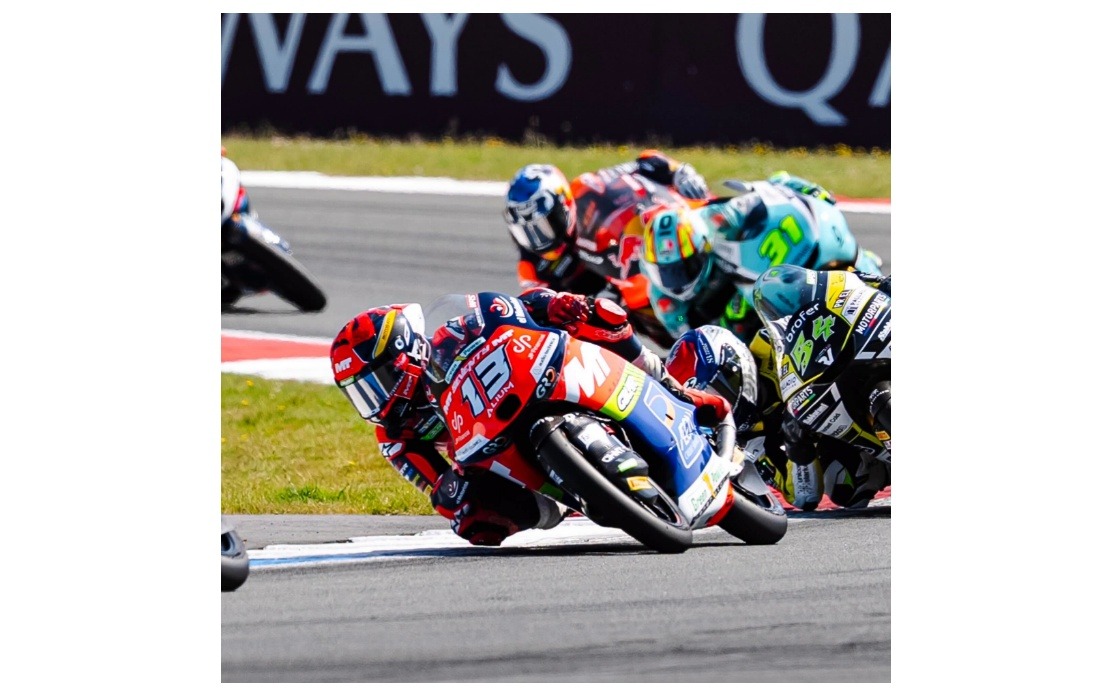
Malaysian racing prospect Muhammad Hakim Danish Ramli delivered a solid performance at the Moto3 Dutch Grand Prix, crossing the line in seventh position at the TT Circuit Assen despite contending with persistent tyre grip challenges throughout the encounter. The 18-year-old's result proved particularly noteworthy given his challenging starting position and the intensity of competition he faced during the 25-lap affair, demonstrating his capacity to execute damage control and extract maximum value from a difficult afternoon on track.
The Moto3 competitor reflected positively on his tactical execution during the race, highlighting his impressive recovery from a 16th-place grid position. Through disciplined riding and strategic decision-making, Hakim Danish navigated through the field during the opening phases, breaking into the lead group and positioning himself among the frontrunners for much of the contest. This early momentum suggested he might challenge for a podium finish, a prospect that appeared realistic as he maintained competitive pace against his immediate rivals during the middle stages of the event.
According to his assessment, the race unfolded with escalating difficulty as fresh competitors entered the battle. The arrival of an additional wave of challengers transformed the competitive dynamics, forcing Hakim Danish to recalibrate his approach and concentrate on preserving his position. The Malaysian rider acknowledged that maintaining momentum became increasingly challenging, particularly as his confidence in the tyre's responsiveness diminished as the race progressed and track conditions evolved.
The critical turning point arrived during the final five laps, when Hakim Danish's performance visibly deteriorated as tyre degradation mounted. The confidence he had built during the earlier stages eroded noticeably, and he found himself unable to maintain the pace required to defend his position. This vulnerability allowed subsequent challengers to capitalize on his struggles, resulting in multiple overtakes that saw him gradually slip down the order before the chequered flag.
Despite the late-race difficulties, Hakim Danish completed the 25-lap distance in 33 minutes 56.275 seconds, demonstrating sufficient consistency to claim a points-scoring finish. In the fiercely competitive Moto3 category, where margins between competitors remain razor-thin and grid positions fluctuate rapidly, any points harvest contributes meaningfully to the longer campaign. The ninth-point reward from his seventh-place finish represented valuable capital for his championship ambitions, particularly given the unpredictability inherent in single-seater motorcycle racing at this level.
The result proves particularly significant for Hakim Danish's championship trajectory. His improved tally moved him into sixth position in the Moto3 standings with an accumulated 82 points, reflecting his progression through the season and establishing himself among the category's consistent performers. For Malaysian motorsport followers, this advancement represents encouraging progress for a young rider developing his craft against an international field of determined competitors.
The challenge of managing tyre performance under race conditions reflects a broader reality in contemporary motorcycle racing, where fuel consumption, tyre temperature management, and strategic pit stop decisions fundamentally determine outcomes. Hakim Danish's experience at Assen demonstrates the steep learning curve confronting drivers transitioning through junior categories. The ability to adapt mid-race when mechanical or environmental factors shift unexpectedly distinguishes successful riders from those who struggle to maintain consistency.
For Malaysian motorsport, Hakim Danish represents part of a broader generation seeking recognition on the international stage. His participation in Moto3 reflects the country's investment in nurturing young talent through structured development pathways. The Assen performance, though not a breakthrough result, showcases his capability to compete effectively and score consistently against riders from established racing nations, reinforcing the potential for Malaysian motorsport to produce competitive international performers.
Moving forward, Hakim Danish faces the familiar challenge confronting all junior category competitors: maintaining consistency while gradually accumulating the experience and racecraft required to challenge for wins and podiums. The Dutch Grand Prix confirmed his capacity to navigate difficult circumstances and extract value from imperfect situations—a quality essential for long-term success in competitive motorsport. As the season unfolds, observers will monitor whether he can build momentum from his championship position and challenge the frontrunners consistently.

