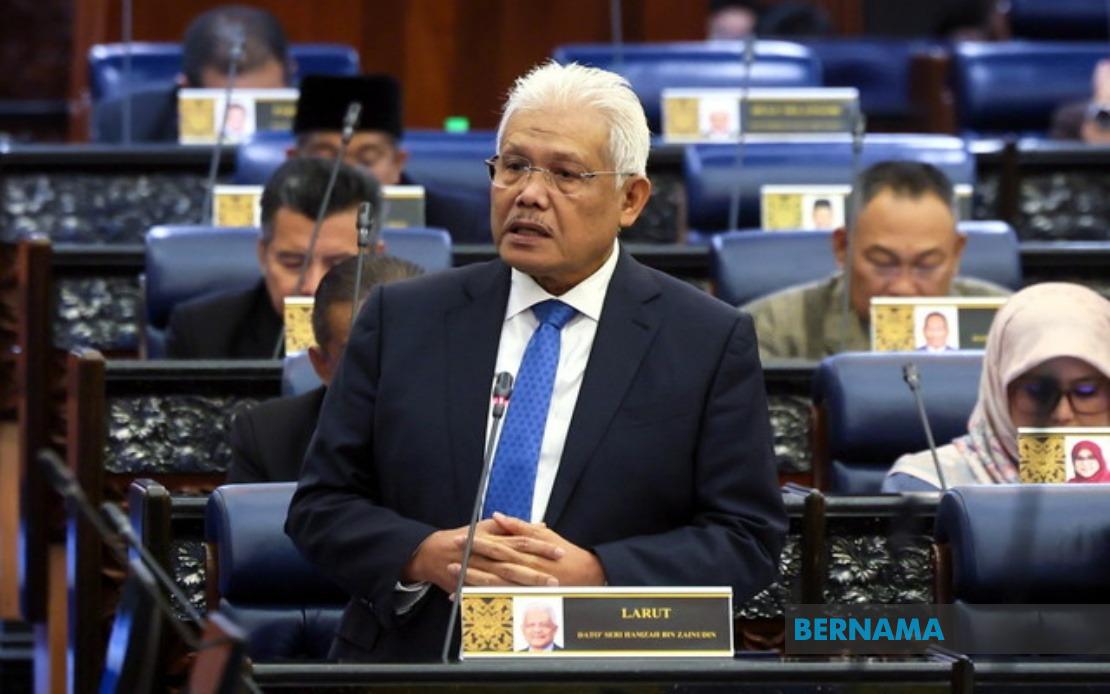
The parliamentary machinery has formally documented a change in the Opposition's leadership hierarchy, with Dewan Rakyat Speaker Tan Sri Johari Abdul providing official confirmation on June 22 that Larut MP Datuk Seri Hamzah Zainudin has resumed his position as Opposition Leader. The announcement came during the chamber's opening remarks before Oral Question Time, marking the resolution of a leadership transition that unfolded across the preceding month.
According to the Speaker's statement grounded in parliamentary developments and documented notifications considered by his office, Hamzah's tenure as Opposition Leader technically commenced on May 20, 2026. This date carries procedural significance within Malaysia's parliamentary system, as it establishes the official chronology for parliamentary records and the exercise of Opposition prerogatives within the Dewan Rakyat.
The leadership landscape shifted substantially when Kemaman MP Datuk Seri Dr Ahmad Samsuri Mokhtar assumed the Opposition Leader position beginning May 21, serving in an interim capacity until June 10. This arrangement suggests a deliberate transition rather than a direct handover, indicating that the opposition coalition required a bridging period to manage internal adjustments during this interval. Throughout his tenure, Ahmad Samsuri fulfilled the constitutional and parliamentary duties associated with the role, representing the Opposition benches during parliamentary proceedings and engaging with government on behalf of the opposition faction.
Hamzah's return to the leadership role on June 18 completed this transitional sequence, restoring continuity to the Opposition's institutional representation within Parliament. The Speaker's formal acknowledgment carries weight beyond ceremonial significance, as it establishes the official record of who holds the constitutionally recognised opposition leadership position during any given period. This matters for parliamentary procedure, media accreditation, and the practical mechanics of how opposition business is conducted within the chamber.
The Speaker took the opportunity to publicly commend Ahmad Samsuri for his service during the interim period, offering institutional appreciation for the Kemaman MP's willingness to assume the leadership mantle when circumstances required. This courtesy reflects the parliamentary tradition of recognizing individuals who step into roles requiring significant responsibility, even when those roles prove to be temporary. For Ahmad Samsuri, the experience provided direct exposure to the formal mechanisms of opposition leadership and the visibility associated with leading the parliamentary opposition.
Parliamentary procedures governing such changes fall under Standing Order 4A(3) of the Dewan Rakyat Standing Orders, the specific regulation through which the Speaker announced the status update. These standing orders provide the procedural framework for recognising and documenting shifts in opposition leadership, ensuring that such transitions receive proper parliamentary treatment and official documentation. The invocation of this specific rule underscores that the matter followed established parliamentary protocol rather than occurring through informal arrangements.
Simultaneously, the Speaker addressed a separate but significant parliamentary matter involving two separate by-elections now in prospect. Dewan Rakyat Speaker Johari confirmed that parliamentary vacancies have arisen in both the Pandan and Setiawangsa constituencies following the resignation letters submitted on May 18 by their respective representatives, Datuk Seri Rafizi Ramli and Nik Nazmi Nik Ahmad, who both voluntarily relinquished their memberships as Members of Parliament.
These dual vacancies have triggered the formal constitutional machinery for managing parliamentary seat vacancies. The Speaker stated that he has duly notified the Election Commission in accordance with Article 54(1) of the Federal Constitution, the provision that establishes the procedure for handling such situations. This notification initiates the chain of events that ultimately leads to by-elections being called for these constituencies. The timing of these notifications and the subsequent by-electoral process remains in the Election Commission's domain, but the formal notification represents a critical procedural step that cannot be reversed.
For Malaysian voters, the prospect of two simultaneous by-elections in Pandan and Setiawangsa carries considerable significance. These urban constituencies represent different demographic profiles and political dynamics. Both MPs' departures suggest that developments within these constituencies and their respective parties necessitated their withdrawal from Parliament, though the specific circumstances driving each resignation remain matters for separate analysis. The by-election campaigns will provide an opportunity for both the ruling coalition and opposition to test voter sentiment in these constituencies.
The broader parliamentary context reflects the ongoing dynamics within Malaysia's political landscape, where leadership transitions, parliamentary vacancies, and the management of opposition representation remain central features of institutional life. The confirmation of Hamzah's return as Opposition Leader, while significant, represents routine management of parliamentary structures within the framework of Malaysia's constitutional system. The simultaneous management of two parliamentary vacancies demonstrates the continuous operation of democratic procedures even as political actors navigate shifting circumstances and alignments.
These developments underscore how Malaysia's parliamentary system operates with formal procedures, institutional checks, and established protocols that structure political activity within the Dewan Rakyat. Whether addressing opposition leadership or managing parliamentary vacancies, the processes operate through defined constitutional and standing order provisions that ensure clarity and legitimacy. For observers of Malaysian politics, these announcements represent the operational machinery of parliamentary democracy functioning according to established rules and procedures.