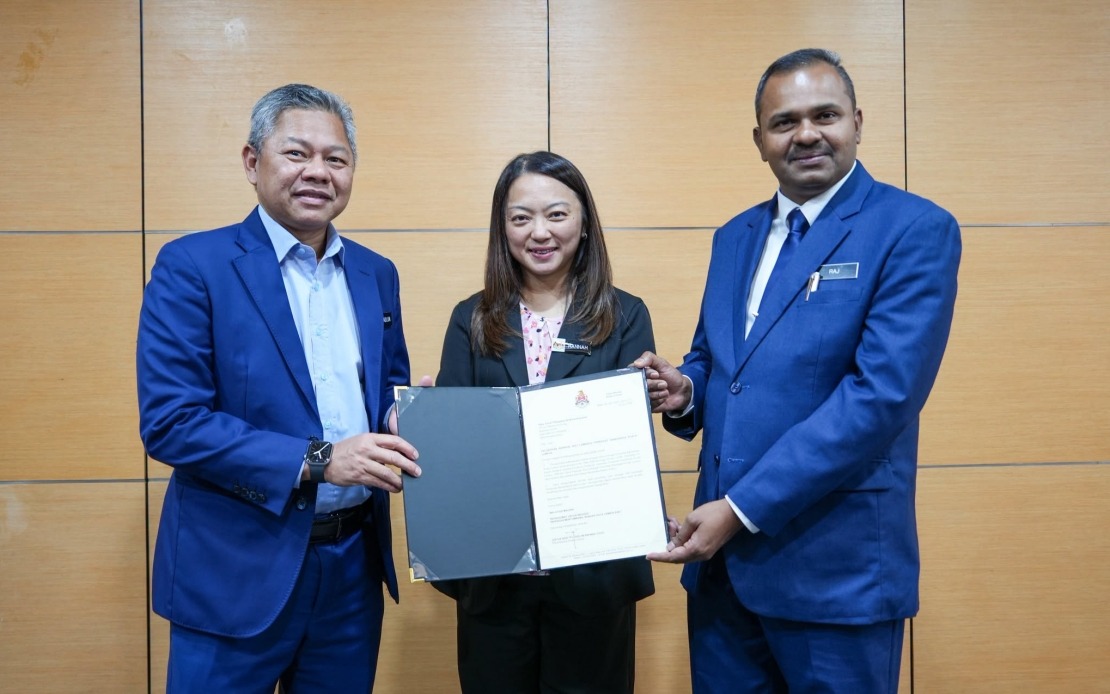
Federal Territories Minister Hannah Yeoh has thrown her support behind S. Thiyagaraj, a former corrections official who has recently been appointed to the Kuala Lumpur City Advisory Board, signalling the government's confidence in the retired bureaucrat's ability to contribute to the capital's governance framework. The appointment took place at an official ceremony in Kuala Lumpur on June 29, where Mayor Datuk Seri Fadlun Mak Ujud formally presented Thiyagaraj with his commission letter, with Hannah present to witness the milestone.
In her statement endorsing the newcomer, Hannah expressed optimism that Thiyagaraj would approach his new responsibilities with the same rigour and dedication he demonstrated throughout his career in law enforcement. She specifically called on him to exercise his duties with unwavering integrity, upholding the professional standards expected of those who advise the city's chief executive on sensitive urban management questions. Her remarks underscored the government's expectation that board appointees should serve as a reliable check on municipal decision-making, ensuring that policy initiatives align with community expectations.
Thiyagaraj brings substantial administrative experience to the advisory role, having spent nearly two decades within Malaysia's penitentiary system. From 2005 through 2023, he held progressively senior positions within the Prisons Department, eventually reaching the rank of Assistant Superintendent of Prisons. During his tenure, he specialised in technical intelligence and investigative work, roles that required him to synthesise complex information and provide strategic recommendations to senior leadership—qualifications that Hannah suggested would translate well to urban policy deliberation.
The Kuala Lumpur City Advisory Board functions as a consultative mechanism between the metropolis's administration and diverse stakeholder interests. Rather than wielding executive authority, board members are tasked with offering perspective on contentious or strategically significant questions affecting how the city operates and develops. This advisory capacity, while non-binding, carries considerable symbolic weight in a political environment where public participation in governance is increasingly expected by urban constituencies.
Hannah's comments specifically highlighted how advisory board membership carries fiduciary obligations that extend beyond ceremonial participation. She stressed that each appointee bears responsibility for enhancing the city's institutional performance across multiple dimensions—efficiency, transparency, and responsiveness to citizen concerns. These priorities reflect broader governance debates within Malaysia, where metropolitan administration has faced intermittent criticism regarding service delivery, land-use planning, and the incorporation of community feedback into major infrastructure and development decisions.
The appointment also reflects an ongoing pattern within Malaysian governance of recruiting retired public servants into advisory and consultative bodies. These individuals bring institutional knowledge and established networks that can facilitate communication between municipal agencies and the broader civic ecosystem. Thiyagaraj's background in law enforcement and intelligence work suggests the advisory board may be seeking perspectives on public order, security, and urban safety matters alongside traditional development and administrative concerns.
For Kuala Lumpur specifically, advisory board augmentation comes at a time when the capital continues expanding and wrestling with competing demands from residents, businesses, and environmental advocates. The city's rapid growth has created tension between development imperatives and livability concerns, particularly regarding traffic congestion, public transportation adequacy, green space preservation, and affordable housing availability. Board members with varied professional backgrounds are positioned to inject diverse viewpoints into municipal deliberations on these multifaceted challenges.
Hannah's public endorsement carries additional political significance given her portfolio. As Federal Territories Minister, she oversees the governance framework within which Kuala Lumpur operates, making her assessment of board member calibre a visible indicator of the ministry's commitment to strengthening institutional quality. By publicly commending Thiyagaraj's appointment, she signals to the broader public that such advisory positions are being filled through merit-based selection rather than patronage or political considerations.
Thiyagaraj's transition from corrections management to metropolitan advisory roles exemplifies how Malaysian governance increasingly draws on cross-sectoral expertise. The movement from security-focused bureaucratic work to broader urban administration represents a conscious effort to ensure that different governmental domains—law enforcement, urban planning, public services—maintain institutional coherence and mutual understanding. This appointment thus reflects an implicit recognition that effective city governance requires input from officials with varied experience across the public sector.
Looking forward, Thiyagaraj's participation will be particularly relevant as Kuala Lumpur navigates post-pandemic recovery, digital transformation of municipal services, and climate adaptation planning. His capacity to synthesise information and advise leadership, honed within the corrections system, may prove valuable in deliberating complex issues where trade-offs between competing public interests require balanced judgement. The advisory board's collective composition, enriched by such diversity of professional backgrounds, should theoretically enhance the Mayor's access to nuanced counsel on matters shaping the capital's trajectory.

