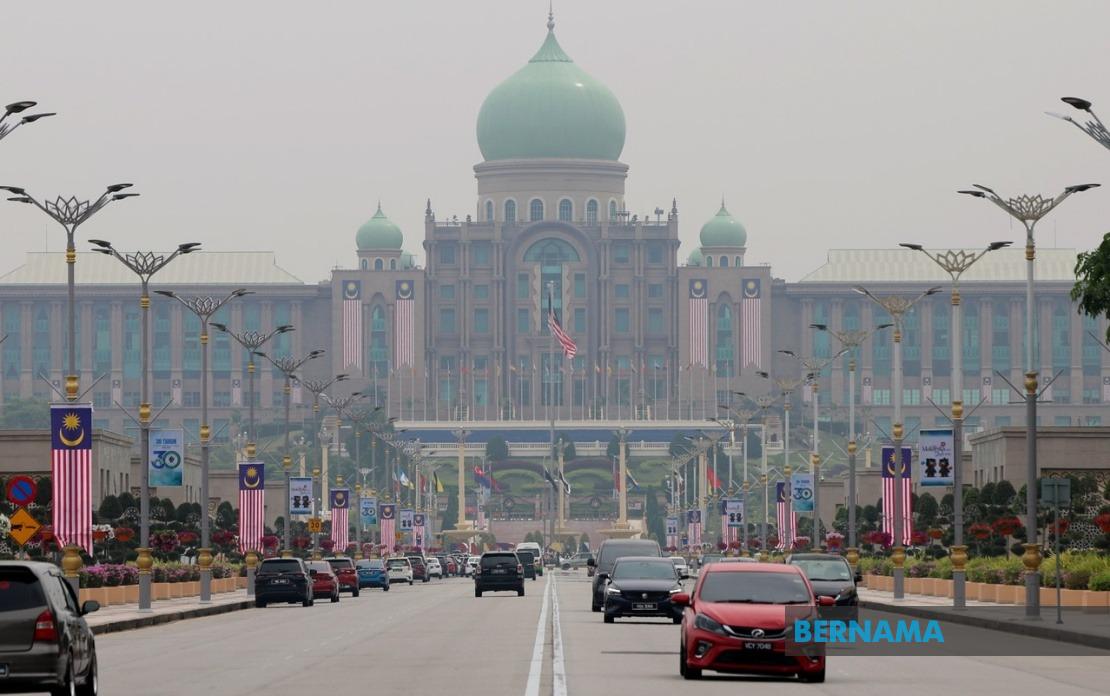
Malaysia's meteorological authorities have issued a substantial haze alert covering several key regions through the end of August, with the most severe conditions expected to blanket Sarawak as southwest monsoon winds continue to push smoke and particulates from burning hotspots across the Indonesian archipelago. The Malaysian Meteorological Department forecasts that atmospheric visibility will deteriorate markedly between now and August 31, creating potentially hazardous conditions across the peninsula and East Malaysia during a period coinciding with important national celebrations.
Dr Mohd Hisham Mohd Anip, director-general of MetMalaysia, attributed the deteriorating air quality to persistent fire activity concentrated in southern Sumatra and western Kalimantan, combined with prevailing weather patterns that funnel this pollution northward into Malaysian airspace. The department's Malaysian Community Multiscale Air Quality Model indicates that atmospheric dispersion conditions will remain constrained, preventing the natural clearing mechanisms that occasionally provide temporary relief during haze episodes.
Sarawak emerges as the region facing the gravest situation, with the forecasting model predicting that most districts will sink into the Unhealthy category on the Air Pollution Index, while certain areas may deteriorate further to Very Unhealthy levels on August 30 and 31. This represents a significant escalation of risk, particularly for vulnerable populations including children, elderly residents, and those with respiratory or cardiovascular conditions. The state's status as the primary affected zone underscores how transboundary air pollution patterns can create vastly disparate impacts across Malaysia's diverse geography.
For Sabah, haze conditions are anticipated to commence this coming Saturday and persist through the month's conclusion. On the peninsula, a chain of jurisdictions spanning the southern and central regions—encompassing Johor, Melaka, Negeri Sembilan, Selangor, the federal territories of Kuala Lumpur and Putrajaya—will experience elevated haze concentrations throughout this five-day window. The inclusion of Putrajaya, the administrative capital, carries particular significance given its status as the venue for major national ceremonies.
MetMalaysia has committed to continuous monitoring and dynamic forecasting, stating that updated predictions will incorporate real-time atmospheric observations and evolving meteorological patterns. This adaptive approach reflects the inherent uncertainties in predicting transboundary pollution episodes, which depend on variables including fire intensity across Indonesian provinces, wind speed and direction shifts, and precipitation patterns that could provide temporary cleansing of the atmosphere.
The haze situation has precipitated serious deliberations within the government regarding Malaysia's National Day observance scheduled for August 31. Communications Minister Datuk Seri Fahmi Fadzil confirmed that authorities are actively considering whether to modify the scale or venue of the celebration, reflecting concerns about both public health and the visibility conditions essential for the visual spectacle that characterizes the occasion. Such modifications would represent an extraordinary measure, given the symbolic and ceremonial importance of National Day as an annual affirmation of national identity and unity.
Prime Minister Datuk Seri Anwar Ibrahim has made public appeals for Malaysians to pray that air quality conditions remain manageable in the lead-up to both National Day and Malaysia Day on September 16, two celebrations requiring substantial operational coordination across government structures. His remarks tacitly acknowledge that despite forecasting capabilities, meteorological outcomes retain an element of unpredictability, and that the nation's capacity to proceed with outdoor celebrations depends partly on factors beyond administrative control. This invocation of prayer, alongside technical preparation, reflects the multifaceted approach required to navigate environmental crises.
The timing of this haze episode carries particular consequence for Malaysia, arriving as the nation prepares to stage two successive national commemorations that require extensive logistics, outdoor activities, and public gatherings. The interruption of these celebrations due to environmental degradation, while potentially necessary for public health, carries symbolic weight, as air pollution becomes a tangible constraint on the nation's ability to exercise civic ceremonial activities. This dynamic illuminates how transboundary environmental challenges directly intersect with political and social functions.
Regionally, this episode exemplifies the chronic vulnerability of Malaysia and Southeast Asia to Indonesian transboundary haze pollution, a phenomenon recurring with seasonal regularity during the dry season when agricultural burning and forest fires intensify. Despite years of diplomatic engagement and regional frameworks including ASEAN agreements on transboundary haze, the underlying drivers—agricultural land conversion, inadequate fire prevention infrastructure in Indonesian provinces, and limited enforcement of environmental regulations—persist substantially unchanged. Malaysia remains structurally dependent on Indonesian cooperation and forest management for mitigation.
For Malaysian residents and businesses, the unfolding situation demands practical adaptation. Individuals should monitor air quality indices released by MetMalaysia, restrict outdoor activities during peak pollution hours, and ensure access to protective equipment for vulnerable groups. Employers must evaluate workplace safety, particularly for sectors requiring outdoor operations. The economic costs of haze episodes—encompassing health expenditures, reduced productivity, tourism disruption, and transportation delays—accumulate silently even as public attention fluctuates.
The convergence of environmental crisis, public health risks, and national ceremonial obligations presents policymakers with complex trade-offs. Cancelling or relocating National Day celebrations appears premature given remaining forecast uncertainty, yet proceeding with outdoor events during Unhealthy air quality levels creates defensible public health objections. This tension between normalcy and adaptation has become routine during Malaysia's haze seasons, reflecting the integration of environmental constraints into the annual national calendar.

