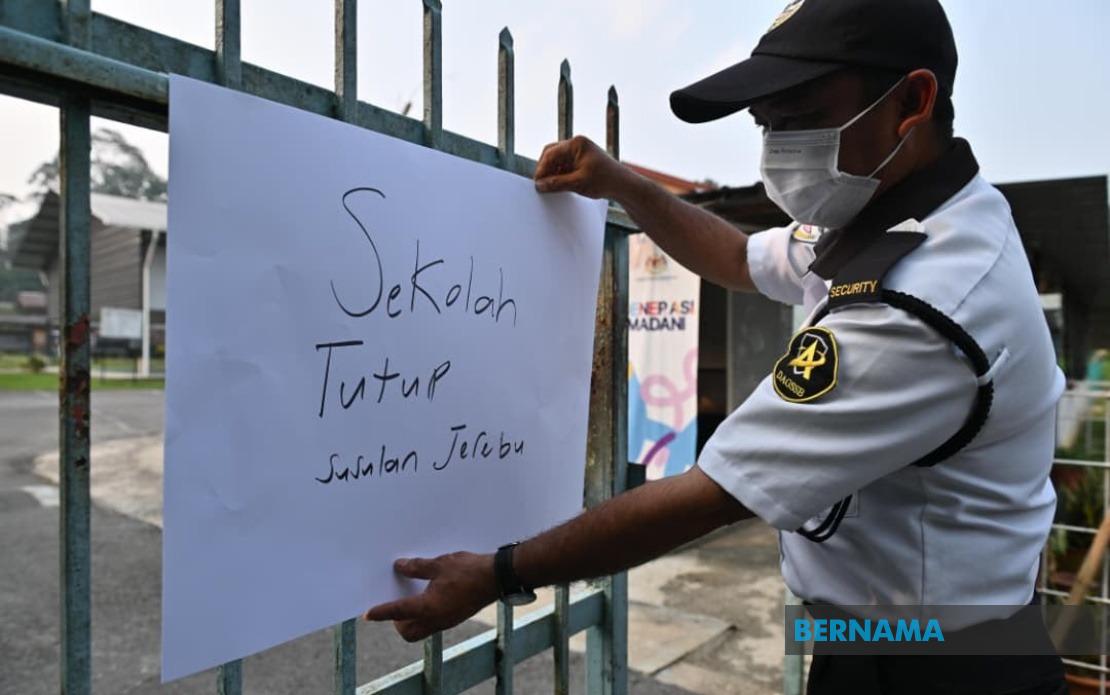
The Serian district in Sarawak has become the focal point of a serious air quality emergency, forcing education authorities to close 108 schools as a precautionary health measure. This action came after the Air Pollutant Index (API) readings in the area surged beyond the 200 threshold, crossing into the very unhealthy category. The Sarawak State Disaster Management Committee confirmed the closures were implemented in accordance with the National Haze Action Plan to protect students and educators from exposure to hazardous atmospheric conditions that pose demonstrable risks to respiratory function and overall well-being.
The decision to suspend regular classroom operations does not mean learning comes to a halt. Instead, educational continuity is being maintained through Home-Based Teaching and Learning, commonly referred to as PdPR in Malaysian education terminology. This shift to remote instruction represents an established protocol that state education authorities activate whenever air quality deteriorates beyond safe thresholds. The arrangement ensures that curriculum progression continues uninterrupted despite the closure of physical school premises, though it does place additional burdens on both educators and families managing the transition from traditional to digital learning environments.
Understanding the API scale is crucial to grasping the severity of the current situation. The index functions as a standardised measurement tool, with readings of zero to 50 indicating good air quality suitable for unrestricted outdoor activity. Moderate air quality exists between 51 and 100, while unhealthy conditions range from 101 to 200. The very unhealthy category spans 201 to 300, and anything exceeding 300 is classified as hazardous. The fact that Serian and Tebedu have recorded readings of 202 and 212 respectively places them squarely in the very unhealthy bracket, triggering automatic school closures under established guidelines.
The haze situation affecting Sarawak has developed gradually over the past month, with air quality showing a consistent deterioration pattern since August 1. As of mid-afternoon on August 12, the state presented a mixed but concerning air quality picture. Beyond the two areas in the very unhealthy category, eleven additional districts were classified as unhealthy, including major population centres like Kuching, Sibu, and Miri. This widespread impact suggests the haze affecting Sarawak represents not a localised phenomenon but a regional atmospheric issue affecting multiple sectors of the state simultaneously.
Districts currently recording unhealthy API readings include Kuching, Samarahan, Sri Aman, Sarikei, Sibu, Bintulu, Samalaju, Miri, Lundu, Lubok Antu, and Lawas. The geographic spread of these affected areas, extending from coastal zones to inland regions, indicates that the pollution originates from sources capable of dispersing across considerable distances. For residents and decision-makers throughout Sarawak, this broad distribution suggests the haze situation could persist and potentially worsen depending on wind patterns, atmospheric conditions, and the continued emission of pollutants from source areas.
Public health advisories have been issued urging residents to modify their daily routines in response to deteriorating air quality. The recommendations target particularly vulnerable populations, including children whose lungs are still developing, elderly persons with declining respiratory capacity, pregnant women whose bodies are undergoing physiological stress, and individuals already managing chronic respiratory or cardiovascular conditions. For these groups, exposure to air pollutants can exacerbate existing health complications or trigger acute medical episodes. The general population is similarly advised to minimise outdoor activities, particularly during peak pollution hours when API readings are highest.
The closure of schools in Serian represents a tangible manifestation of how transboundary air pollution—a persistent regional challenge in Southeast Asia—disrupts essential services and affects vulnerable populations. Sarawak has repeatedly experienced haze episodes originating from Indonesian territory, particularly during dry seasons when agricultural burning and forest fires intensify. While the source of the current episode has not been explicitly stated in official communications, the timing and pattern are consistent with known seasonal haze dynamics affecting the broader Borneo region. This recurring challenge underscores the need for sustained regional cooperation on air quality management and emission control.
The Sarawak State Disaster Management Committee has emphasised the importance of accessing information through official government channels, cautioning the public against sharing unverified claims or speculation regarding the haze situation. This guidance reflects a broader concern about misinformation during environmental emergencies, where social media amplification of exaggerated or inaccurate reports can trigger unnecessary panic or inappropriate responses. In an interconnected digital environment, citizens play a crucial role in preventing the spread of false information that could undermine public trust in official institutions or lead to economically disruptive decisions based on faulty premises.
For Malaysian readers, particularly those in Sabah and Peninsular Malaysia, the Sarawak haze situation carries instructive implications. Atmospheric pollution does not respect state or national boundaries, and episodes affecting Sarawak today could potentially influence air quality in other parts of Malaysia under certain meteorological conditions. The coordinated response mechanism demonstrated through school closures and remote learning provisions represents a model that other Malaysian states might study and adapt. Furthermore, the persistence of haze events despite periodic regional discussions about emission control underscores the need for stronger enforcement mechanisms and transnational frameworks to address what remains one of Southeast Asia's most visible environmental challenges.

