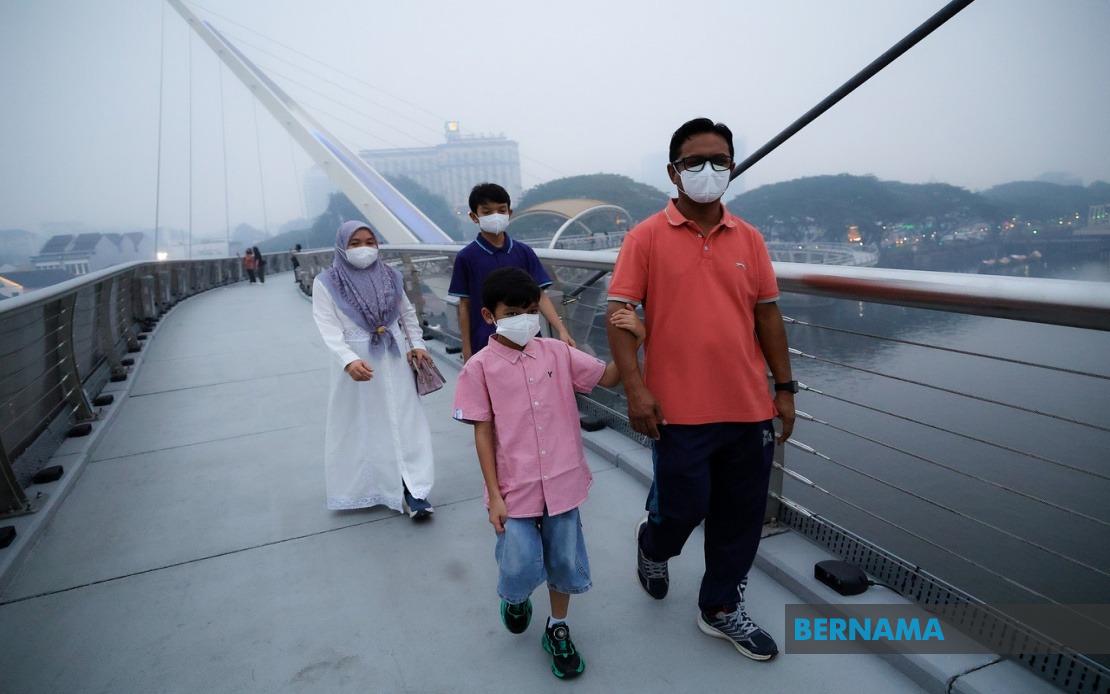
As haze blankets the region once again, health professionals are emphasising the importance of staying informed about air quality conditions and adopting preventive health measures to shield the public from escalating respiratory complications. The warnings come amid rising health impacts being recorded across sentinel healthcare facilities, with medical experts calling for greater public vigilance and preparedness.
Dr Anas Ahmad Jamhari, a lecturer at the Faculty of Health Sciences at Universiti Sultan Zainal Abidin, stressed that citizens should make checking the daily Air Pollutant Index readings from the Department of Environment a routine practice before engaging in any outdoor pursuits. The Department of Environment issues these measurements regularly, providing critical guidance for activity planning. The threshold of particular concern sits at 100 and beyond, when outdoor activities become riskier propositions for vulnerable segments of the population.
For individuals who must venture outside for essential obligations, Dr Anas emphasised that N95 masks represent the gold standard in personal protective equipment when used with meticulous attention to proper fitting. The mask's efficacy hinges critically on correct application and maintaining an airtight seal against the face, a requirement often overlooked in practical settings. Fine particulate matter, specifically PM2.5 particles, penetrates deep into the respiratory tract and constitutes the primary health hazard during haze episodes. However, the protective benefit diminishes substantially if the mask sits loosely, gets removed frequently, becomes damp, sustains damage, or when facial hair compromises the seal integrity. Children face additional complications, as appropriately sized masks for their smaller faces prove difficult to obtain, frequently failing to establish the necessary sealing contact required for filtration.
The lecturer cautioned against maintaining regular exercise routines during unhealthy air quality periods. Activities such as jogging, cycling, and competitive sports elevate breathing rates, causing individuals to draw in significantly larger volumes of contaminated air. This increased respiratory ventilation during physical exertion allows substantially greater quantities of harmful fine particles to penetrate the respiratory system, intensifying exposure to the pollutants responsible for both immediate acute reactions and longer-term chronic health deterioration. Despite widespread awareness campaigns, many residents continue pursuing outdoor physical activities even when air quality metrics have officially transitioned into the unhealthy category, thereby unnecessarily amplifying their personal health risks.
Within domestic spaces, Dr Anas recommended maintaining sealed windows and doors to minimise external pollutant infiltration. Simultaneously, households should eliminate internal pollution sources that compound haze exposure, encompassing cigarette and vaping products, incense burning, scented candle usage, and cooking methods that generate substantial smoke accumulation. Vehicle air-conditioning systems require attention as well; operators should configure these systems to recirculate cabin air rather than drawing in external atmosphere, thereby reducing pollutant ingress during transit through affected areas. Open burning practices, whether agricultural or otherwise, demand immediate cessation as they directly contribute to the haze phenomenon affecting entire communities.
From a toxicological standpoint, haze presents far greater complexity than simple visible smoke that merely reduces sight lines. The atmospheric mixture comprises diverse particles and chemical compounds whose health implications vary significantly. The particular threat from fine PM2.5 particles stems from their diminutive size, enabling them to bypass upper respiratory defences and lodge deep within the lungs. Once these particles settle in the respiratory system, they initiate oxidative stress mechanisms, triggering inflammatory cascades that produce cell damage and functional impairment throughout the respiratory apparatus. This biochemical cascade creates cascading health consequences extending beyond temporary discomfort.
Public health specialist Datuk Dr Zainal Ariffin Omar expanded the analytical framework beyond simple API metrics, introducing environmental temperature and humidity as equally significant variables during haze episodes. These meteorological factors interplay with air quality measurements to create compound health stressors requiring holistic consideration. Adequate hydration becomes particularly crucial during haze events occurring concurrently with elevated temperatures, as the dual pressure from polluted air and heat exposure dramatically escalates heatstroke and dehydration risks. The intersection of El Niño weather patterns bringing elevated temperatures with seasonal haze creates what medical professionals characterise as a compounded threat environment, demanding comprehensive public health responses addressing both air quality and thermal stress rather than narrowly focusing exclusively on API figures.
Dr Zainal Ariffin cautioned against perceiving haze as merely a seasonal inconvenience that allows communities to maintain routine behaviours unchanged. This normalisation approach undermines preparedness for subsequent episodes, as public readiness diminishes during inter-haze periods. He advocated for continuous reinforcement of public awareness utilising simplified, readily comprehensible messaging that encourages protective behaviour initiation before air quality deteriorates to critical levels. Delayed action until API readings reach severe thresholds represents a reactive stance that medical professionals argue should be replaced with anticipatory measures triggered earlier in pollution cycles.
Recent Health Ministry data underscore the escalating health impact being registered across healthcare surveillance systems. Asthma case presentations at sentinel medical facilities experienced a more than eightfold surge, climbing from 219 documented cases in the preceding epidemiological week to 1,811 cases during Epidemiological Week 34. Conjunctivitis presentations similarly demonstrated concerning upward trajectories, rising from 146 cases to 720 cases within the same comparative period. These clinical indicators represent concrete manifestations of the population-level health burden being imposed by current atmospheric conditions, translating expert warnings into measurable healthcare demand that hospital systems must accommodate.

