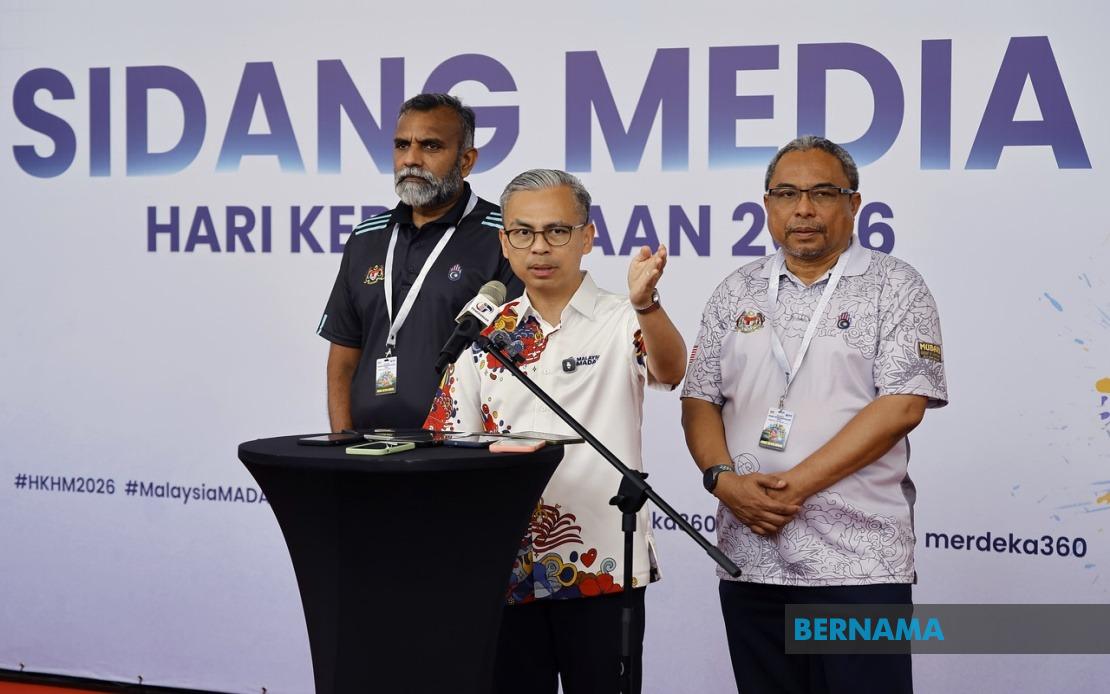
Organisers of Malaysia's 2026 National Day celebrations have issued guidance recommending that visitors to the flagship event at Dataran Putrajaya wear N95 masks to mitigate health risks from ongoing haze affecting the region. The advisory, issued by Communications Minister Datuk Seri Fahmi Fadzil who chairs the main organising committee for the National Day and Malaysia Day festivities, aligns with directives from the Ministry of Health and is particularly directed at vulnerable populations including young children, elderly citizens, and those with respiratory conditions such as asthma.
The decision to provide protective equipment reflects a measured approach to public health management during the celebrations. Rather than mandating mask-wearing for all attendees, the organisers have opted for a voluntary advisory system that respects individual choice while ensuring that protective measures remain available. The committee has procured N95 masks for distribution to more than 10,000 participants involved in various capacities during the event, ranging from performers and ceremonial participants to support staff and volunteers. This stockpiling of protective equipment demonstrates the organisers' commitment to maintaining participant health without introducing overly restrictive measures that could diminish the celebratory atmosphere of the national occasion.
Parental awareness has been highlighted as a key component of the health strategy. The minister specifically encouraged parents accompanying young children to equip themselves with N95 masks, acknowledging that younger age groups may experience greater susceptibility to haze-related respiratory effects. Similarly, individuals with pre-existing respiratory conditions have been identified as requiring enhanced protection, with the implicit recommendation that such persons consider masks as essential rather than optional precautions. This stratified approach to health advice recognises that risk levels vary considerably across the population, allowing resources and messaging to be appropriately targeted.
Medical infrastructure has been substantially mobilised to support the celebrations. The Ministry of Health has established medical bases at multiple strategic locations throughout Dataran Putrajaya, staffed with qualified doctors capable of responding to health emergencies with minimal delay. These medical stations represent a significant commitment to participant welfare and reflect lessons learned from previous large-scale public gatherings. According to Minister Fahmi, the medical bases had been functioning without reported incidents as of the dress rehearsal stage, suggesting that planning and coordination between healthcare authorities and event organisers has been thorough and effective.
The full dress rehearsal conducted ahead of the main event proceeded without complications, providing event planners with confidence that operational procedures and contingency arrangements are functioning as designed. The successful rehearsal constituted a critical test of coordination among multiple government agencies and private contractors, demonstrating that the complex logistics required for a national-scale celebration can be executed smoothly. This positive outcome suggests that participants can reasonably expect a well-managed event with appropriate safety protocols.
Medial coverage of the 2026 celebrations will expand significantly compared to previous years, with 823 journalists now accredited to cover the festivities compared to approximately 600 in 2025. This substantial increase in media presence reflects growing national and international interest in Malaysia's marquee national occasion. The expanded media contingent places additional demands on communications infrastructure, particularly internet connectivity, which remains essential for modern news operations requiring real-time transmission of content to outlets worldwide.
Infrastructure enhancements have been implemented to accommodate expanded media coverage and general communications demands. The Malaysian Communications and Multimedia Commission, working in coordination with the Network Monitoring Centre and private telecommunications providers, has installed supplementary communications equipment at 102 locations across the celebration venues. These installations are designed to ensure seamless mobile network coverage and high-speed internet access throughout Dataran Putrajaya, eliminating potential bottlenecks that could otherwise compromise media operations or public communications during the event. The proactive deployment of this infrastructure underscores recognition that modern national celebrations are inherently digital events requiring robust technical support.
Security arrangements have been implemented to maintain public order throughout the festivities. The Royal Malaysia Police has maintained close monitoring of the venue and surrounding areas, with authorities reporting that no significant security incidents have emerged requiring urgent intervention. The statement that public order is being maintained and no issues have surfaced reflects confidence that the security framework is operating effectively. This reassurance is particularly important given Malaysia's experience with large public gatherings and the need to balance open, celebratory atmosphere with appropriate safety precautions.
The haze that prompted the health advisory represents a recurring environmental challenge for Malaysia and Southeast Asia generally. Transboundary air pollution originating from regional sources periodically impacts air quality across the peninsula, necessitating adaptive responses from health and event management authorities. The decision to proceed with celebrations while implementing health precautions reflects a pragmatic approach that acknowledges environmental realities without allowing external challenges to derail national commemorations. For Malaysian readers and regional observers, the measures adopted during the 2026 National Day serve as a case study in balancing public health requirements with the cultural and political imperative to celebrate national identity.
The comprehensive preparation evident in the health, security, media, and communications arrangements suggests that Malaysian authorities have invested substantially in ensuring the 2026 National Day celebrations meet international standards for large-scale public events. The inclusion of contingency measures, pre-event rehearsals, and coordination across multiple government ministries demonstrates institutional capacity for complex event management. As haze remains an intermittent challenge throughout Southeast Asia, the protocols established for these celebrations may serve as a template for future major public gatherings across the region.

