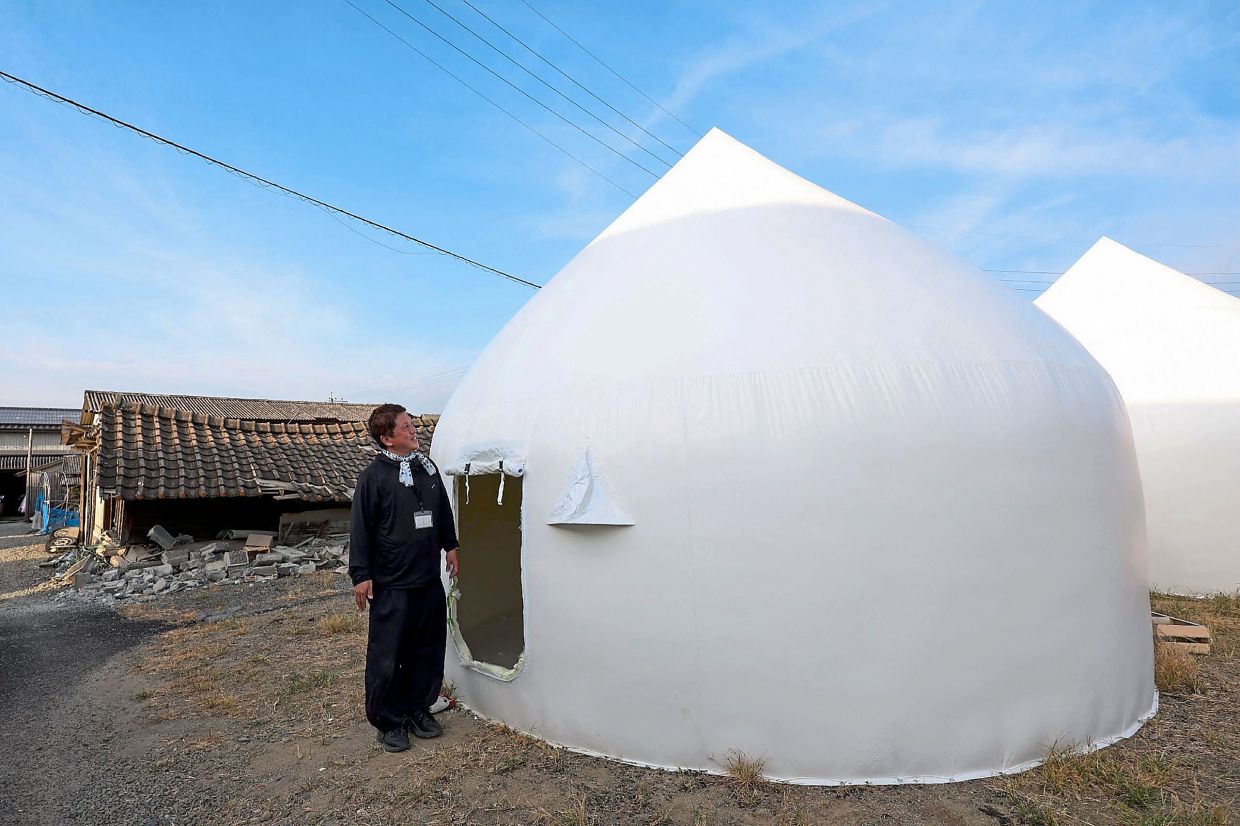
The death toll from the devastating magnitude 7.1 earthquake that struck Kumamoto Prefecture on Japan's southern island of Kyushu last Tuesday has climbed to 36, with an elderly woman in her 70s becoming a victim not of the quake itself but of the punishing heat that has compounded the disaster's aftermath. Found dead on Thursday in a parked car devoid of fuel, the woman represents the precise calamity that emergency management officials and public health experts had warned against as the region sweltered under extreme temperatures exceeding 36 degrees Celsius. Her death illustrates a grim reality unfolding across much of disaster-affected southwestern Japan: the immediate geological catastrophe has given way to a secondary crisis of heat-related illness among a displaced and exhausted population struggling to survive in inadequate conditions.
The circumstances surrounding her death highlight the desperate measures some survivors have taken in the absence of sufficient shelter infrastructure. With over 9,000 people crowded into emergency evacuation centres—many of them converted community halls, school gymnasiums, and classrooms without adequate air-conditioning—residents have increasingly sought privacy and escape from overcrowded conditions by sheltering in their vehicles. What appeared to be a temporary refuge became a fatal trap when the vehicle ran out of fuel and the air-conditioning ceased operating. Kumamoto Governor Takashi Kimura responded with anguish at the incident, issuing an urgent appeal to car-dwelling evacuees to maintain their vehicles with sufficient petrol to keep cooling systems running or to relocate to air-conditioned evacuation centres where at least environmental conditions could be managed.
The prefecture's authorities have begun circulating informational pamphlets warning shelter residents about the specific dangers posed by the combination of displacement stress and extreme weather. The materials urge evacuees to remain in cool environments, consume adequate fluids to maintain hydration, and engage in regular physical movement to prevent blood clotting complications that can develop during prolonged periods of immobility—a condition Japanese authorities refer to as "economy class syndrome," which poses particular risk to elderly disaster victims confined to limited spaces. These precautions represent the emerging recognition that disaster management must now address a dual catastrophe: the structural and immediate human toll of the earthquake itself, compounded by environmental factors that transform inadequate shelter into a life-threatening scenario.
The scale of infrastructure damage throughout the prefecture remains staggering. Search and rescue operations concluded on Saturday at Aeon Mall in the town of Kashima, one of the most severely affected sites, after extracting five survivors and recovering seven bodies from the collapsed structure. The mall's second floor gave way following an explosion that authorities believe originated from a gas leak occurring after approximately 3,000 shoppers had been evacuated to the parking area. Some employees remained inside the building when the explosion occurred, turning the mall into a secondary disaster zone within the primary catastrophe. Across the entire prefecture, preliminary damage assessments indicate that over 180 homes have been completely destroyed and more than 3,800 buildings suffered significant damage, disrupting utilities and essential services for hundreds of thousands of residents.
Utility failures are compounding the heat crisis substantially. Nearly 47,000 households remain without access to fresh water supplies, forcing survivors to depend on emergency distributions and limiting their ability to maintain basic hygiene and hydration during extreme heat conditions. Simultaneously, fuel shortages have afflicted the region, restricting people's capacity to run vehicles for air-conditioning and hindering the delivery of aid supplies to outlying communities. These cascading infrastructure failures have transformed Kumamoto into a region where the basic requirements for surviving extreme weather—water, electricity, and fuel—are acutely scarce, creating a multiplier effect on health risks. Japan's meteorological agency recorded temperatures reaching 36.6 degrees Celsius in Kumamoto city on Saturday alone, with forecasts suggesting even higher readings in subsequent days, placing unprecedented pressure on a population already traumatised and exhausted from the earthquake's immediate impacts.
Prime Minister Sanae Takaichi acknowledged the critical nature of conditions during a government task force meeting on Saturday, committing to accelerated delivery of essential supplies and infrastructure improvements to evacuation facilities. Water shipments, food provisions, portable toilet facilities, and air-conditioning units are being dispatched to evacuation centres, alongside privacy partitions intended to alleviate the psychological strain that experts have long identified as a consequence of Japan's densely packed emergency shelter system. Disaster management specialists have repeatedly criticised the crowded conditions prevalent at Japanese emergency shelters, arguing that inadequate sanitation, lack of privacy, and stress-inducing environments collectively elevate health risks beyond the immediate physical injuries caused by the disaster itself. The combination of these factors creates conditions where secondary health crises—heat stroke, infections, psychiatric episodes, and cardiovascular events—can prove as fatal as the original catastrophe.
The search for missing persons continues with significant resource deployment, including thousands of personnel from the Self Defence Forces, police departments, rescue organisations, and search dogs systematically combing through debris fields and collapsed structures. The total number of missing individuals remains officially undetermined as rescue operations press forward, with each day of extreme heat adding urgency to the recovery efforts and increasing the risk that survivors buried in rubble face dehydration and heat-related complications before rescue teams can reach them. This dimension of the disaster—the intersection of ongoing rescue operations and extreme environmental conditions—represents a uniquely challenging scenario that tests Japan's emergency management protocols beyond their typical parameters.
Beyond the direct casualties from earthquake trauma and secondary heat-related deaths, authorities are investigating two additional fatalities to determine whether they should be classified as earthquake-related, potentially raising the confirmed death toll further. The confirmed injury count stands at 105 people, with many others experiencing ongoing health complications from stress, displacement, and inadequate living conditions. For Malaysia and Southeast Asian observers, the Kumamoto disaster offers sobering lessons about disaster preparedness in contexts where extreme heat represents a permanent environmental factor rather than a seasonal consideration. As climate patterns intensify across the region and earthquakes remain an ever-present geological reality, the Kumamoto experience demonstrates that comprehensive disaster response infrastructure must anticipate and mitigate secondary health crises with equal urgency as immediate search and rescue operations.

