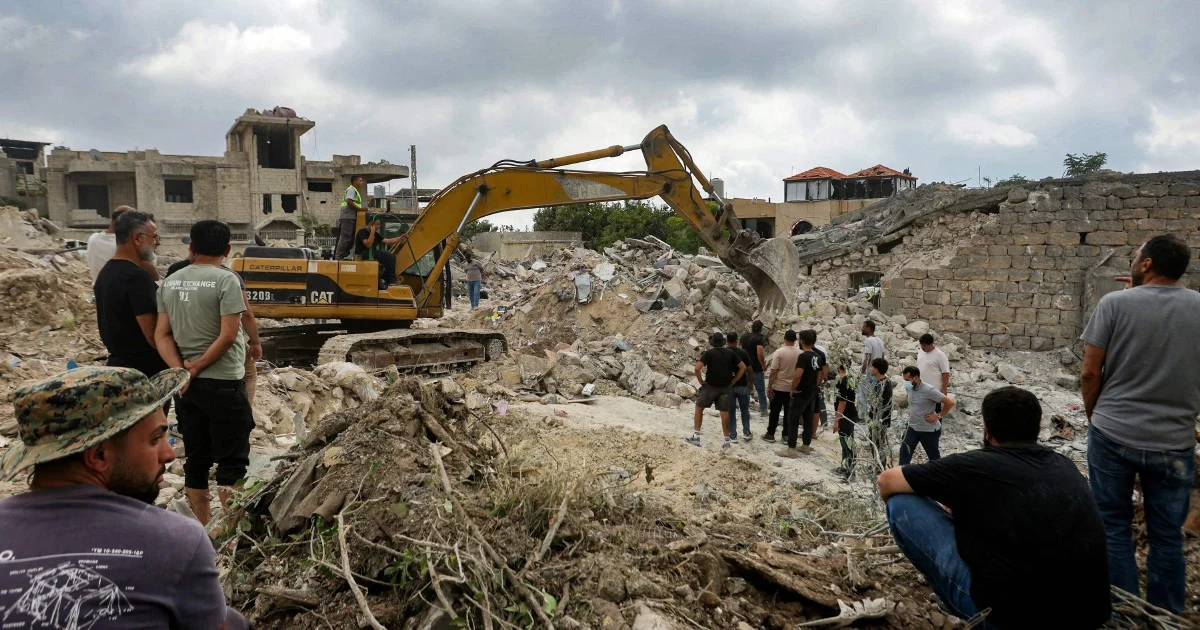
Hezbollah's political and spiritual leader Naim Qassem moved swiftly to counter Prime Minister Benjamin Netanyahu's assertion that Israeli forces would maintain a prolonged presence in southern Lebanon, declaring on Sunday that his organization would not tolerate any Israeli security arrangements or military installations on Lebanese soil. The stark rejection underscores the deepening friction between Israel and the Shia militant group over the future security architecture of Lebanon's border region, a flashpoint that has repeatedly threatened regional stability.
Netanyahu's declaration that Israeli troops would occupy southern Lebanese territory "as long as necessary" represents an open-ended commitment to maintaining boots on the ground in a country already fractured by poverty, political dysfunction, and armed conflict. The Israeli prime minister's framing of the deployment as essential to national security reflects Tel Aviv's longstanding concerns about cross-border attacks and the military capabilities accumulated by Hezbollah near the Israeli frontier. For decades, Hezbollah has operated with impunity in these border areas, establishing command structures and weapons caches that Israeli security planners view as an existential threat.
Qassem's categorical rejection signals that Hezbollah, despite military setbacks in recent months, maintains a hardline posture on Lebanese sovereignty and the military balance of power in the south. The organization, which evolved from a ragtag militia in the 1980s into a sophisticated fighting force with an estimated 100,000 to 150,000 fighters, has consistently framed Israeli military actions as violations of Lebanese territorial integrity. This nationalist framing resonates beyond Hezbollah's own base, allowing the group to position itself as a defender of Lebanese interests rather than merely a Shia political movement.
The dispute over a security zone carries historical weight in Lebanese memory. Israel previously occupied a "security zone" in southern Lebanon from 1982 to 2000, a period marked by civilian suffering, clandestine operations, and cycles of retaliation. That occupation became a rallying point for Lebanese resistance movements and contributed to Hezbollah's consolidation of power among Shia communities. The prospect of a renewed Israeli military presence therefore triggers profound anxiety among Lebanese policymakers and ordinary citizens who view such arrangements as violations of national sovereignty and harbingers of renewed conflict.
The current impasse reveals the fragility of any ceasefire or settlement in the region. While international mediators, particularly the United States and France, have attempted to broker arrangements that would satisfy Israeli security demands while respecting Lebanese sovereignty, fundamental gaps remain between the parties. Netanyahu's public commitment to indefinite occupation contradicts the implicit understanding that Israeli withdrawal would follow once threats are neutralized, whereas Hezbollah's rejection of any arrangement suggests the organization intends to retain military capabilities in the south regardless of diplomatic outcomes.
For Malaysia and other Southeast Asian nations, this confrontation illustrates the persistent challenge of managing cross-border security threats without resorting to unilateral military occupation. The Lebanese situation presents a cautionary template: asymmetric conflicts between state militaries and non-state armed groups rarely find resolution through extended occupation alone, particularly when the occupying force lacks international legitimacy or domestic support in the occupied territory. Regional governments concerned about militant groups operating near their borders might study Lebanon's experience to identify more sustainable approaches to security cooperation and conflict management.
Hezbollah's institutional position complicates the security calculus further. The organization functions simultaneously as a political party with parliamentary representation, a social service provider, and a military force. This multi-layered presence means that any Israeli military campaign or occupation affects not merely Hezbollah's armed wing but also the civilian welfare systems and political infrastructure that millions of Lebanese depend upon. Such interconnection transforms security operations into contests over state legitimacy and social provision, not merely military matters.
The organization's rejection also reflects Hezbollah's assessment of its current military capacity and political leverage. Recent airstrikes and ground operations have degraded but not dismantled Hezbollah's capabilities, and the group evidently calculates that it retains sufficient military strength to make an Israeli occupation costly and unsustainable over time. Lebanese domestic politics, meanwhile, remain fractured, with Hezbollah commanding substantial parliamentary influence despite widespread public discontent over corruption and economic mismanagement. This political foothold allows Hezbollah to shape any negotiated settlement and resist arrangements that would diminish its position.
The international dimension of this dispute cannot be overlooked. Regional powers including Iran, which provides Hezbollah with financial and military support, and Saudi Arabia, which seeks to contain Iranian influence, will closely monitor developments and likely attempt to shape outcomes through proxy actors and diplomatic channels. Similarly, the United States and European nations have strategic interests in Lebanese stability and Israeli security. These competing external interests create a crowded diplomatic field where bilateral negotiations between Lebanon and Israel prove insufficient.
Moving forward, the situation remains volatile and unpredictable. Qassem's rejection does not necessarily preclude negotiations or backroom compromises, but it signals that any solution must preserve meaningful Lebanese sovereignty and Hezbollah's institutional presence. Netanyahu's insistence on extended occupation seems equally rigid. This collision of incompatible demands suggests that the underlying security dilemma—Israel's fear of Hezbollah military buildup and Hezbollah's determination to maintain deterrent capabilities—remains fundamentally unresolved. Regional observers should anticipate prolonged tensions, periodic military escalations, and potential humanitarian consequences for Lebanese civilians caught between these opposing strategic visions.
%22%2F%3E%3C%2Fpattern%3E%3C%2Fdefs%3E%3Crect%20width%3D%22100%25%22%20height%3D%22100%25%22%20fill%3D%22url(%23ph1dyt3g)%22%2F%3E%3Crect%20width%3D%22100%25%22%20height%3D%22100%25%22%20fill%3D%22url(%23ph1dyt3p)%22%2F%3E%3Ctext%20x%3D%2250%25%22%20y%3D%2250%25%22%20text-anchor%3D%22middle%22%20dominant-baseline%3D%22central%22%20fill%3D%22rgba(255%2C255%2C255%2C0.95)%22%20font-family%3D%22Georgia%2C%20'Times%20New%20Roman'%2C%20serif%22%20font-weight%3D%22700%22%20font-size%3D%22170%22%20letter-spacing%3D%22-0.02em%22%3ESelangor%3C%2Ftext%3E%3C%2Fsvg%3E)
%22%2F%3E%3C%2Fpattern%3E%3C%2Fdefs%3E%3Crect%20width%3D%22100%25%22%20height%3D%22100%25%22%20fill%3D%22url(%23ph3uv4ig)%22%2F%3E%3Crect%20width%3D%22100%25%22%20height%3D%22100%25%22%20fill%3D%22url(%23ph3uv4ip)%22%2F%3E%3Ctext%20x%3D%2250%25%22%20y%3D%2250%25%22%20text-anchor%3D%22middle%22%20dominant-baseline%3D%22central%22%20fill%3D%22rgba(255%2C255%2C255%2C0.95)%22%20font-family%3D%22Georgia%2C%20'Times%20New%20Roman'%2C%20serif%22%20font-weight%3D%22700%22%20font-size%3D%22272%22%20letter-spacing%3D%22-0.02em%22%3EQatar%3C%2Ftext%3E%3C%2Fsvg%3E)