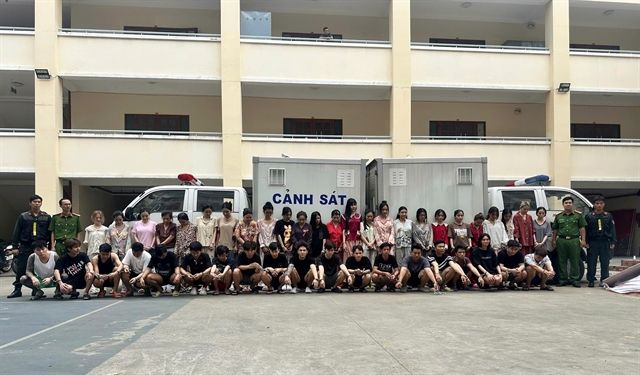
Vietnamese authorities in Ho Chi Minh City have dismantled a sophisticated criminal network distributing electronic cigarettes spiked with etomidate, a powerful surgical anaesthetic, resulting in the arrest of 49 individuals including four foreign nationals. The operation, disclosed by the city's drug investigation police division, represents a significant escalation in authorities' efforts to combat an emerging drug-delivery method that targets young Vietnamese consumers through deceptively marketed products.
The scale of the confiscation underscores the operation's success: police seized 1,670 vape pods during raids across the metropolis, alongside substantial quantities of additional narcotics including hundreds of grams of ketamine and methamphetamine. The recovery of these quantities indicates the network operated at a considerable scale, suggesting distribution well beyond a single neighbourhood or venue. Among those detained were two South Korean nationals, one Chinese national, and one Cambodian national—a composition reflecting the transnational nature of drug trafficking networks operating across Southeast Asia.
Etomidate occupies a unique position in the criminal drug landscape. Classified as a short-acting intravenous sedative legitimate only in controlled surgical settings administered by anaesthetists, Vietnam's government added it to the official controlled substances list in January, effectively criminalizing its non-medical manufacture and sale. The substance poses particular dangers when inhaled through vaporized forms because it bypasses normal metabolic pathways, crossing lung tissue directly into the bloodstream and reaching the brain within seconds—a mechanism fundamentally different from conventional drugs and creating unpredictable physiological responses.
The marketing strategy employed by traffickers reveals sophisticated understanding of youth consumer psychology. Drug-laced pods were packaged under innocuous-sounding brand names including "chill pod," "relaxation pod," "sleep-well pod," and "fly pod"—terminology designed to normalize the products and appeal to young people seeking stress relief or novel experiences. Distribution occurred through venues frequented by younger demographics: bars, karaoke establishments, rental apartments, and similar social spaces where peers influence consumption decisions and enforcement scrutiny may be lighter than in more formal commercial settings.
The investigation's genesis demonstrates how law enforcement often begins with single leads that unravel larger conspiracies. Police received information regarding a man operating on An Duong Vuong Street in An Lac Ward using the nickname Ba Giá. Subsequent identification revealed this individual as Nguyen Huu Huan, a 28-year-old from Dong Thap province in the Mekong Delta region. When authorities apprehended Huan and his wife, Ngo Thi Kim Chi, on June 25, they discovered evidence of direct retail transactions with customers like Tran Phuc, establishing the supply chain's final retail layer.
Further investigation exposed the network's structural complexity, involving at least three distinct supplier organizations operating semi-autonomously. One group headed by Huynh Ngoc Thuy Nhu, a 26-year-old, and assisted by Hua Tuong Vy, aged 20, operated within Ho Chi Minh City itself. A second operation led by Le Quoc Duy, a 40-year-old from An Giang province in the Mekong region, demonstrated the cross-provincial nature of distribution. Critically, Duy's role involved smuggling vape products from Cambodia across relatively porous border crossings in his home province before transporting them to Ho Chi Minh City's retail network. Police recovered 37 vape pods from Duy alongside 200 grams each of ketamine and methamphetamine, indicating this organization trafficked multiple drug types simultaneously.
A third supplier group operated an international dimension, led by Han Kiat, a Cambodian national, working alongside three additional foreign nationals to supply etomidate vapes specifically to expatriate communities within Ho Chi Minh City. This targeting of non-Vietnamese populations suggests organized criminals deliberately segment markets, with different networks servicing different demographic groups and language-speaking communities.
The physiological dangers posed by inhaled etomidate distinguish this substance from more familiar drug threats. Users typically experience initial symptoms including light-headedness and mild hallucinations, creating an illusion of controlled, pleasurable intoxication. However, acute effects can manifest suddenly and severely: neurotoxicity, profound drowsiness, involuntary muscle spasms, and complete loss of consciousness represent the dangerous spectrum of potential outcomes. When combined with alcohol or other sedatives—combinations likely in social settings where vapes are used—the risk escalates dramatically toward respiratory failure and death. The dose-response relationship remains unpredictable, particularly among first-time users unfamiliar with the substance.
A critical vulnerability in current enforcement involves the detection challenge posed by etomidate's chemical structure. Standard rapid-testing kits available commercially and deployed in field conditions detect traditional drugs including heroin, cannabis, and methamphetamine through established chemical signatures. Etomidate, however, lacks these signatures entirely, meaning field police using conventional equipment cannot identify contaminated vapes. Only specialized forensic analysis systems operated by police laboratories and dedicated agencies can accurately confirm etomidate's presence. This detection gap enables criminals to market products fraudulently as "undetectable" or "100 per cent negative" on rapid tests, misleading customers about the actual contents and regulatory status of their purchases.
For Malaysian readers, this Ho Chi Minh City operation carries significant implications for Southeast Asian drug policy and enforcement. Transnational criminal networks readily exploit porous borders and regulatory differences between countries. The involvement of Cambodian and other foreign nationals indicates drugs transit through multiple jurisdictions; if etomidate-laced vapes are reaching Vietnam from Cambodia and being sold to international communities, similar distribution pathways likely extend into Thailand, Malaysia, and other regional destinations. Malaysia's own youth populations and expatriate communities represent potential target markets for these products.
The emergence of drug-laced vaping products also exposes gaps in regulatory frameworks across the region. While Vietnam has criminalized etomidate, harmonization of substance-control lists, detection capabilities, and cross-border enforcement remains inconsistent. The speed with which criminal networks adapted to exploit e-cigarette delivery technology demonstrates how rapidly drug markets evolve in response to enforcement pressure—a pattern Malaysian and regional authorities must anticipate. Enhanced regional intelligence sharing about emerging drug-delivery mechanisms and international criminal networks becomes increasingly essential as criminals develop more sophisticated methods to evade detection.

