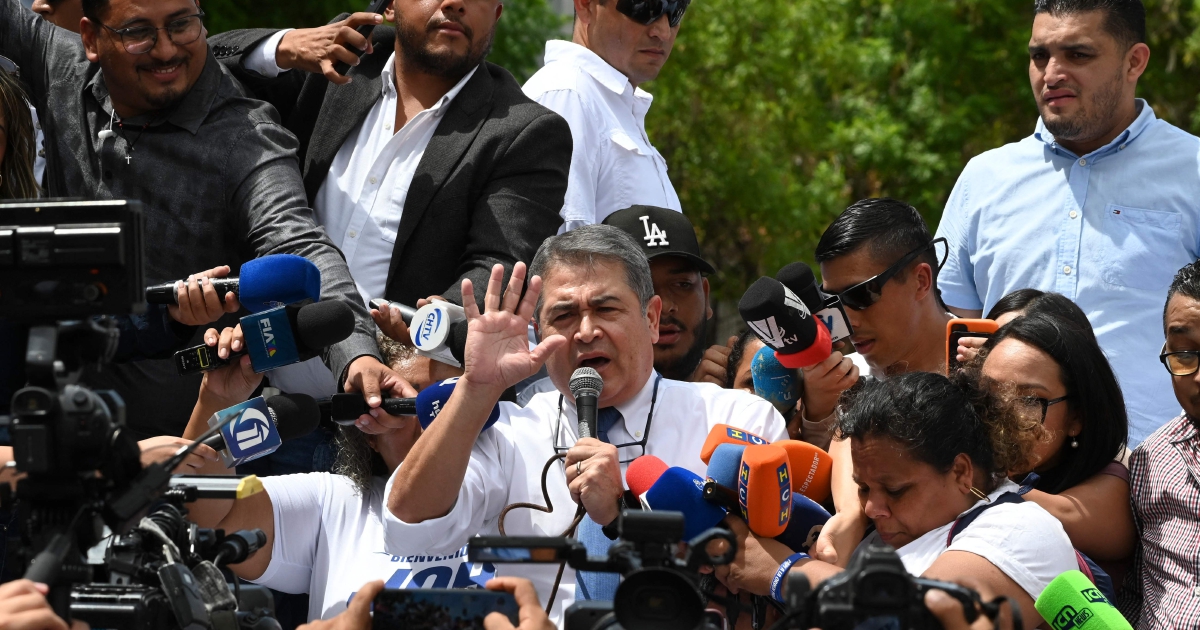
A Honduran judicial authority ruled on Monday that former president Juan Orlando Hernández, who received a presidential pardon from the United States last year regarding drug trafficking accusations, will be permitted to continue his freedom pending the outcome of his domestic corruption trial. The decision marks a significant development in the legal saga surrounding one of Central America's most controversial political figures, whose administration was marked by allegations of systematic graft and links to organised crime.
The ruling represents a critical juncture in Honduras' attempt to address institutional corruption through its domestic judicial system. For years, Hernández presided over a government plagued by reports of high-level embezzlement, bribery, and connections to drug trafficking networks. His presidency from 2014 to 2022 became synonymous with governance failures that prompted international scrutiny and contributed to Central American migration pressures. The decision to permit him freedom during trial proceedings underscores the complexities facing Honduras as it seeks to demonstrate accountability whilst navigating international diplomatic considerations.
Trump's pardon of Hernández in 2023 stunned observers across the Americas and strained US-Honduras relations. The former American president granted clemency despite the drug trafficking indictment filed in New York, where Hernández faced serious federal charges. This controversial pardon effectively shielded Hernández from prosecution in American courts, complicating efforts by US authorities who had invested substantial resources in building their case. The decision reflected Trump's unpredictable approach to presidential clemency and raised questions about whether diplomatic or financial considerations influenced the pardon.
Honduras itself has been attempting to rebuild institutional credibility following the Hernández era. The incoming administration under Xiomara Castro promised transparency and anti-corruption measures, positioning these reforms as central to restoring public trust. The ability of domestic courts to pursue accountability against powerful former officials represents a test of Honduras' commitment to the rule of law. However, political pressure from Hernández's supporters and concerns about selective prosecution have complicated these efforts, creating a polarised environment where judicial decisions carry significant political implications.
The ruling permitting Hernández to remain free rather than detaining him pending trial reflects common judicial practice in many Latin American jurisdictions when considering preventive detention. Judges must weigh flight risks, evidence strength, and proportionality when deciding whether to remand defendants in custody. Hernández's legal team likely argued that as a prominent political figure with established roots in Honduras, he poses minimal risk of absconding. Additionally, his advanced age and health considerations may have influenced the court's determination regarding pretrial detention measures.
For regional observers, the case illustrates broader challenges facing Central America's justice systems. Endemic corruption within security institutions, limited resources for investigations, and political interference have historically prevented successful prosecution of former leaders. When politicians escape accountability through international asylum, diplomatic intervention, or legal technicalities, it reinforces public cynicism about institutional capacity for justice. The Honduras proceedings therefore carry implications beyond the immediate circumstances, signalling whether the region's judicial bodies can function independently of political manipulation.
The corruption allegations against Hernández encompass a range of charges related to misappropriation of public resources and alleged bribery involving state contracts. Specific accusations focus on his administration's handling of public funds, particularly regarding healthcare and social programmes that were diverted for personal enrichment or political patronage. Testimonies from former associates and financial investigators have reportedly documented complex schemes involving shell companies and money laundering mechanisms designed to obscure the origins of illicitly obtained wealth.
International anti-corruption organisations have monitored the Honduran proceedings with interest, viewing the trial as a test of institutional independence. Success in prosecuting Hernández could establish important precedent for holding other former officials accountable, whilst failure might reinforce perceptions that elite impunity remains entrenched within the system. Development agencies and bilateral donors often condition assistance on governance improvements, making visible progress on corruption prosecutions a prerequisite for continued international support.
The intersection of the US pardon and Honduran prosecution creates unique jurisdictional complexities. Whilst the Trump pardon precludes American criminal proceedings, it does not shield Hernández from his home country's laws. Honduras maintains constitutional authority to pursue corruption charges regardless of foreign clemency decisions. This separation between jurisdictions means Hernández faces potential incarceration based on domestic convictions even though he escaped US federal prison through presidential pardon. The legal outcome in Tegucigalpa will reveal whether Honduras can maintain prosecutorial independence or whether political calculations will ultimately determine Hernández's fate.

