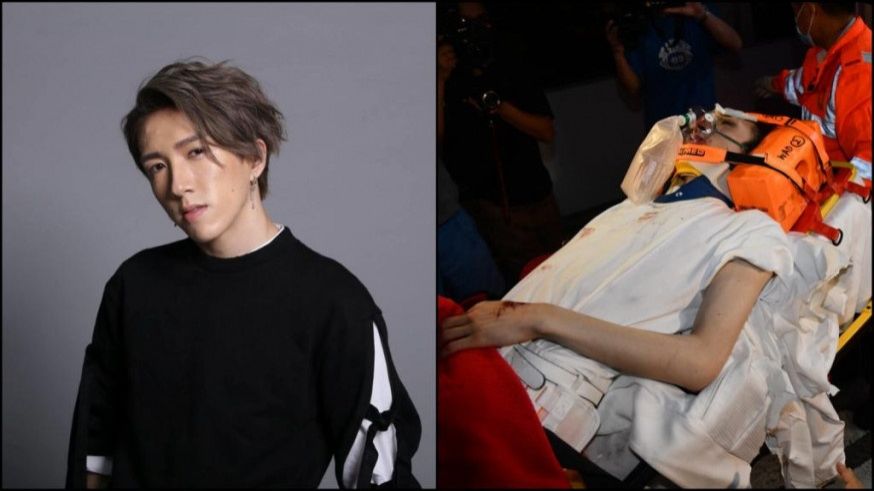
A Hong Kong dancer who became permanently paralysed when a massive LED display fell on him during a Mirror concert has secured a landmark compensation award of HK$6.29 million (approximately RM3.32 million) from the District Court. The judgment, delivered on June 15, marks a significant victory for Mo Li Kai-yin in establishing employer liability for the catastrophic injuries he sustained at the Hong Kong Coliseum on July 28, 2022, bringing some financial remedies for a life fundamentally and irreversibly altered by a preventable workplace accident.
The court's decision awarded Mo the maximum available damages across multiple categories, including permanent total incapacity, round-the-clock care provision, ongoing medical expenses, and periodic payments designed to support his lifetime needs. The ruling explicitly characterised the nature of Mo's condition as "catastrophic," acknowledging in legal terms what his family has lived through daily: that he will never again enjoy the independence, mobility, or career prospects that defined his early adulthood. The judgment further stipulated that his employer, Studiodanz, must cover all legal costs and interest accumulated during the litigation process.
Mo's injuries resulted from a four-by-four-metre LED panel plummeting from the ceiling above the stage during the fourth performance of what was scheduled to be a 12-concert residency by the hugely popular Cantopop boy band Mirror. The impact left him with a cervical spine dislocation, an injury that severed his spinal cord and left him paralysed from the neck downward. He was rushed to Queen Elizabeth Hospital for emergency surgery and intensive treatment, beginning a rehabilitation journey that continues to this day with experimental regenerative medicines and implantable microstimulation technology.
The 31-year-old dancer's current circumstances illustrate the profound toll of his injuries. He now requires three full-time caregivers to assist with all aspects of daily living, from personal hygiene to mobility and feeding. The court's description of his plight captures a grim reality: Mo has lost the capacity to lead an independent adult life and is entirely dependent on round-the-clock professional support. This dependency extends beyond immediate care; it encompasses his need for ongoing medical interventions, physiotherapy, and technological aids to maintain his health and attempt to recover some functional capacity.
Despite these enormous obstacles, Mo has demonstrated remarkable determination in pursuing recovery through cutting-edge medical interventions. Transferred from Queen Elizabeth Hospital to private facilities both within Hong Kong and internationally, he has undergone multiple surgeries alongside experimental treatments. Video evidence from his social media accounts demonstrates tangible, if modest, progress: by March of this year, he had regained sufficient movement and control in his right arm to steer an electric wheelchair independently. He has also recovered some sensation in bladder and bowel functions, victories that may seem small but represent months of intensive rehabilitation work.
The personal cost to his family has been equally devastating. Mo's father, Reverend Derek Li Shing-lam, abandoned his pastoral work and relocated from Canada to become his son's primary caregiver, a role he maintained until his death on April 25. The loss of this dedicated family support system adds another layer of tragedy to an already unbearable situation, underscoring how workplace accidents devastate not just individual victims but entire family structures and relationships.
Mo's pre-accident career trajectory reveals what was lost in those moments when the LED screen failed. He discovered dance while studying at university between 2015 and 2019, a late start that nonetheless proved consequential for his life direction. Transitioning to full-time professional dancing in 2019, he built a multifaceted career spanning concert performances, television appearances, commercial work, and music videos, while simultaneously teaching dance at four different studios, including Studiodanz where he was working when injured. He represented the success story of someone who had found their passion and built a sustainable, creatively fulfilling livelihood.
Studiodanz, the company responsible for safety at the venue where Mo worked, notably absented itself from the trial proceedings, choosing not to contest the compensation claim. The company had previously been penalised with a HK$132,000 fine for breaching occupational safety regulations related to the incident. This regulatory enforcement action, combined with the civil court judgment, establishes a pattern of institutional failure in safeguarding worker welfare and event safety standards. For the entertainment and events industry across Southeast Asia, the case serves as a cautionary reminder of the potentially catastrophic consequences when safety protocols are inadequately implemented or monitored.
The compensation award, while substantial by many measures, can only partially address the scope of Mo's needs and losses. The financial compensation funds necessary medical care, professional nursing, rehabilitation programs, and technological aids, but it cannot restore his mobility, independence, or the career he was building. The periodic payment structure ensures ongoing financial support, yet money cannot reverse spinal cord damage or return him to the life he was living before July 2022.
From a regional perspective, this case highlights vulnerabilities in workplace safety enforcement within Hong Kong's entertainment sector and raises questions relevant to similar industries across Southeast Asia. Concert and live event production involves complex technical operations where single points of failure can prove catastrophic. The incident demonstrates why rigorous safety audits, equipment maintenance protocols, and emergency response procedures are non-negotiable, not optional features of professional event management. For Malaysian venues, production companies, and entertainment venues hosting large-scale concerts and performances, Mo's experience offers an instructive, albeit tragic, lesson in prioritising comprehensive safety frameworks.
Looking forward, Mo's case will likely influence how Hong Kong and potentially other regional jurisdictions approach employer liability in entertainment accident scenarios. The generous compensation award sets a precedent that employers cannot escape accountability through absence from legal proceedings, and that courts will fully account for lifetime care requirements when assessing damages. For entertainment workers across Asia, the judgment provides both hope that serious injuries will be taken seriously by the legal system and a sobering reminder of the occupational hazards that can emerge without adequate safety investment and oversight.