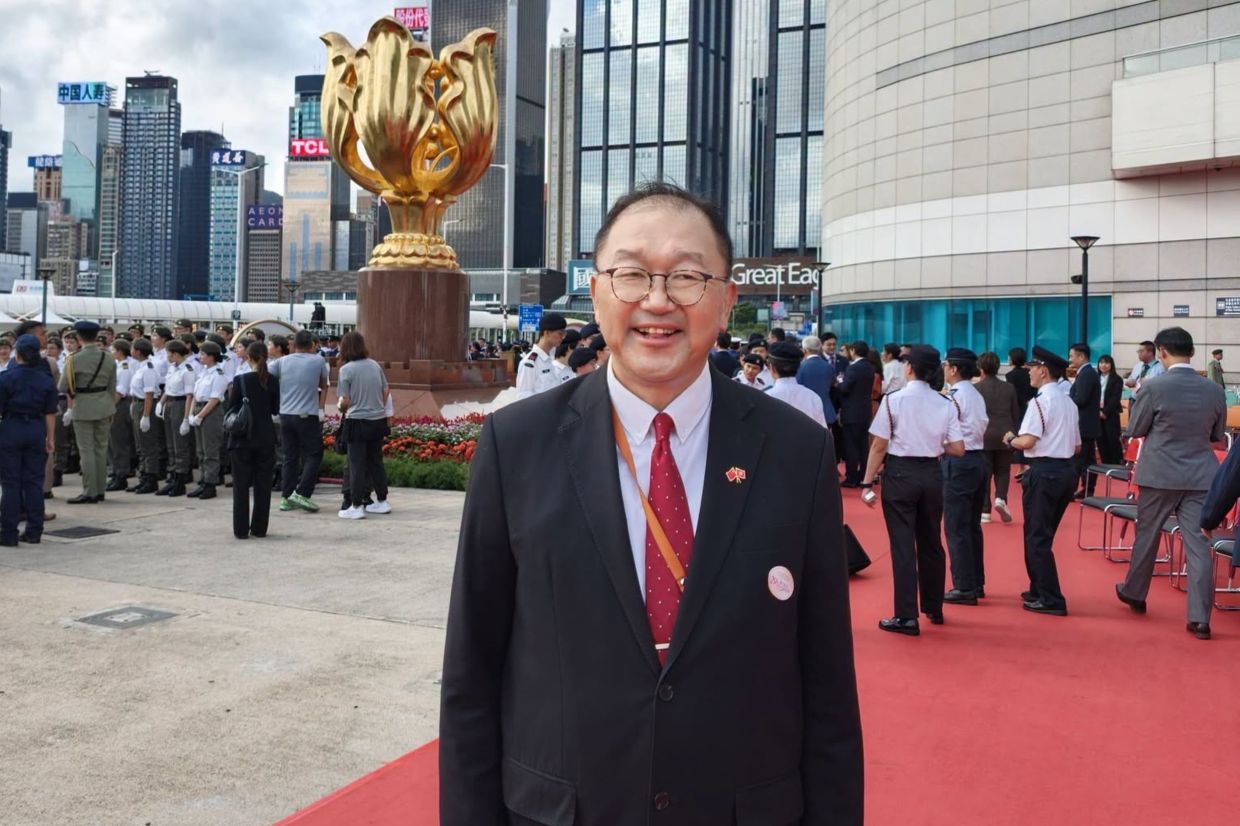
William Wong Kam-fai, a 66-year-old Hong Kong legislator, has stepped down from his position in the Legislative Council, becoming the first lawmaker to resign over a scandal in more than two decades. The decision follows his Monday night arrest on suspicion of drink-driving and involvement in a hit-and-run incident on a university campus, where his vehicle collided with two parked cars. Wong's announcement came on Friday, just hours after police concluded their initial investigation into the traffic incident that took place near staff residences.
In his resignation statement, Wong expressed remorse for the consequences of his actions, acknowledging the distress caused to both the legislature and society at large. He emphasised that his departure was intended to shield the Legislative Council from further disruption and reputational harm. While declining to elaborate on specific details given the ongoing police investigation, Wong indicated his commitment to continuing service to his community and Hong Kong through other avenues. Legislative Council President Starry Lee Wai-king formally acknowledged his resignation letter and praised his historical contributions to the chamber.
The significance of Wong's resignation extends beyond the immediate scandal. His departure represents a watershed moment for Hong Kong's political establishment, which has faced mounting scrutiny over standards of conduct among senior officials. The last legislator to resign over a scandal was Gary Cheng Kai-nam in 2000, who quit after disclosures emerged regarding undisclosed business interests and improper handling of confidential government documents. Cheng subsequently faced criminal charges and served an 18-month prison sentence after conviction on multiple counts including bribery and misconduct in public office. The quarter-century gap between these resignations underscores how rare such departures have become in Hong Kong's legislature.
Political analysts have characterised Wong's swift resignation as strategically prudent, suggesting it serves multiple constituencies. Lau Siu-kai, consultant at the Chinese Association of Hong Kong and Macau Studies, argued that immediate withdrawal minimises collateral damage to Wong's personal reputation while protecting the broader legitimacy of the legislature and the "patriots administering Hong Kong" framework that underpins the current political system. Extended attempts to retain his position could have invited sustained criticism and potentially escalated pressure on the governing structure itself. According to this analysis, resignation represents damage control that preserves institutional stability while acknowledging the gravity of his actions.
Tam Yiu-chung, Hong Kong's former representative to the National People's Congress Standing Committee, endorsed the resignation as appropriate given the elevated behavioural expectations placed on legislators. He emphasised that lawmakers occupy positions of public trust requiring exemplary personal conduct, and lapses of this magnitude warrant stepping aside. Tam's perspective reflects a prevailing view among establishment figures that resignation demonstrates accountability and allows the political system to reassert its standards without requiring external intervention or formal disciplinary proceedings.
Wong held additional positions beyond his legislative seat, including membership in the Chinese People's Political Consultative Conference, an elite national advisory body composed of several thousand representatives from across China and Hong Kong. Analysts have suggested his resignation from the CPPCC role may follow, particularly given the severity of the incident. Though removal of CPPCC members is exceptionally uncommon, sources indicate central authorities would likely accept a voluntary resignation under these circumstances, avoiding the embarrassment of formal expulsion proceedings. Wong also served as a faculty member at a major university, which has suspended him from administrative duties pending the completion of police investigations.
The question of whether to hold a by-election to fill Wong's vacated seat remains unsettled. Wong represented the Election Committee constituency rather than a functional constituency, a distinction that affects both his replacability and parliamentary impact. Officials have indicated that no legal requirement mandates holding a by-election, and the government retains discretion regarding whether to proceed. Previously, when legislator Stephen Wong Yuen-shan departed to assume a government position in late 2022, authorities opted against holding a by-election, leaving the seat vacant for approximately three years. Constitutional Affairs Minister Erick Tsang Kwok-wai has indicated that fiscal considerations will weigh in future by-election decisions.
The incident occurred on Monday evening near campus staff accommodations when Wong's vehicle suddenly lost control, striking a parked car that subsequently collided with a second vehicle. Police arrested Wong at the scene after breathalyser testing indicated suspected drink-driving, and investigators have been examining the circumstances surrounding the collision and his departure from the scene. The traffic incident itself, while not unusual in isolation, assumed tremendous significance given Wong's prominent legislative position and the political sensitivity surrounding official conduct standards in contemporary Hong Kong.
For Malaysian and broader Southeast Asian observers, Wong's situation illuminates how even nominally insulated legislatures face pressure to maintain appearance of propriety. Hong Kong's political system, substantially reformed following the 2020 National Security Law to emphasise patriotic governance, has sought to project stability and orderly administration. However, the exposure of serious personal misconduct among senior figures creates tensions between maintaining institutional legitimacy and enforcing meaningful accountability. Wong's resignation, while resolving the immediate crisis, raises questions about whether token departures adequately address underlying governance challenges, or whether more systemic reform of legislative oversight and ethical frameworks remains necessary.
The implications for Hong Kong's political culture suggest a system navigating competing demands for both internal discipline and external legitimacy. Rapid resignation forestalls accusations of institutional laxity while avoiding protracted controversy that might undermine confidence in the governance apparatus. Yet the rarity of such scandals surfacing publicly may reflect either genuine ethical adherence or effective information management rather than systematic oversight. As Hong Kong's political framework continues evolving under the post-2020 constitutional arrangements, the standards applied to senior officials will likely face continued scrutiny from both international observers and domestic constituencies concerned with administrative integrity.

