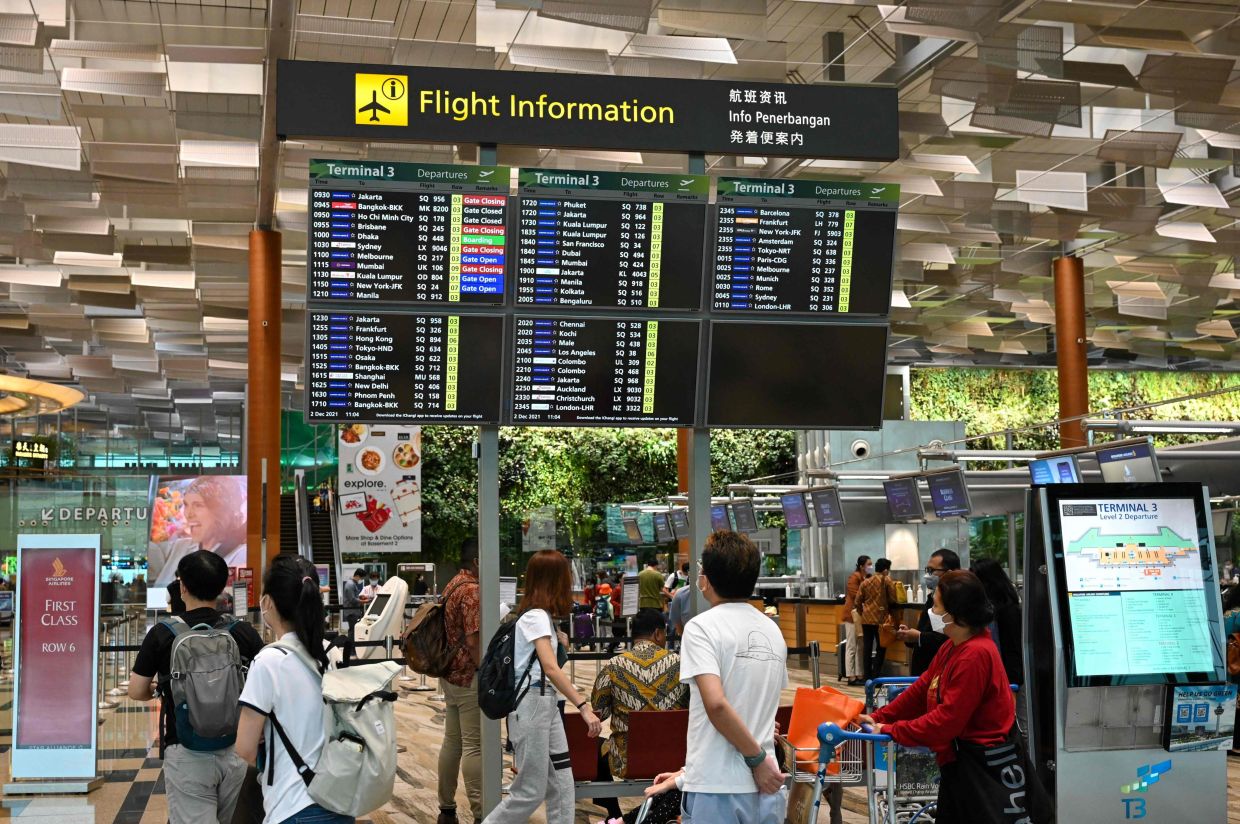
A Singapore court has imposed significant jail sentences on a Hong Kong mother and her adult son for their involvement in a chaotic altercation at Changi Airport that left a bystander injured and resulted in a police officer being bitten. Chan Sui-kwan, 65, received a six-month prison term for voluntarily causing hurt with the intention to deter a public servant from performing his official duties, while her son Chan Wing-kwan, 42, was sentenced to 10 days in jail for the lesser charge of voluntarily causing hurt. The verdicts, delivered on Monday following their conviction on July 29, culminate a protracted legal process that began with the June 30, 2024 incident at Changi Airport's Terminal 3.
The sequence of events that triggered the confrontation reveals how a moment of perceived disrespect escalated into violence involving multiple people. The son initially became upset after misinterpreting the actions of bystanders around him, mistakenly believing they were deliberately mocking his behaviour. This agitation led him to physically lash out at his own mother, kicking her without apparent provocation. When a 69-year-old bystander witnessed this attack on the woman and attempted to intervene, offering to check on her wellbeing, the elderly man encountered a stark response. Rather than accepting assistance, Chan Sui-kwan instructed him to mind his own affairs, while her son responded with aggression, explicitly challenging the stranger to fight.
What might have remained a contained family dispute between terminals quickly spiralled into a more serious assault. The two parties encountered each other again on another floor of Terminal 3, where the son attacked his mother a second time. This second assault prompted the concerned bystander to take action by attempting to contact the police to report the disturbing behaviour he had witnessed. However, instead of allowing this call to proceed, the son physically rushed towards the man to prevent him from reaching authorities. During the violent scuffle that followed, the son repeatedly struck the older man with his fists, inflicting injuries that required medical attention, including a head haematoma—essentially a pool of blood beneath the skin—along with abrasions to the knee and bruising to the fingers.
The immediate police response on June 30 appeared routine at first. Officers attended the scene and recorded the passport details of both the mother and son before returning their travel documents, seemingly treating the incident as a minor disturbance that could be resolved through information gathering. However, the situation deteriorated dramatically when authorities encountered the pair again that same afternoon in the airport's departure hall. The mother's behaviour during this second encounter proved to be the catalyst for formal arrest. She refused to surrender her passport when requested by officers and created a further disturbance that necessitated her arrest. As uniformed personnel moved to take her into custody, she mounted fierce physical resistance, during which she bit a police officer on his right forearm. Despite the officer's protective clothing, her bite left a visible one-centimetre mark and caused bruising to the arm.
The legal process that followed has been characterised by delays and complications that extended the case across multiple years. Chan Sui-kwan did not appear in court until November 18, 2024—nearly five months after the initial incident—suggesting either jurisdictional complexities or the time required to gather evidence and prepare charges. Her son faced charges earlier, being formally charged on April 24 of the previous year, yet remarkably remained in the system for an extended period without resolution. Both parties compounded their legal difficulties by failing to appear for a scheduled court hearing on July 22 of this year, an absence that triggered the issuance of an arrest warrant. Despite this missed date, they were eventually convicted on July 29 before receiving their sentences the following Monday.
The case carries particular significance for Southeast Asia's transportation security and the responsibilities of both the public and officials at major transport hubs. Changi Airport, as one of Asia's busiest aviation centres and a critical gateway for millions of passengers, functions as a controlled public space where the management of conflict and the maintenance of order are paramount. The incident demonstrates how rapidly situations can deteriorate when individuals fail to accept intervention from concerned citizens and instead respond with aggression. The involvement of a bystander willing to assist another person in distress—a principle generally encouraging in civil society—was met with violence, raising questions about personal safety for those attempting to help others in airports.
The behaviour of the defendants also illustrates the particular vulnerability of law enforcement officers who attempt to manage such situations. The biting of the police officer, though not resulting in serious injury, represents a serious breach of respect for authority and a potential public health concern. The mother's resistance to arrest and physical assault on an officer trying to perform his duty formed the basis for her more severe sentence compared to her son's, reflecting the Singaporean legal system's recognition that attacks on public servants warrant enhanced penalties. This distinction sends a clear message about the consequences of violence directed specifically at those tasked with maintaining order.
For Malaysian travellers and residents of the region, this case underscores the importance of maintaining composure and restraint while navigating international airports, which remain subject to rigorous security protocols and law enforcement presence. The extended timeline of the case—from June 2024 to August 2024—also highlights the determination of Singapore's courts to pursue justice in what might otherwise be dismissed as a minor airport altercation. The sentences, while not extraordinary, represent a significant disruption to the defendants' lives and freedom, serving as a deterrent against similar behaviour in future. Hong Kong citizens conducting business or travelling through Singapore should be aware that aggressive responses to perceived slights or bystander interventions carry serious legal consequences in jurisdictions with robust criminal codes.
The incident also raises broader questions about psychological triggers and cultural differences in interpreting social cues. The son's initial conviction that bystanders were deliberately mocking him suggests a level of social sensitivity or misinterpretation that, left unaddressed, led to violence against his mother and subsequently a stranger. Whether this reflected a mental health issue, cultural misunderstanding, or simply poor emotional regulation remains unclear from the court documents. Nevertheless, the case demonstrates how quickly airport environments—already charged with travel stress and fatigue—can become flashpoints for conflict when individuals lack mechanisms for deescalation.

