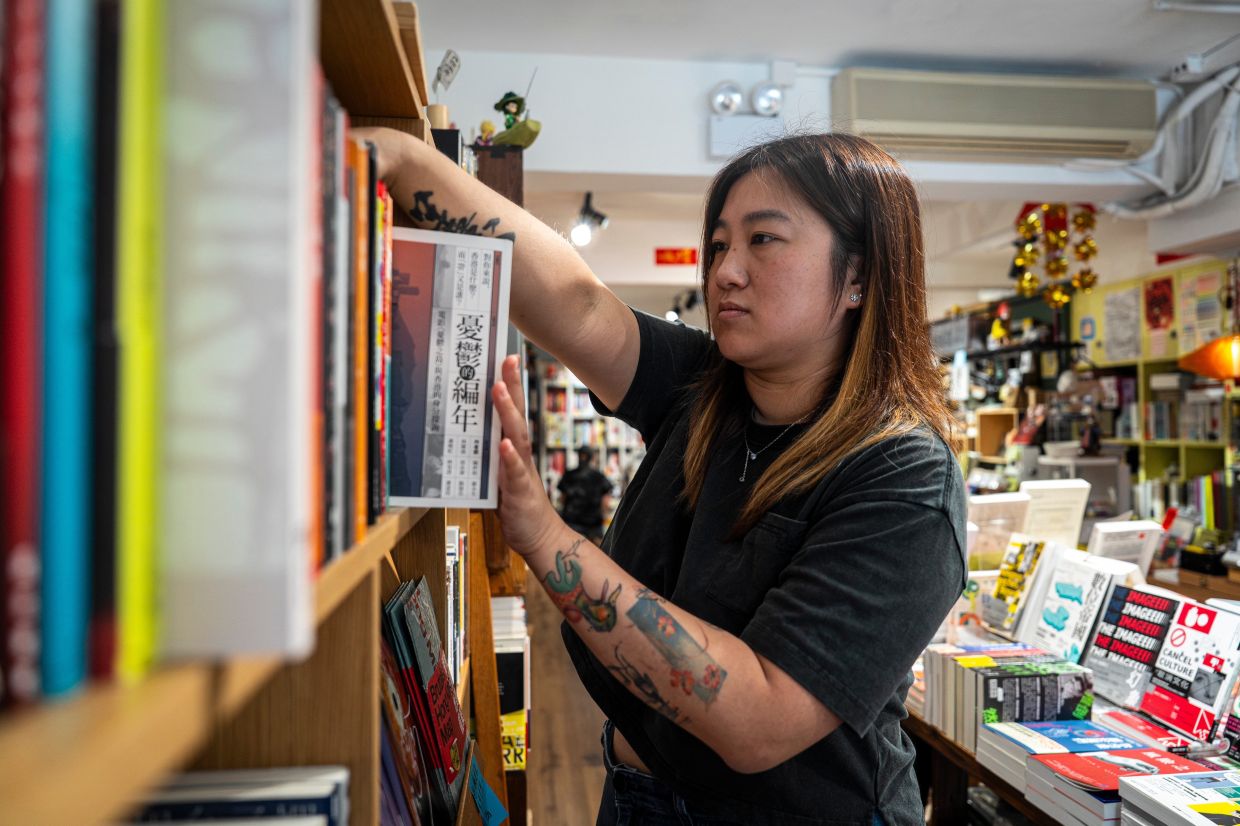
Hong Kong's police force moved swiftly against suspected seditious bookselling activities on Wednesday, detaining two individuals operating from a shop in Sham Shui Po district. The arrests, announced through an official government statement released Thursday morning, represent another escalation in enforcement of the 2024 national security legislation that has fundamentally reshaped the political landscape of Asia's premier financial centre. While the authorities declined to publicly name those arrested, local news organisations including Ming Pao have attributed the detention to Leticia Wong, the owner of Hunter Bookstore and a former district councilor known for her pro-democracy advocacy.
Wong's potential involvement carries significant symbolic weight within Hong Kong's shrinking civil liberties sphere. As someone who has consistently maintained her vocal stance on democratic principles even as the city's activism landscape has contracted dramatically following the 2019 protest movement, her arrest would underscore how far authorities are willing to extend enforcement of national security provisions. The timing is particularly noteworthy, occurring just days before Hong Kong marks the 29th anniversary of its return to Chinese sovereignty in 1997, a moment that typically triggers reflection on unfulfilled promises regarding the preservation of the territory's distinct legal and political systems.
The alleged offences carry considerable weight within Hong Kong's evolving legal framework. Police suspect the detainees of displaying materials designated as seditious and distributing publications whose content allegedly incites hatred towards the Hong Kong government, its judiciary, and law enforcement institutions. Additionally, authorities contend the pair received financial remittances originating from overseas political organisations, suggesting cross-border coordination that heightens concerns under national security statutes. The government's announcement, however, declined to specify which publications or foreign entities fell under investigation, a pattern that critics argue adds opacity to enforcement decisions.
Wong's bookstore has attracted government scrutiny for months preceding this arrest. Between July 2022 and June 2025, her records document 92 instances of official action against the establishment, ranging from routine inspections to sustained patrol operations conducted with apparent deliberation outside the premises. Such documented pressure extends beyond direct police involvement—an anonymous letter campaign successfully intimidated a planned event organiser into cancelling a booking at the venue, illustrating how authorities and allied actors create chilling effects beyond formal legal mechanisms. These administrative and psychological pressures represent a sophisticated approach to constraining speech and assembly without necessarily relying on criminal prosecution.
The bookstore itself gained notoriety within Hong Kong's politically engaged circles following a pro-Beijing newspaper's criticism of a literary fair hosted there. The outlet had characterised the event as expressing "soft resistance" and specifically flagged the venue's intention to stock a biography of Jimmy Lai, the jailed pro-democracy media entrepreneur whose imprisonment symbolises the vulnerability of prominent dissidents under the new security regime. Such public denunciation often precedes formal enforcement action, effectively labelling targeted businesses as ideologically suspect and exposing them to heightened official scrutiny.
Biographies and biographical materials have emerged as unexpected flashpoints in Hong Kong's evolving political landscape. Jimmy Lai's life story, in particular, has become contestable subject matter, with the Lai biography serving as a litmus test for what authorities and their supporters regard as permissible historical and political discourse. This transformation reflects a fundamental shift in how official bodies conceptualise sedition—the category has expanded from explicit calls for violence or regime change to encompass biographical narratives that implicitly challenge official narratives or validate figures deemed hostile to state interests. Such expansion troubles international observers monitoring democratic backsliding in the former British colony.
Wong's case follows closely upon similar enforcement actions targeting the bookselling sector. In March, police detained the proprietor and workers at another bookstore on comparable suspicion regarding seditious material distribution, with the Jimmy Lai biography again featuring prominently in the investigation. Though those individuals were subsequently released on bail, the pattern demonstrates sustained official focus on what has traditionally been considered a marginal industry. The publishing and bookselling community, once enjoying substantial practical autonomy in Hong Kong's commercial ecosystem, now faces consistent legal jeopardy.
The wider context reveals tensions between official rhetoric and observable practice. The Hong Kong government maintains that both national security statutes remain essential safeguards for urban stability, and it insists simultaneously that freedom of speech continues to flourish within the territory. These contradictory claims have become increasingly difficult to sustain as arrest records accumulate. The 2024 national security law, introduced with assurances that it would narrowly target seditious activity and foreign interference, has instead provided authorities with expansive prosecutorial discretion encompassing bookselling, biographical publication, and activist infrastructure.
Malaysian and broader Southeast Asian audiences should recognise these developments as instructive within regional governance contexts. Hong Kong's experience demonstrates how national security legislation, introduced as targeted measures against specific threats, can metastasise into comprehensive regulation of intellectual and political expression. The trajectory from anti-subversion statutes to controls on historical narrative and cultural production offers cautionary lessons for jurisdictions contemplating similar security frameworks. The precedent established in Hong Kong—where publishing decisions become matters of criminal liability—influences how neighbouring governments conceptualise acceptable bounds on expression and the proper balance between security imperatives and civil liberties.
The international dimensions of this case warrant particular attention. Official allegations regarding foreign funding introduce questions about what constitutes illegitimate external influence within Hong Kong's governance ecosystem. This framing potentially criminalises ordinary transnational solidarity networks that have historically connected pro-democracy activists across borders. Malaysian observers, particularly those engaged with civil society organisations receiving international support, should appreciate how security frameworks can weaponise international collaboration as evidence of sedition, thereby constraining legitimate cross-border advocacy and information exchange.
For the immediate future, Wong's case and its legal trajectory will probably resonate far beyond Hong Kong's borders. International civil liberties organisations have signalled deepening concern regarding the territory's slide towards authoritarian governance practices, and high-profile prosecution of bookstore operators would likely trigger coordinated international scrutiny. Simultaneously, the arrests illustrate how official machinery operates incrementally—each enforcement action establishes precedent for subsequent prosecutions, gradually recalibrating what constitutes permissible expression. The cumulative effect transforms the legal and social environment regardless of whether individual prosecutions ultimately succeed in court.

