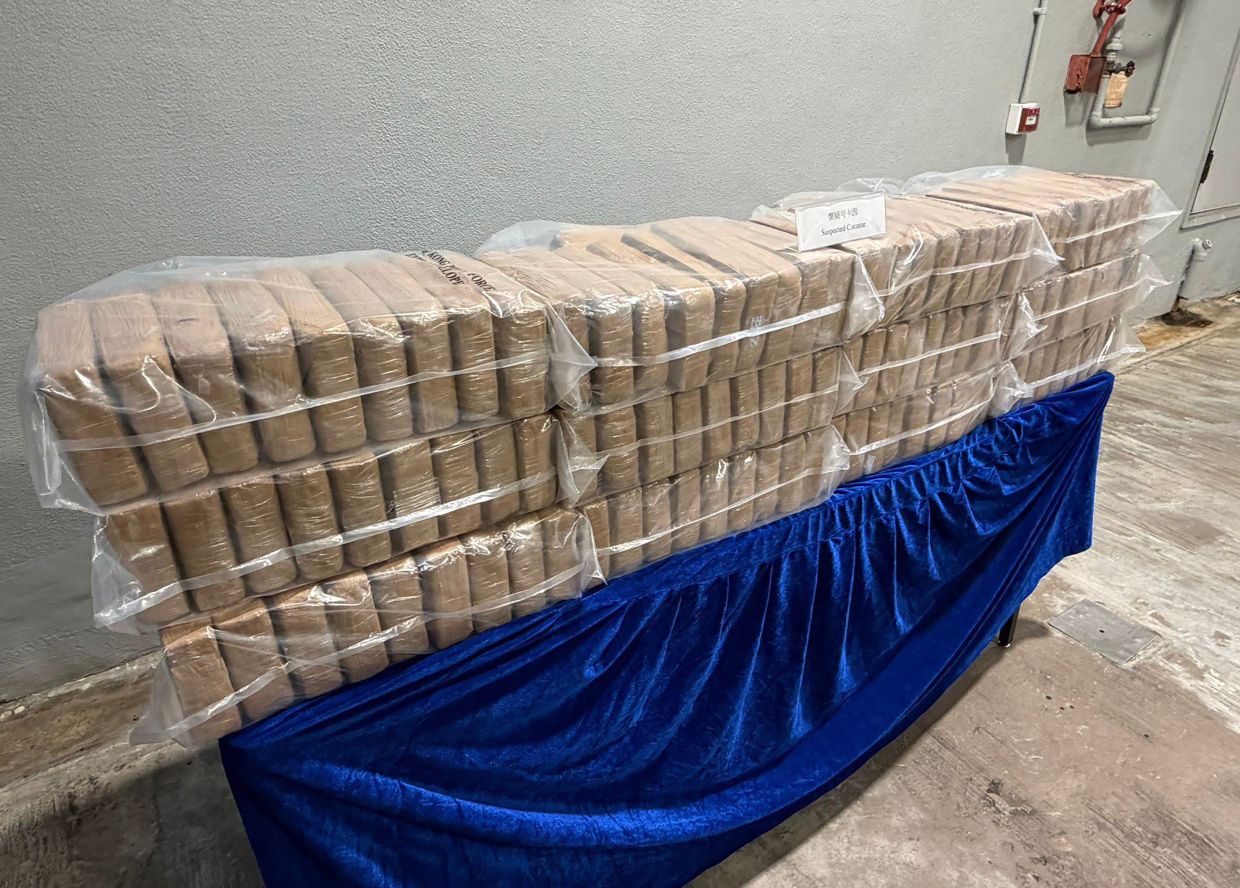
Hong Kong's narcotics enforcement unit has uncovered what police are describing as the city's most substantial cocaine trafficking operation in over a year, following the discovery of approximately 120 kilograms of the drug aboard a six-metre vessel on Sunday. The raid came just days after officers had already apprehended suspects and recovered 241 kilograms of cocaine from another yacht moored in the same Aberdeen Typhoon Shelter anchorage. When combined, the twin operations have resulted in the confiscation of roughly 361 kilograms of cocaine, representing a street value exceeding HK$270 million—a striking blow against drug trafficking infrastructure operating in Hong Kong's waters.
The sequential nature of these discoveries has given investigators crucial insight into the operational structure of the syndicate involved. Both vessels were located in close proximity to one another within Aberdeen Typhoon Shelter, a busy mooring ground that offers traffickers access to Hong Kong's extensive waterways whilst remaining within relatively enclosed waters. The repeated targeting of yachts in this specific location suggests that authorities had identified a pattern in the smuggling network's behaviour and were able to act decisively on intelligence gathered during the initial Friday operation.
Detectives examining the evidence recovered from Sunday's raid noticed striking similarities between the cocaine packages discovered aboard the second yacht and those seized from the first vessel. The consistency in packaging materials, brick dimensions, and total weight strongly indicates that both shipments originated from the same source and were part of a single consolidated trafficking consignment. This assessment has led investigators to conclude that the syndicate was employing a deliberate strategy of distributing their cargo across multiple vessels as a risk mitigation measure—a tactic that substantially reduces the likelihood of losing an entire shipment to law enforcement interception.
The operational sophistication reflected in this storage dispersal strategy points to an organised criminal enterprise with significant resources and planning capacity. Rather than concentrating all contraband in a single vessel, thereby exposing the entire operation to catastrophic loss if that boat were discovered, the trafficking network had instead implemented a redundancy system. By placing substantial quantities of cocaine aboard separate yachts anchored near one another, the syndicate could maintain oversight of their inventory whilst compartmentalising risk. This approach, whilst ultimately unsuccessful given the police breakthrough, demonstrates the level of coordination and infrastructure investment that major drug trafficking organisations now dedicate to moving narcotics through Asia-Pacific maritime routes.
The investigation has already resulted in multiple arrests spanning the operational hierarchy of the suspected trafficking network. Following the initial raid on Friday, police apprehended a man believed to be a principal figure within the syndicate, alongside two individuals identified as core operatives within the organisation. These three individuals have claimed to authorities that they are either unemployed or engaged in fishing activities—explanations that investigators have clearly rejected given the evidence of large-scale drug trafficking. On Monday, authorities took into custody a 45-year-old local woman who was registered as the official owner of the second yacht. She has similarly stated that she is unemployed and is currently undergoing police questioning as officers seek to establish her precise role within the trafficking arrangement.
The identity and ownership structure concealment techniques evident in this case reflect broader trends in how international drug trafficking organisations operate throughout Southeast Asia and the South China Sea region. By registering vessels under the names of individuals who claim no substantive income sources, trafficking syndicates create a layer of deniability and complicate asset forfeiture proceedings. The woman arrested on Monday may be occupying a figurehead position, serving as the nominal owner whilst actual operational control remains vested in more senior members of the organisation who maintain lower profiles and less direct connection to the contraband.
This incident carries significant implications for regional maritime security and drug interdiction efforts across Southeast Asia. Hong Kong, as a major international shipping hub with one of the world's busiest container ports and extensive anchorages, remains an attractive transit point for narcotics destined for distribution throughout the region. The sheer quantities recovered—361 kilograms—underscores the enormous volumes of illicit drugs that flow through Asian waters annually. Cocaine originating primarily from South American production centres has increasingly become available in East Asian markets, driven partly by lucrative demand from wealthy urban populations and the emergence of new trafficking routes via the Pacific.
For Malaysian authorities and other regional law enforcement agencies, the Hong Kong operation provides instructive insights into how sophisticated trafficking syndicates operate and the methods they employ to evade detection. Malaysia's own maritime boundaries, encompassing substantial territorial waters and numerous islands, present comparable vulnerabilities to those exploited in the Hong Kong case. The tactical employment of multiple vessels for cargo distribution and the use of nominal owners to obscure actual criminal liability are techniques that Malaysian enforcement officials have encountered in their own investigations.
The HK$270 million street value attached to this seizure also highlights the extraordinary profit margins that sustain international drug trafficking networks. These enormous financial incentives drive continuous innovation in smuggling methodology and ensure that despite successful law enforcement operations, trafficking organisations will persist in attempting to move narcotics through regional waters. The fact that this represented Hong Kong's largest cocaine bust in twelve months suggests that whilst this particular operation has been disrupted, similar activities likely continue elsewhere across the region's maritime space.
Moving forward, the intelligence gathered during this investigation—including details regarding supplier networks, distribution channels, and trafficking methodology—will likely inform regional cooperation mechanisms involving Hong Kong, mainland Chinese authorities, and other Southeast Asian nations. The three-dimensional nature of modern drug trafficking, encompassing maritime, aviation, and land-based routes, demands coordinated responses that transcend individual national boundaries. Success in disrupting one trafficking cell frequently generates valuable information about broader networks operating across multiple jurisdictions.

