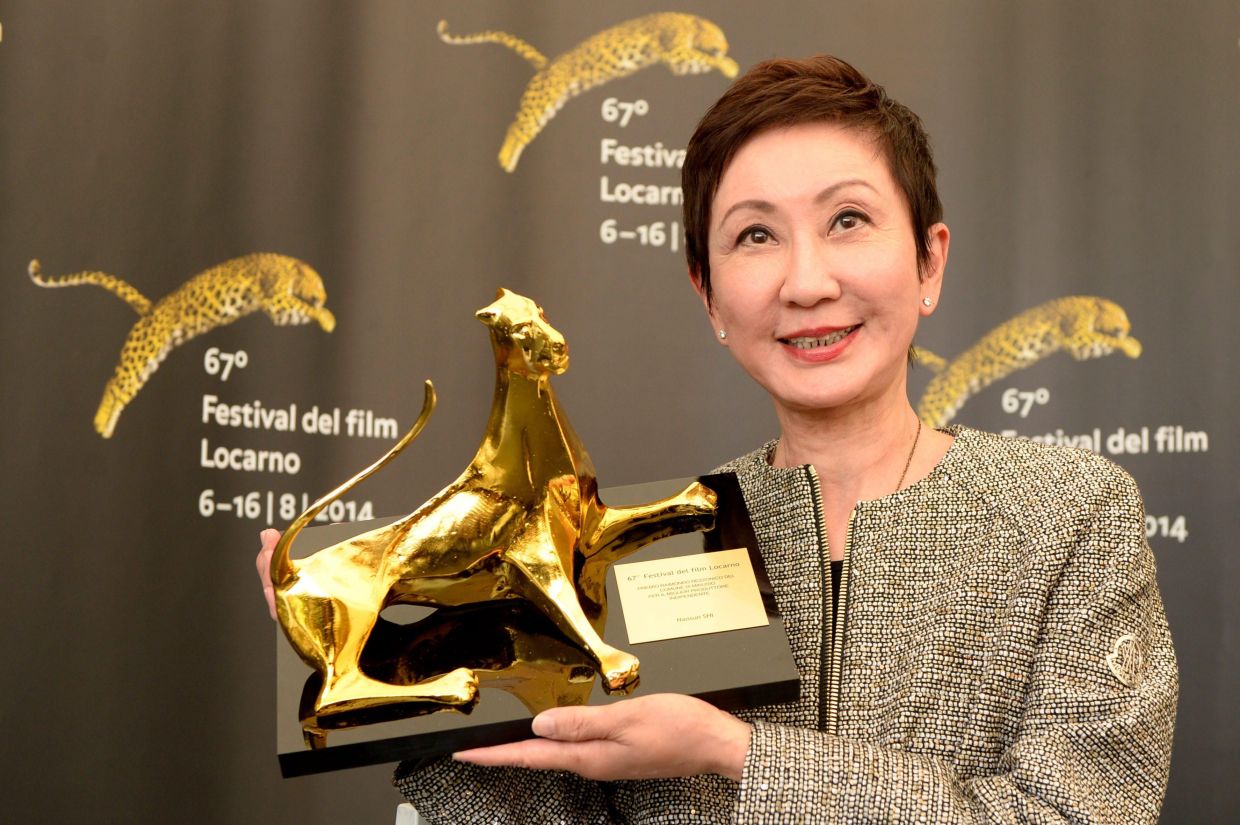
The Hong Kong film industry has lost one of its most influential figures with the death of Shi Nan-sun, the visionary producer and co-founder of Film Workshop, who passed away on Monday aged 75 at the Hong Kong Sanatorium & Hospital after suffering multiple organ failure caused by a bacterial infection. Her death, which occurred peacefully in the company of family and friends at 8.51pm, has prompted an outpouring of tributes from some of Asia's biggest cinema names and Hong Kong's cultural leadership, underscoring the profound impact she had on filmmaking across the region.
Shi had been in declining health since 2022 as complications related to her immune system worsened over time. In her final months, recurrent infections led to cascading organ dysfunction, a struggle she endured with the resilience that colleagues say defined her approach to both life and work. Her ex-husband and long-time creative partner, acclaimed director Tsui Hark, described how she "held on bravely until the very last moment", maintaining her characteristic grace and gratitude even as her condition deteriorated. The last public sighting of Shi came in May when she attended the funeral of fellow producer Linda Kuk Mei-lai, a moment when observers noted her use of a walking stick and began to harbour concerns about her health.
International cinema icon Jackie Chan led the flood of public remembrances, posting to Weibo that the film world had "lost another legendary figure" whose contributions would endure through the "classic works" bearing her imprint. Actress Carina Lau, who worked closely with Shi over many years, wrote of the producer's profound influence on her understanding of professional integrity and personal conduct. "I have learned countless pieces of wisdom from you on how to conduct oneself," Lau wrote, reflecting on how Shi represented an exemplary standard for women in the entertainment business. Fellow luminaries including Brigitte Lin Ching-hsia, Donnie Yen Chi-tan, and Shu Qi joined the chorus of tributes, each recognising the producer's outsized role in shaping Hong Kong's cinematic legacy.
Hong Kong's Secretary for Culture, Sports and Tourism, Rosanna Law Shuk-pui, released an official statement characterising Shi as a "distinguished Hong Kong producer" whose labours proved instrumental in sustaining the local film industry's vitality and relevance. Law emphasised that Shi's "precious cinematic memories" would remain central to how Hong Kong citizens understood their own cultural heritage. The government tribute acknowledged that Shi devoted her entire professional life to the film and television sectors, leaving behind an institutional imprint that would influence production practices and international distribution strategies for generations to come.
Born and educated in Hong Kong, Shi's path into cinema emerged from an unconventional foundation. She studied statistics and computing at the Polytechnic of North London in Britain, equipping herself with the analytical and quantitative skills that would later define her approach to film business operations. Beginning her career in television before pivoting to motion pictures in 1981, she joined Cinema City as an executive director, where she quickly earned recognition for her meticulous oversight of administration, contract negotiations, and the intricate logistics of international distribution. This background in technical and financial planning set her apart from many contemporaries who approached filmmaking primarily from creative angles.
In 1984, Shi co-founded Film Workshop alongside Tsui Hark, establishing a production and distribution entity that would become synonymous with Hong Kong cinema's global expansion during its most creatively fertile period. The pair later established Distribution Workshop, creating infrastructure through which Hong Kong-produced films could reach audiences far beyond East Asia. This dual focus on both production and distribution represented a strategic innovation, allowing Shi to influence not only what films were made but how they reached international markets, a comprehensive approach that proved crucial in building Hong Kong's reputation as a major filmmaking centre.
Shi and Tsui married in 1996, maintaining their partnership for eighteen years before divorcing in 2014, yet remarkably sustaining a close friendship that enabled continued professional collaboration. Brigitte Lin, who counted Shi as a friend for over fifty years, once quoted the legendary novelist Jin Yong in describing Shi's devotion to Tsui, calling her "the only wife who is completely infatuated with her husband." Lin elaborated that Shi "devoted herself entirely, admired, and protected Tsui Hark, viewing him as a true artist." This characterisation reveals the personal dimension often obscured in industrial accounts—Shi's profound commitment to nurturing artistic vision alongside the commercial operations that sustained it.
Beyond her domestic influence, Shi became a crucial ambassador for Hong Kong cinema on the world stage during a period when Asian films were beginning to penetrate Western cultural consciousness. Her efforts to elevate Hong Kong productions to international standing earned her formal recognition including appointment as an officer of France's Ordre des Arts et des Lettres, a prestigious honour reflecting her impact on global film culture. She received the best independent producer award at the Locarno International Film Festival and served as jury member or festival president for numerous major international cinema events, roles that positioned her as an arbiter of quality and a mentor to emerging filmmakers.
The honours continued accumulating even as her health declined. In January 2025, just months before her death, Shi and Tsui jointly received a lifetime achievement award at the Hong Kong Film Awards, a capstone recognition of their combined contributions to reshaping how Asian cinema was perceived and consumed worldwide. This award ceremony provided a final public celebration of her career, though few observers could have anticipated that her passing would come so swiftly thereafter.
For Malaysian and Southeast Asian readers, Shi's influence extended beyond Hong Kong's borders. During the 1980s and 1990s, when Hong Kong cinema was at its creative zenith, Shi's distribution networks helped ensure that films reached regional audiences, shaping tastes and establishing aesthetic standards that influenced local filmmaking aspirations. Her professionalisation of film business practices—particularly her emphasis on contract negotiations, international co-productions, and strategic distribution—offered a template that aspiring producers across Asia observed and adapted. Her passing represents the conclusion of an era when Hong Kong served as the region's undisputed cinema capital, a position increasingly challenged by the rise of other Asian film industries.
Shi's legacy ultimately transcends the specific films she produced or financed. She demonstrated that film industry leadership required not merely creative sensibility but rigorous business acumen, international perspective, and an unflinching commitment to artistic integrity even when commercial pressures pulled in contrary directions. Her ability to balance these often-conflicting demands while building institutions and mentoring talent established a model of cultural entrepreneurship that remains relevant as Asian cinema continues evolving in the streaming era. The tributes from peers and officials alike suggest that her influence will persist through both the films that bear her imprint and the professional standards she helped establish.

