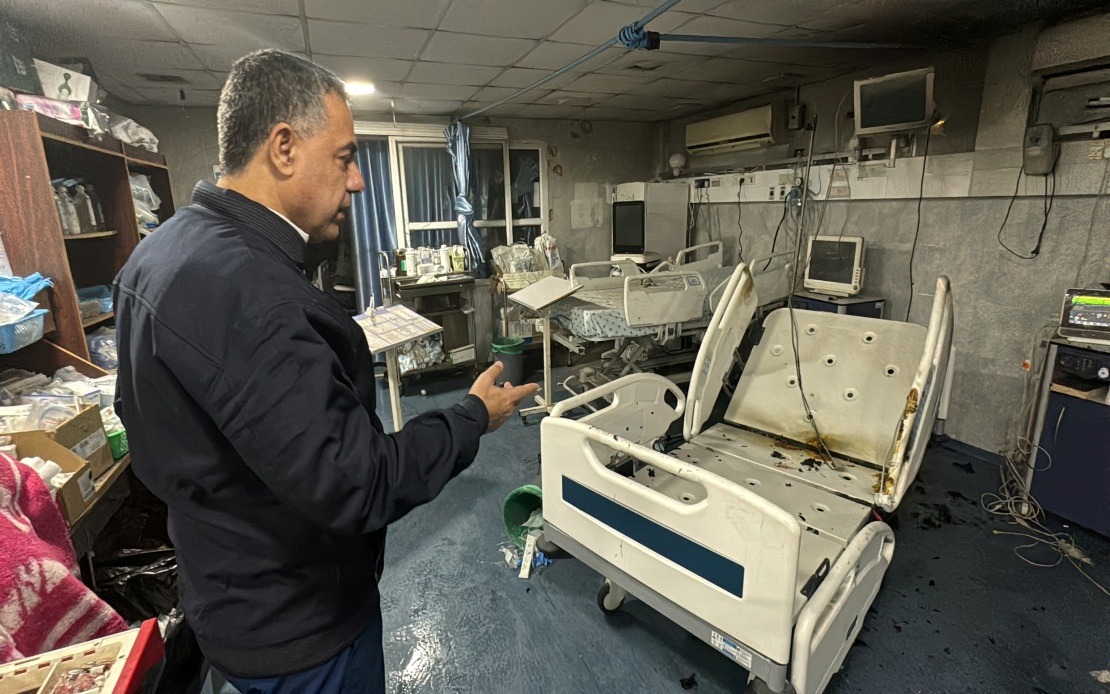
Physicians for Human Rights has issued a stark warning about the medical condition of Dr Hussam Abu Safiya, the director of Kamal Adwan Hospital in northern Gaza, claiming his health has sharply declined since his transfer to Israel's Nitzan Prison. The allegation comes as the humanitarian situation in Gaza remains dire, with healthcare infrastructure severely compromised by months of conflict. The organisation's assessment, based on a visit to the detained physician on July 2, paints a troubling picture of conditions facing medical professionals caught in the crossfire of the Israeli-Palestinian conflict.
The documentation provided by Nasser Odeh, the lawyer representing Dr Abu Safiya through Physicians for Human Rights Israel, details an alarming array of physical symptoms and injuries. During the prison visit, the lawyer observed severe traumatic injuries affecting the head region, with bruising around the eyes, ears, and neck areas so pronounced that the physician's appearance had fundamentally changed. Compounding these visible injuries are reports of respiratory distress and multiple episodes of unconsciousness, suggesting potential internal injuries or neurological complications requiring urgent medical evaluation. The cumulative effect of these observations prompted the lawyer to characterise the situation as exceptionally grave.
The manner in which Dr Abu Safiya was presented during the legal visit further underscores concerns about his treatment while in custody. Prison authorities brought the detainee to the meeting restrained with shackles on both hands and feet, a security measure accompanied by masked prison guards maintaining a visible presence. Such physical restraint combined with the documented injuries raises questions about the conditions under which he is being held and whether appropriate medical care is being administered to someone in apparent physical distress. These procedural details matter significantly because they establish the context in which his health has deteriorated.
Naji Abbas, who directs the Prisoners and Detainees Department at Physicians for Human Rights Israel, characterised the lawyer's testimony as among the most disturbing accounts the organisation has collected since hostilities escalated in the region. The organisation has documented numerous cases involving detained medical personnel throughout this conflict, making this assessment a comparative judgment rather than isolated concern. Abbas stated explicitly that the findings generate immediate and serious apprehension regarding whether Dr Abu Safiya will survive his detention, a conclusion not reached lightly by established human rights monitors.
What distinguishes this case further is Dr Abu Safiya's own expressed fear regarding his safety. According to the organisation's report, the detained hospital director has stated his belief that he may be killed during his time in custody. Such statements from a detainee facing the stress and trauma of imprisonment cannot be dismissed as merely anxious speculation, particularly when corroborated by documented physical injuries and deteriorating health markers. The coincidence of these psychological fears with objective medical indicators creates a compelling narrative of institutional danger.
The timing of Dr Abu Safiya's health deterioration appears closely linked to his legal challenge against his continued detention. Abbas noted that his condition worsened specifically after he contested the extension of his detention through court proceedings, suggesting potential retaliation or punishment for exercising legal rights. This sequence of events—physical assault apparently following a legal challenge—raises serious questions about whether his treatment complies with international standards for prisoner conduct and due process protections that apply regardless of political circumstances.
Physicians for Human Rights Israel has called for an immediate and comprehensive independent investigation into the circumstances of Dr Abu Safiya's detention and the causes of his physical injuries. The organisation argues that such an investigation is essential not only for establishing accountability but also for determining what urgent medical interventions may be necessary to prevent further deterioration. An independent inquiry would provide the neutral documentation necessary to separate factual events from interpretations, though the organisation's lawyers have already been present to document conditions.
The question of legal status hangs over this detention as a critical issue in the broader human rights debate. The organisation emphasises that Dr Abu Safiya and other medical personnel currently in detention are being held without formal charges or trial proceedings. This legal limbo creates a situation where detainees lack the formal accusation and judicial process that international law designates as fundamental protections. The absence of transparent legal process, combined with physical deterioration, generates the humanitarian concern that motivates the organisation's intervention.
Israeli authorities maintain responsibility under international humanitarian law for the health, safety, and welfare of individuals in their custody, a principle that transcends the political status or nationality of the detainee. Physicians for Human Rights has invoked this legal obligation as the basis for demanding urgent intervention to protect Dr Abu Safiya's life. The organisation's explicit attribution of responsibility to Israeli authorities establishes that human rights monitors view this case as fundamentally one of state accountability rather than abstract humanitarian tragedy.
For Malaysia and the broader Southeast Asian region, this situation reflects ongoing concerns about detention practices during armed conflict and the vulnerability of medical professionals operating in war zones. The case of Dr Abu Safiya exemplifies how medical personnel attempting to fulfil their humanitarian duties become targets or detainees despite international conventions protecting healthcare workers. Malaysia's medical community and civil society organisations may find this case relevant to regional discussions about protecting health sector neutrality during conflicts and establishing accountability mechanisms for alleged abuse of detainees.
The detention of hospital directors and medical staff raises broader questions about whether international humanitarian law protections for healthcare workers are being adequately enforced or respected in contemporary conflicts. As violence continues affecting civilian populations and healthcare infrastructure globally, cases like Dr Abu Safiya's establish precedents regarding what accountability mechanisms and protections should exist. The documentation efforts by Physicians for Human Rights represent an attempt to create a record that can support future accountability, whether through international courts, fact-finding missions, or mechanisms yet to be established.

