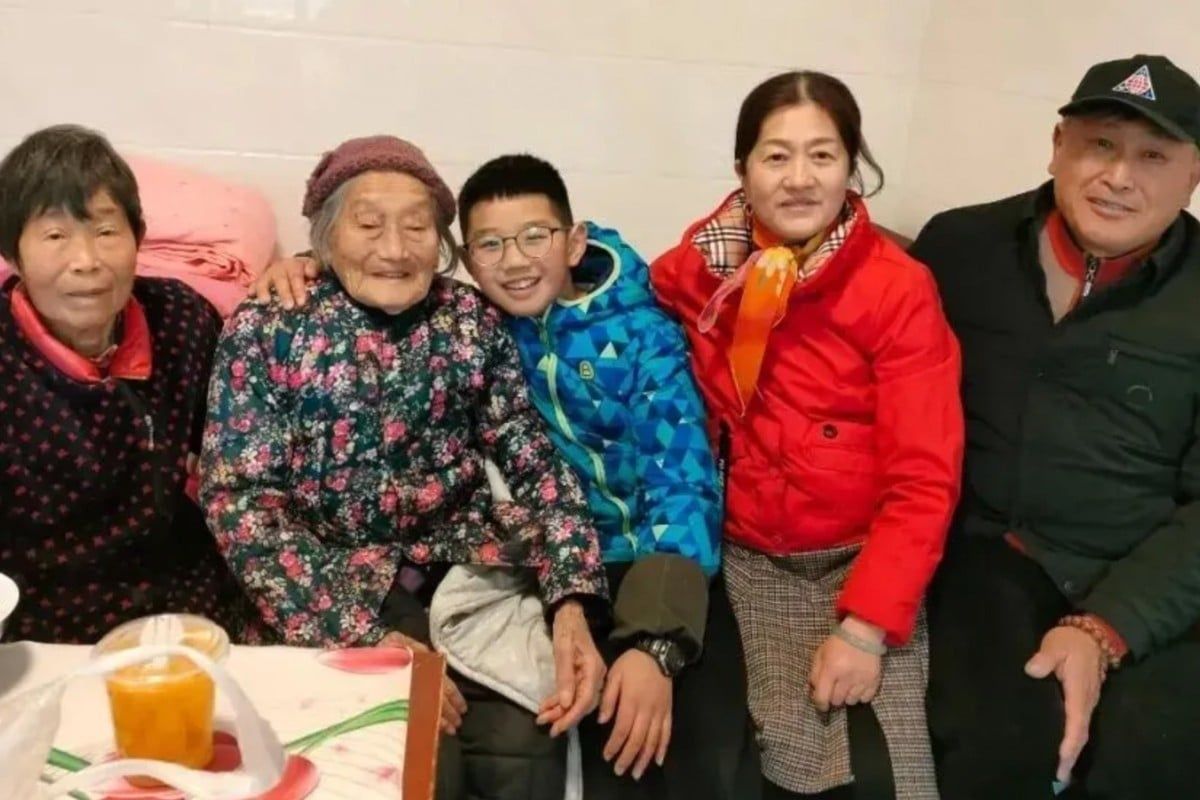
Wang Gaiying, a 111-year-old grandmother residing in Rugao, Jiangsu province in eastern China, has drawn widespread online attention by crediting her extraordinary lifespan to a philosophy that transforms mundane domestic activities into deliberate health practices. Rather than viewing aging as a passive decline, she has embraced an active approach to wellness that integrates seamlessly into daily living. Her case offers particular relevance for Southeast Asian readers as emerging research increasingly examines how lifestyle habits in specific geographic regions contribute to exceptional longevity rates across aging populations.
Rugao has earned recognition throughout China as a "longevity capital," a distinction rooted in concrete demographic data. According to the Jianghai Evening News, as of February the region was home to 672 centenarians, representing an unusually high concentration of individuals who have surpassed 100 years. This demographic phenomenon has prompted serious scientific inquiry into the underlying factors. Researchers at the Chinese Academy of Sciences' Institute of Soil Science in Nanjing have identified a compelling environmental contributor: the mineral-rich composition of local soil produces crops laden with trace elements that offer significant health benefits to those who consume them regularly. This discovery underscores how geography, nutrition, and longevity intersect in ways that extend beyond individual behaviour.
Wang resides within a five-generation household structure, a living arrangement that provides both practical support and social engagement. Her grandson is 60 years old, placing her within a multigenerational family ecosystem that contrasts sharply with increasingly common patterns of isolated elderly living in developed economies. Until recently, Wang maintained active involvement in agricultural work, personally harvesting peanuts and watermelons in the fields surrounding her home. While age has inevitably slowed her productivity, she has retained physical mobility and mental acuity that would be remarkable at her age anywhere in the world. Her refusal to adopt a sedentary lifestyle has become a defining characteristic of her approach to aging.
The cornerstone of Wang's daily regimen centers on her reframing of household labour as deliberate exercise rather than burdensome obligation. She engages in light domestic tasks including wiping tables and folding clothes, insisting to family members who suggest she rest that this physical engagement maintains the vitality of her limbs and ensures proper circulation. When relatives urge her to reduce her workload, she explains with evident conviction that remaining in motion constitutes the fundamental principle underlying graceful aging. This perspective aligns with modern gerontological research suggesting that consistent low-intensity physical activity among elderly populations produces substantial health dividends. Her philosophy transforms what many Western societies might characterize as obligatory chores into a customized exercise program tailored to her capabilities.
Dietary discipline forms a second pillar of Wang's longevity strategy. Rather than adhering to any rigid nutritional dogma, she maintains variety and balance across her meals. Her family deliberately rotates between different staples including dumplings and steamed buns, ensuring nutritional diversity. Fish occupies a special place in her dietary preferences, valued for its tenderness and digestibility. She practices conscious moderation, believing firmly in the principle that variety matters more than quantity and that overeating undermines health regardless of food quality. This measured approach to consumption reflects traditional Chinese nutritional philosophy that has informed longevity practices for centuries across the region.
Social media influencer Yaoqing Ge, who documented Wang's lifestyle during a December visit, disclosed an interesting historical detail about her dietary habits. Wang once regularly consumed rice soaked in baijiu, the potent traditional Chinese liquor, a practice her family discontinued approximately five years ago. The decision to eliminate this habit stemmed from practical safety concerns: the risk of intoxication leading to falls posed an unacceptable hazard at her advanced age, outweighing any potential health benefits from moderate alcohol consumption. This adaptive decision-making reflects rational reassessment of risks and benefits across different life stages rather than rigid adherence to established patterns.
Beyond physical and nutritional factors, Wang attributes her longevity to psychological and spiritual dimensions of her existence. She adheres to a personal daily practice of performing small acts of kindness, whether through offering compliments to family members or sending brief greetings to elderly friends. This consistent orientation toward others' welfare appears inseparable from her own wellbeing. Equally significant is her characteristic calm demeanor and her deliberate approach to emotional regulation. When confronted with frustrations or problems, she employs sleep as a therapeutic tool, choosing to rest rather than ruminate. Her philosophy holds that matters causing distress during waking hours often lose their significance after a restorative sleep period, a practice that contemporary sleep medicine increasingly validates as genuinely beneficial for both psychological and physical health.
Wang's daily schedule demonstrates remarkable discipline and consistency. She maintains a substantial nightly sleep duration extending from 7pm through 7am, supplemented by one or two daytime naps. This sleep architecture—which substantially exceeds the widely recommended seven to nine hours for working-age adults—reflects both her age and her recognition that sleep constitutes a primary mechanism through which the body restores and maintains function. Her commitment to this consistent routine, despite lacking the time pressures that govern younger adults' schedules, suggests she views sleep not as lost productivity but as essential investment in health preservation.
The online response to Wang's story reveals how her experience resonates across digital communities. One observer reflected that "Grandma Wang is truly blessed," expressing hope that their own parents might achieve comparable longevity. Another commenter offered more analytical perspective, suggesting that Wang's long life represents not merely individual achievement but rather the convergence of three distinct factors: inherited genetic predisposition toward longevity, environmental advantages inherent to her geographic location, and deliberate lifestyle choices accumulated across more than a century. This multifactorial interpretation aligns with scientific consensus that exceptional longevity results from complex interaction between nature, nurture, and behaviour rather than any single determining factor.
For Malaysian and broader Southeast Asian audiences, Wang's case presents instructive lessons applicable across diverse cultural contexts. The emphasis on maintaining physical activity through integrated daily engagement, the importance of family structure and intergenerational connection, the value of balanced nutrition emphasizing variety, and the recognition of psychological wellbeing's role in physical health all represent principles that resonate across traditional Southeast Asian societies. As these societies increasingly confront aging populations and chronic disease patterns characteristic of development, the mechanisms through which regions like Rugao achieve exceptional longevity warrant serious attention from public health researchers and policymakers throughout the region.

