Video games are increasingly becoming spaces where discomfort is not a bug but a feature. A narrative-driven title developed by Russian studio Ice-Pick Lodge, directed by Alexandra Golubeva, demonstrates this philosophy through gameplay that deliberately unsettles players and forces them to confront the consequences of their choices without offering easy redemption. Set in an alternative early 20th century, the game presents players with a plague-stricken town where survival hangs in the balance and every decision reverberates through the community. The artistic ambition here extends beyond mere storytelling; it represents a fundamental challenge to how contemporary games are designed and consumed.
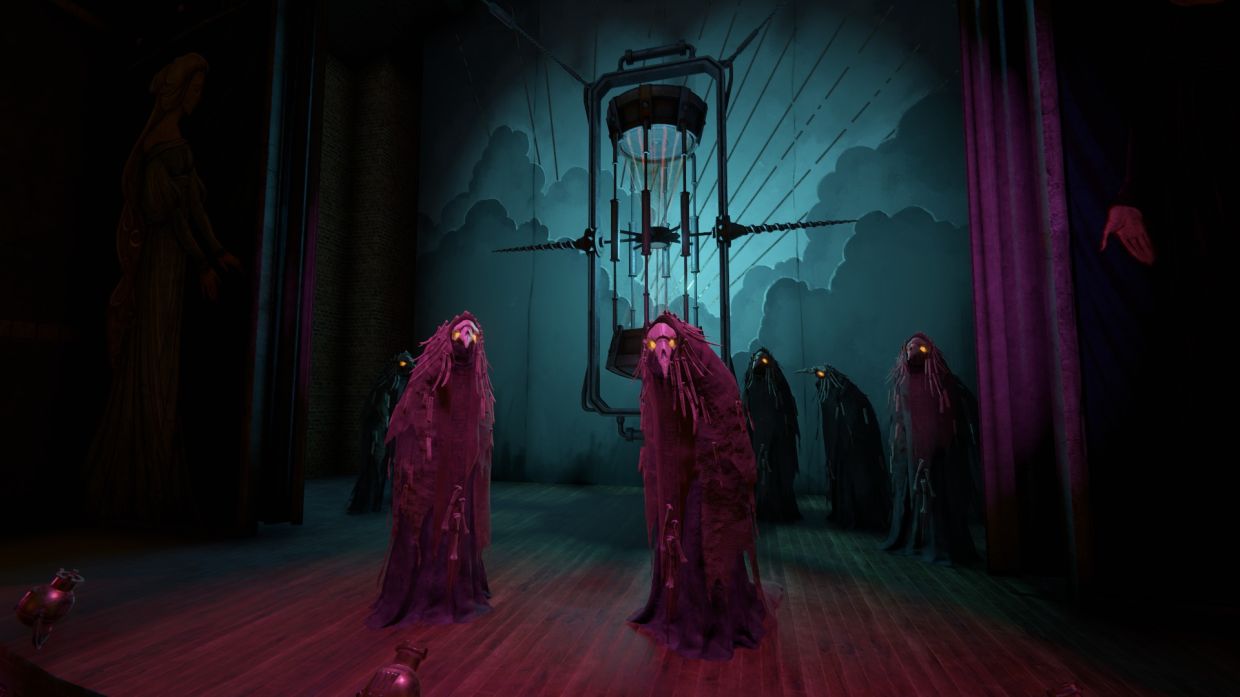
Golubeva's approach to game design draws inspiration from theatrical and cinematic traditions, particularly the sparse aesthetic employed by filmmakers who use minimalism to amplify emotional impact. The town's limited number of reused character models might seem like a technical constraint, but the studio weaponises this apparent limitation, creating an artificial world that becomes oddly more immersive through its honesty about its own construction. This mirrors the deliberate stagecraft of certain art house cinema, where bare-bones sets force viewers to focus on performance and narrative rather than visual spectacle. The result is a game that feels less like a window into another world and more like a carefully constructed theatrical experience.
The game's opening sequences are deliberately disorienting, employing philosophical dialogue that sets a serious tone. One memorable exchange features a severe judge declaring that "the bolder the dream, the more surely it becomes dust when the moment is lost," while another character, a theatre director with distinctive hair, suggests that a truly impactful production should leave audiences emotionally devastated. These aren't throwaway lines but thematic anchors that prepare players for the emotional journey ahead. This commitment to intellectual substance separates the work from conventional gaming narratives, which often prioritise plot mechanics over philosophical depth.
Once the game's framework is established, players shoulder mounting responsibilities and moral dilemmas. The plague itself becomes a mystery wrapped in existential questions: where did it originate, and does it possess intentionality? Players must navigate this uncertainty while managing resources, making decisions that affect not just their own survival but that of the townspeople around them. The game's non-player characters pursue their own agendas and are willing to deceive the player, ensuring that conventional gaming wisdom frequently leads to disaster. This unpredictability mirrors how actual human societies function, where information is incomplete and trust is fragile.
The difficulty settings carry their own philosophical weight. Players who attempt to reduce the challenge encounter a stern warning that the intended experience is "almost unbearable." This framing rejects the modern gaming industry's emphasis on accessibility at all costs, instead positioning discomfort as central to the artistic vision. For some players, this proves too much; the protagonist can spiral into poverty and starvation, creating cascading failures that feel genuinely catastrophic rather than merely inconvenient. The game doesn't soften these blows or offer convenient escape routes.
Yet the designers have incorporated a time-manipulation mechanic that allows players to revisit and alter previous decisions. However, this power comes at a cost. A limited in-game resource gates access to temporal manipulation, and exhausting it triggers an irrevocable game over state. Furthermore, certain quests are designed to delete saved progress entirely, eliminating the safety net that players might rely on. This design cleverly subverts the expectation that games offer infinite second chances, instead creating genuine stakes where poor planning has permanent consequences.
Golubeva articulates a compelling philosophy about why games represent a unique medium for exploring discomfort. She argues that video games function as counterweights to the dopamine-driven consumption patterns dominating digital culture—the endless scroll of TikTok, the repetitive loops of engagement-optimised applications. "Why not do the opposite?" she suggests, proposing that players deliberately subject themselves to jarring, challenging experiences within the game world, then return to their comfortable everyday lives with renewed appreciation. This inverts the usual relationship between games and personal wellbeing, positioning discomfort not as a flaw but as therapeutic.
The psychological dimension of failure in games operates differently than in other media. Gabriel Winslow-Yost, a games industry analyst, notes that video games provide "direct access to negative feelings which no other medium does." Unlike passive consumption of film or literature, where the audience observes characters' failures from a distance, games collapse that separation. Players experience failure as their avatar's failure, creating an immediate, visceral connection to loss and consequence. This immediacy transforms gaming into a space for genuine emotional processing rather than entertainment distraction.
Alexander Souslov, the executive producer and lead designer, emphasises how games allow players to "reflect on failure" in ways unique to the medium. When a player fails in a game, it registers not as a narrative setback but as a personal reckoning. "That bad ending, the failure is your own failure," Souslov notes, highlighting how games collapse the boundary between player and character in ways that demand accountability. This philosophical stance represents a significant departure from games designed to make players feel powerful or successful.
Paradoxically, Golubeva suggests that embracing failure within a game environment can itself feel empowering. She describes the satisfaction of beginning with "complete failure" and being granted the opportunity to "fix this catastrophe." This reframes recovery from failure not as a return to a previous state of grace but as an active process of reconstruction and redemption. The player becomes an agent of change within a broken system, which carries its own particular satisfaction distinct from the ego-gratification of traditional power fantasies.
For Malaysian and Southeast Asian audiences, this design philosophy offers refreshing perspective as gaming becomes increasingly mainstream across the region. Most commercial games available in regional markets emphasise progression, reward, and positive reinforcement—mechanics designed to maximise engagement metrics rather than challenge players intellectually. The Ice-Pick Lodge approach suggests that games could serve educational and developmental functions, teaching resilience through genuine struggle rather than simulated challenge.
The implications extend beyond gaming itself. As Southeast Asian societies grapple with rapid technological change and the psychological effects of constant digital stimulation, games that deliberately cultivate discomfort might offer unexpected value. They provide contained spaces where failure carries no real-world consequences but generates meaningful reflection. This could prove particularly relevant in educational contexts, where games might supplement traditional teaching methods by allowing students to experience failure safely and repeatedly until patterns of behaviour shift.
Ultimately, Ice-Pick Lodge's approach represents a mature vision of what games can accomplish as an artistic medium. Rather than chasing photorealism or maximum entertainment value, these designers have chosen to create experiences that are challenging, philosophically substantive, and uncompromising in their commitment to making players uncomfortable. In an entertainment landscape saturated with products designed to please, the value of deliberately difficult art cannot be overstated. These games remind us that failure, struggle, and discomfort are not obstacles to enjoyment but potential pathways to deeper self-understanding.

