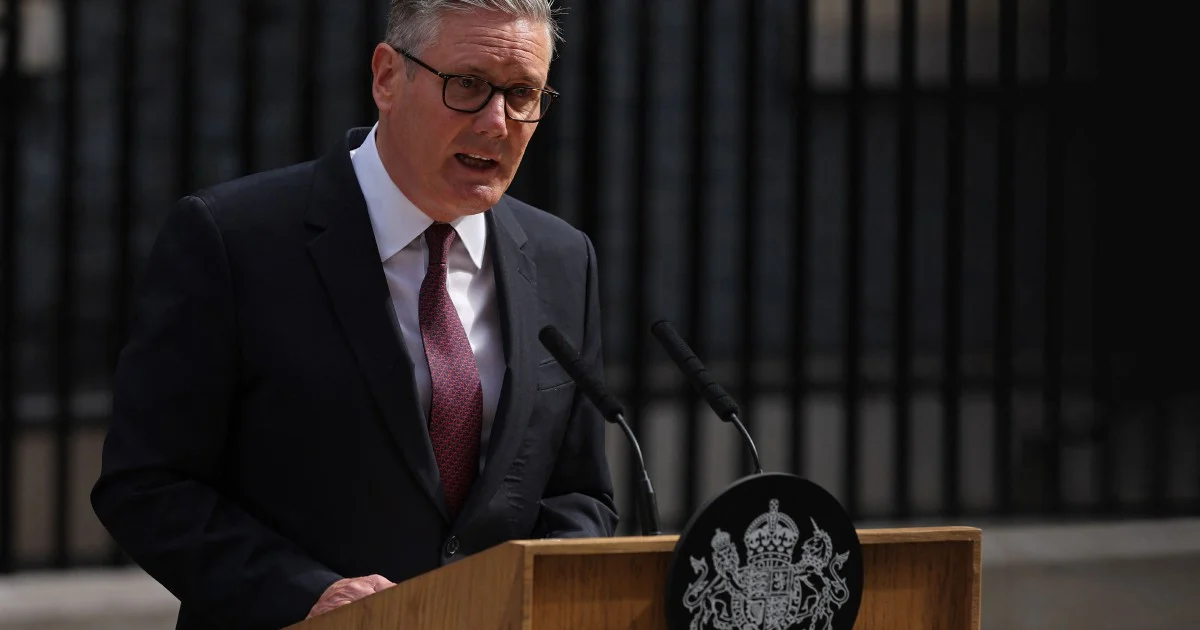
Prime Minister Keir Starmer's announcement on Monday that he intends to step down from his position represents a significant turning point in British politics, with the country preparing to install its seventh leader in just over a decade. The commitment to have a successor in place by the time parliament reconvenes in September underscores the urgency surrounding the transition and the institutional mechanisms that govern leadership succession within the United Kingdom's political system.
Under the Labour Party's constitutional framework, the process for selecting a new leader follows a carefully structured pathway that has evolved over recent decades. The party's rules establish that once a sitting leader announces their intention to depart, a formal election process commences in which eligible candidates must secure nominations from sufficient numbers of Labour members of parliament and registered party supporters. This democratic approach distinguishes the British system from some other Westminster democracies and reflects the party's commitment to broad-based decision-making on fundamental leadership questions.
The timeline for Starmer's replacement reflects practical and political necessities. By anchoring the transition to parliament's return in September, the party creates a defined window for its selection process while ensuring that the House of Commons reconvenes under established leadership rather than amid ongoing uncertainty about the top position. This scheduling acknowledges that prolonged leadership vacuums can create operational difficulties and damage public confidence in government institutions. The Labour Party must balance thoroughness in vetting candidates with the need for decisive action.
The broader context of seven different prime ministers within ten years reveals underlying instability in British governance. This rapid turnover differs markedly from historical norms, where prime ministerial tenures typically extended across multiple parliamentary terms. The frequency of recent changes reflects both structural pressures within the British political system and the particular challenges that contemporary governments face in maintaining internal party cohesion and public support simultaneously. Each change in leadership carries consequences for policy continuity and international relationships.
For Malaysian observers and regional analysts, the British experience offers instructive lessons about leadership transitions within Westminster-style democracies. Malaysia's own constitutional framework for prime ministerial succession differs in important respects, yet both systems grapple with questions about how to manage the transfer of executive power smoothly while maintaining institutional credibility. The Labour Party's reliance on internal democratic processes contrasts with the role that monarchical institutions and coalition dynamics play in determining Malaysian prime ministers, reflecting fundamentally different constitutional architectures.
The rapid succession of British leaders carries implications beyond Westminster. International partners and trading relationships depend on governmental stability and continuity of strategic direction. Southeast Asian governments, including Malaysia, have developed diplomatic and economic relationships anchored to specific administrations. When leadership changes occur in major trading partners and security allies, regional governments must reassess bilateral relationships and adjust their policy calculations accordingly. Starmer's departure adds another element of uncertainty to Britain's international engagement at a time when global tensions remain elevated.
The Labour Party's internal dynamics will significantly shape who emerges as the next leader. Candidates will likely position themselves across the party's ideological spectrum, with some emphasizing continuity with recent policies and others advocating for modified approaches. Backbench members of parliament, labour activists, and registered party supporters will all exercise influence through the formal nomination and election mechanisms. This distributed decision-making ensures that the new leader commands genuine support within the party structures rather than emerging purely through elite consensus.
The September timeline creates distinct practical pressures. Senior figures within the Labour Party must decide whether to contest the leadership or support other candidates within days of Starmer's announcement. Campaign messaging will crystallize around central themes about party direction, the government's policy agenda, and the leadership qualities required to address national challenges. The compressed timeframe means that would-be successors cannot conduct extended campaigns or fundamentally rebuild their public profiles, forcing them to rely largely on existing public recognition and established party positioning.
For the broader electorate, leadership change introduces uncertainty about policy direction even though Labour retains its parliamentary majority. Citizens and businesses factor expectations about governmental priorities into their own economic and social decisions. A new prime minister might emphasize different policy areas, shift negotiating positions on European affairs or economic management, or realign relationships with international partners. This uncertainty, while temporary, can have tangible effects on confidence levels and investment decisions across the economy.
The international dimensions of Starmer's resignation merit particular attention for regional observers. Britain's role in Southeast Asian geopolitics, its participation in regional security frameworks, and its economic relationships with countries including Malaysia may all be reconsidered under new leadership. Some potential successors might prioritise European relationships more heavily, while others might advocate stronger engagement across the Indo-Pacific. These leadership-dependent variations in strategic emphasis demonstrate how prime ministerial personalities and priorities shape foreign policy outcomes in ways that transcend standard diplomatic continuity.
The Labour Party's management of this transition will influence public perceptions of government stability heading into future electoral cycles. How smoothly the succession process unfolds, whether unity emerges around the winning candidate, and what policy reassurances are offered will all contribute to whether the party can restore public confidence after recent turbulence. The incoming leader inherits both the government's existing challenges and the reputational damage from the circumstances surrounding Starmer's departure.
Britain's demonstrated capacity to manage multiple prime ministerial transitions within a single decade reflects both the flexibility of Westminster institutions and the stresses contemporary political systems face. The September deadline for appointing Starmer's successor will test these mechanisms once again, determining how effectively democratic procedures can produce legitimate leadership while maintaining governmental continuity and public confidence during periods of institutional flux.