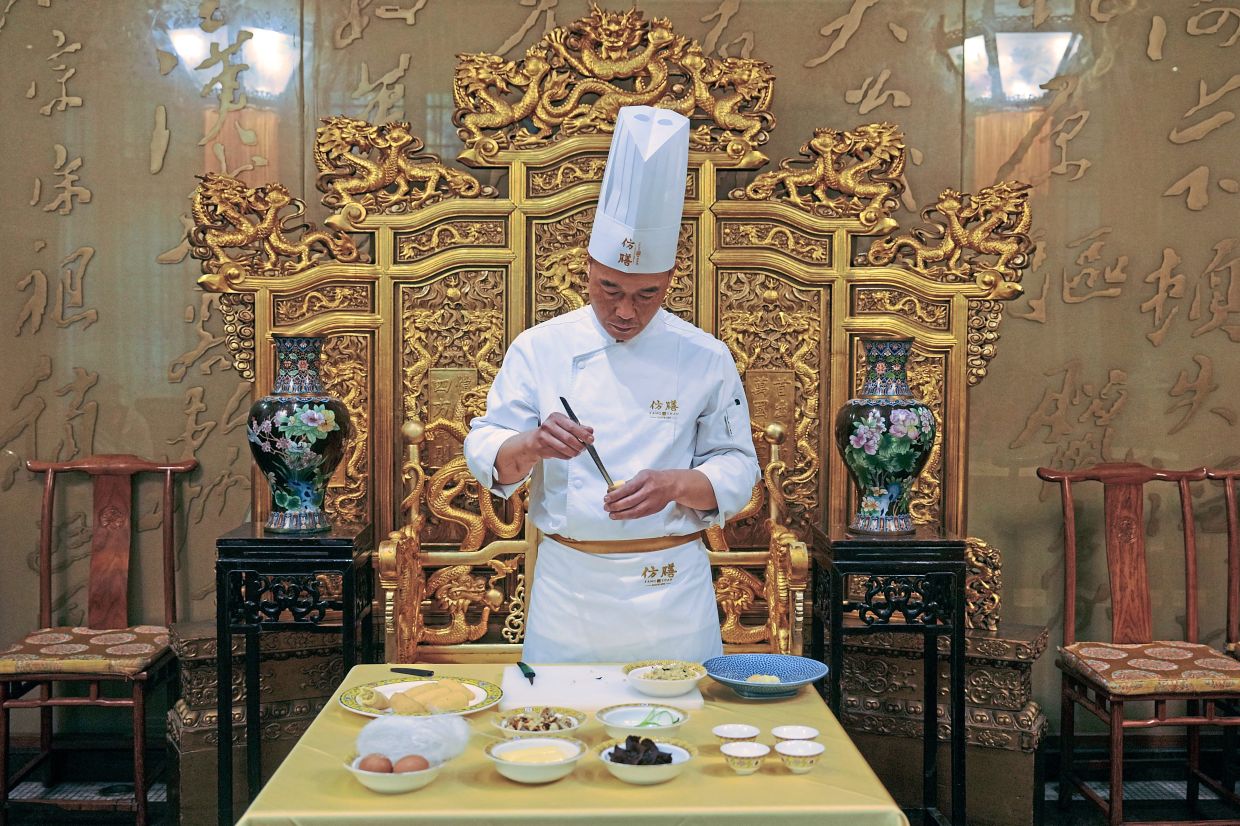
When Empress Dowager Cixi reportedly dreamed of a particular pastry during the twilight years of imperial China, her culinary staff ensured the delicacy appeared on her breakfast table the very next morning. So pleased was she with the confection that she rewarded the responsible chef generously. What began as a humble "minced pork pancake" was transformed into legend through imperial appetite and favour, becoming forever known as the "dream pastry." This anecdote, recounted by Zhou Tong, a pastry chef at Fangshan Restaurant in Beijing, exemplifies how the imperial court's relationship with food transcended mere sustenance, becoming intertwined with power, ceremony and the very fabric of Chinese court life.
Fangshan Restaurant, established in 1925 within Beihai Park by former chefs who served the Qing Dynasty, represents one of the few remaining custodians of authentic imperial cuisine in modern China. Located in a garden once frequented by successive imperial dynasties for governance, relaxation and ritual observances, the restaurant's very name translates as "imitating the imperial cuisine," a modest designation that belies its role as a living museum of culinary history. While several other Beijing establishments offer interpretations of palace dining, Fangshan remains the most systematic in its preservation efforts, complemented by the Palace Museum's archival work in maintaining ceremonial dining implements and recipe documentation from the Qing period.
Imperial cuisine encompassed far more than the emperor's daily meals; it represented an elaborate system of state banquets and ceremonial feasts, each governed by intricate protocols and symbolic meanings. According to researchers at China's Palace Museum, the consumption of milk tea initiated many Qing banquets, setting a ceremonial tone that permeated every subsequent course. The emperor's role as dispenser of favour found expression through food itself: when the sovereign offered wine or particular dishes to princes and officials, recipients were obligated to perform formal gestures of respect and gratitude before partaking. This transformed dining from a nutritional act into a political performance, reinforcing hierarchies and obligations that bound the imperial bureaucracy together.
Beyond celebrations and state occasions, sacrificial rituals formed another pillar of imperial food culture, operating according to separate protocols that often involved meat offerings. At the Palace of Earthly Tranquillity, the consumption of sacrificial pork represented one of the Qing court's most solemn ceremonies. Notably, this pork was boiled without salt, its blandness itself carrying ceremonial significance. Following the ritual, the meat was distributed among attendees, and receiving a portion constituted a considerable honour within court hierarchies. This practice of serving unseasoned foods in ritual contexts extended back centuries into earlier Chinese dynasties, as documented in classical texts such as the "Book of Rites," which describes a ceremonial meat broth served without flavouring. Scholars have interpreted this absence of seasoning as deliberate symbolism, evoking an imagined earlier simplicity and expressing reverence for cultural antiquity.
Pastries occupied a place of particular prominence within the imperial kitchen, commanding their own dedicated institution within the palace apparatus. The recipes preserved at Fangshan today, including Cixi's celebrated dream pastry and delicate steamed corn buns, represent direct lineages from court kitchens, transmitted through generations of master-apprentice relationships. The transmission of these techniques has followed traditional mentorship patterns, with knowledge passing sequentially from one skilled practitioner to the next, ensuring continuity that no written recipe alone could guarantee. This human transfer of craft knowledge has proven essential, as the true mastery of imperial pastry-making involves subtleties that resist codification.
The distinction between imperial pastries and commercially produced alternatives lies fundamentally in methodology. Zhou Tong emphasizes that authentic imperial techniques demand entirely manual execution, forbidding the use of modern convenience appliances such as blenders or food processors. Ingredients undergo specific preparation processes: beans are reduced to powder using traditional sieves, and particular flours are worked in custom-made copper vessels. The rationale extends beyond mere nostalgia; the texture and mouthfeel of hand-crafted pastries possess qualities that mechanised production inevitably destroys. The delicate graininess and sandy sensation characteristic of these confections requires the precise touch and intuitive adjustments that only human hands can provide. During peak seasons, Fangshan sells over 200 pea flour cakes daily, alongside their bestselling red bean rolls, demonstrating that modern consumers appreciate these distinctions enough to support the labour-intensive production.
Chefs entering Fangshan's kitchen often confront a profound professional reorientation. Fan Liangliang, now the restaurant's executive chef, discovered upon joining as an apprentice that his culinary school training required comprehensive unlearning. The institution's slower, more deliberate techniques contradicted the efficiency-focused methods he had acquired academically. Among these traditional methods is "Nizihuo," a labour-intensive process involving the reduction of fish, shrimp or poultry into impossibly smooth paste, which is then artfully reshaped into decorative zoomorphic and botanical forms: frogs, birds and flowers. This transformation exemplifies a foundational principle of imperial cuisine that all dishes required simultaneous achievement of innovation, visual splendour, nutritional value and presentational magnificence befitting the imperial table.
Adaptation has necessarily accompanied preservation, as certain historical ingredients no longer remain available or acceptable. Bear paws, once celebrated components of imperial feasts, have vanished from contemporary menus. Rather than abandoning dishes associated with such rare ingredients, chefs like Fan have developed thoughtful substitutions that retain each dish's essential character and symbolic meaning. This approach reflects a deeper understanding that imperial cuisine functioned as cultural expression rather than static formula, capable of evolution while maintaining continuity with its origins.
The relationship between Chinese food and broader cultural meaning has roots extending far beyond the imperial period. Classical poetry demonstrates how food served as vehicle for expressing political allegiance, personal aspiration and aesthetic philosophy. The celebrated poet Du Fu composed verses about cold noodles prepared with pagoda-tree leaves, transforming this modest peasant dish into a meditation on loyalty and thwarted ambition to serve imperial authority. Such examples illustrate that understanding Chinese culinary heritage requires appreciating how food has historically carried significance reflecting politics, culture and evolving aesthetics. As Wandi Wang, a Chinese studies scholar, observes, the task of preserving culinary traditions demands treating their history with intellectual seriousness, recognising that how contemporary society chooses to remember historical foodways reveals as much about present values as about past practices.
At Fangshan's philosophical centre lies recognition of imperial cuisine as a synthesis of Manchu and Han culinary traditions, deliberately fusing the food cultures of the Qing rulers with those of China's majority population. This culinary amalgamation served political purposes beyond the palate, representing imperial efforts to integrate diverse populations under unified sovereignty. Today, when restaurant servers recount the histories embedded within each dish, customers engage not merely with flavour and texture but with narratives of dynasty, ceremony and cultural continuity. The dream pastry becomes more than pastry; it becomes a connection to an empress's breakfast table centuries past, a tangible link across generations that keeps history alive through the fundamental human act of eating together.

