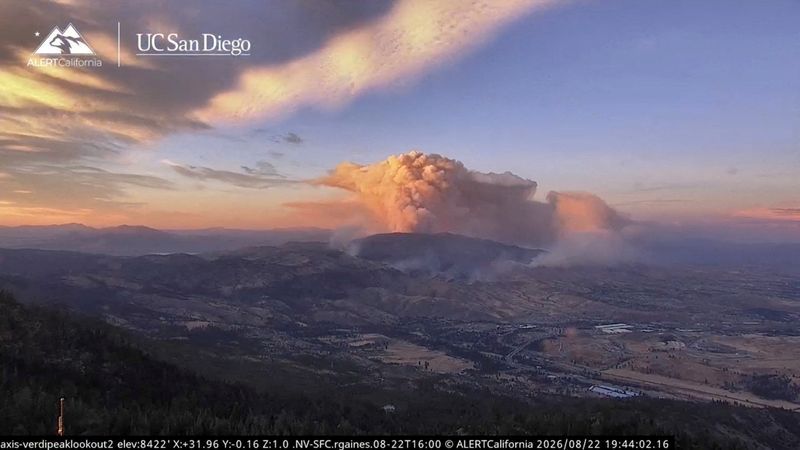
The explosion of smartphones and social media platforms has fundamentally reshaped how news breaks and spreads across the globe. Eyewitnesses now capture moments of significance—from natural disasters to political upheaval—and share them instantly online. This democratisation of visual reporting has proven invaluable for news organisations worldwide. Yet this same accessibility has created a pressing vulnerability. As artificial intelligence technologies advance at breathtaking speed, distinguishing authentic documentation from sophisticated fabrications has become increasingly difficult, forcing newsrooms to develop entirely new skillsets and processes to protect their credibility.
Reuters, operating as the world's largest news agency with approximately 2,600 journalists stationed across roughly 200 locations, recognised early that physical presence alone cannot guarantee comprehensive coverage. Breaking news erupts unexpectedly in remote corners of the planet, often captured first by ordinary people rather than professional journalists. The agency's reliance on verified public-sourced imagery stems from this fundamental reality: no amount of staff deployment can position reporters everywhere simultaneously. This pragmatic approach has enabled Reuters to document major international events—from military strikes causing civilian casualties to mass protests and political crises—with authenticity and timeliness that would otherwise be impossible to achieve.
The stakes surrounding image verification have escalated dramatically with recent advances in artificial intelligence. Early deepfakes and AI-generated content often betrayed their artificial origins through obvious flaws: subjects with anatomically impossible numbers of fingers, text rendered in gibberish, or backgrounds that defied physical laws. Modern AI systems have largely overcome these telltale errors. Contemporary generative technologies can produce images and videos with photorealistic quality that deceives even trained observers. This sophistication extends beyond mere generation; bad actors can feed AI systems authentic photographs and footage, instructing algorithms to manipulate them into depicting events that never occurred or altering how real events unfolded. When false images of Venezuelan President Nicolás Maduro circulated online following his purported January capture—showing him in handcuffs—they exemplified how AI-generated content could instantaneously create misleading impressions of major geopolitical developments.
Beyond deliberately created deepfakes, Reuters identifies another category of misrepresentation that predates AI entirely: the recycling and mislabelling of genuine older content. Social media users frequently share authentic videos of genuine protests or events, but deliberately or carelessly misidentify when and where they occurred. This practice of retroactively recontextualising real footage has become widespread, adding another layer of complexity to verification work. The challenge facing modern newsrooms therefore encompasses both technologically-generated fabrication and human-driven misrepresentation.
Reuters addresses this multifaceted problem through a dedicated team of visual verification specialists who employ systematic methodology to authenticate images before publication. Their process begins with sourcing: locating and interviewing the original person who captured the image or video whenever possible, establishing their credibility and gathering firsthand accounts of the circumstances. This human element remains irreplaceable, as genuine eyewitness testimony provides context that no algorithm can generate. Simultaneously, verification journalists examine the technical data embedded within digital files—metadata containing information about capture location, timestamp, and device used—which can corroborate or contradict claims about when and where footage originated.
The comparative analysis phase constitutes perhaps the most labour-intensive dimension of verification work. Journalists cross-reference visual content against multiple external sources including weather records, satellite imagery, street-level photography archives, and historical datasets. The direction and angle of shadows within photographs reveals the precise time of day when images were captured, since the sun's position follows predictable patterns. Official reports from relevant authorities, news accounts from other media organisations, and supplementary imagery from different eyewitnesses viewing the same scene from alternative angles all contribute to building a comprehensive understanding of whether footage authentically represents claimed events. This resembles detective work more than traditional journalism—assembling fragmentary clues into a coherent narrative that either validates or debunks the content's authenticity.
Technological tools now complement human judgment in this process. Reuters journalists deploy multiple artificial intelligence detection systems specifically trained to identify traces of AI manipulation or generation that remain invisible to human perception. These computational tools scan images and videos for statistical anomalies, processing artifacts, and other signatures characteristic of synthetic or modified content. However, verification specialists recognise these tools carry significant limitations. AI detection systems can generate false positives or fail to identify sophisticated manipulations, meaning they function as supplementary evidence rather than definitive verdicts. The technology remains imperfect, constantly evolving as both detection and generation capabilities advance in parallel.
The cumulative result of this rigorous process is strikingly selective. Reuters journalists process hundreds of photographs and videos daily from social media sources, yet typically validate and publish only approximately a dozen. This extraordinarily high rejection rate reflects the discipline required to maintain credibility in an environment saturated with misleading visual content. Each image and video that reaches publication has survived multiple verification layers: source authentication, metadata validation, comparative analysis against independent data sources, AI detection scanning, and ultimately human editorial judgment.
This commitment to verification reflects Reuters' foundational Trust Principles, established during World War Two and continuously reaffirmed, which mandate providing unbiased and reliable news while constantly strengthening service quality. The visual verification apparatus represents a modern interpretation of these century-old principles applied to contemporary technological challenges. By investing substantially in verification infrastructure and specialist personnel, Reuters signals that authenticity remains non-negotiable, regardless of commercial pressure to publish rapidly or amplify sensational content.
The implications extend beyond Reuters itself. As artificial intelligence becomes increasingly accessible and capable, other news organisations, regulatory bodies, and the general public face equivalent authentication challenges. The systematic methodology Reuters employs—combining human investigation, technical analysis, and comparative corroboration—offers a replicable model for digital literacy in an age of sophisticated visual manipulation. However, the resource requirements are substantial, raising questions about whether smaller newsrooms can maintain equivalent standards. This disparity suggests that verification capacity may increasingly stratify global media, with well-funded organisations maintaining credibility while less-resourced outlets struggle to authenticate content, potentially accelerating the shift toward subscription-based or premium news models.
Looking forward, the verification challenge will only intensify. As AI systems improve and become more widely distributed, the labour-intensive verification processes Reuters currently employs may require enhancement with more sophisticated technological solutions. Yet the fundamental principle—that authentic visual journalism requires dedicated professionals applying rigorous standards—appears unlikely to change. The race between AI detection capabilities and generation sophistication will determine whether visual verification remains feasible at scale, or whether alternative authentication mechanisms such as blockchain-based content provenance systems eventually become necessary.

