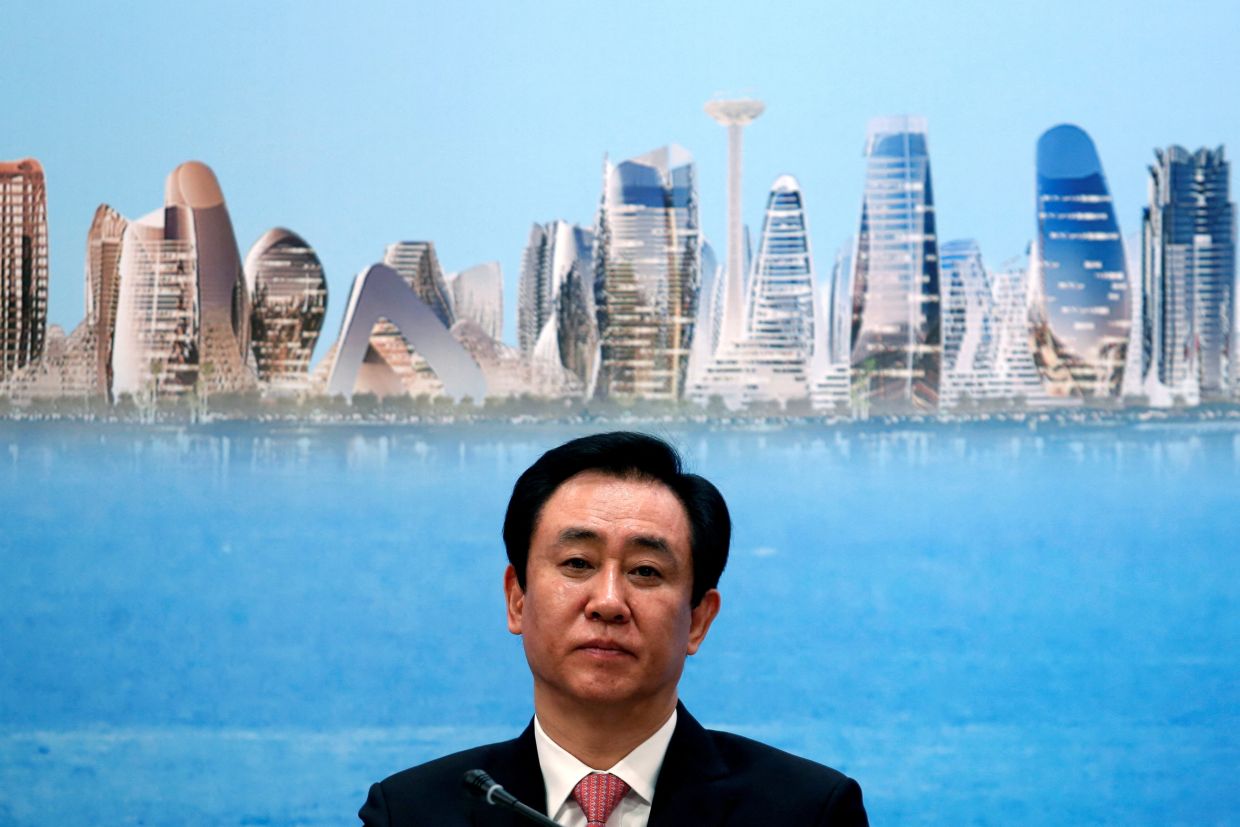
Hui Ka Yan, the former billionaire behind China Evergrande Group, received a life sentence from a Shenzhen court this week, marking a dramatic conclusion to one of Asia's greatest wealth-to-ruin transformations. The 67-year-old property mogul, once recognised as Asia's richest individual, pleaded guilty in April to eight distinct charges encompassing misuse of funds, fundraising deception, illegal deposit-taking, unauthorised lending arrangements, fraudulent securities issuance, and bribery. His conviction represents the judicial culmination of an economic catastrophe that has reverberated across China and global financial markets for half a decade.
Evergrande's implosion stands as a defining moment in the chronic dysfunction afflicting China's property sector, an industry that has long acted as a brake on the world's second-largest economy. The company, which once commanded the position of China's premier property developer by contracted sales volume, now carries nearly $300 billion in defaulted liabilities across domestic and international creditors. The sheer scale of these obligations underscores how aggressively Hui leveraged debt to fuel the company's expansion throughout the 1990s and 2000s, a strategy that ultimately proved catastrophic when the property market cooled.
The sentencing verdict handed down in Shenzhen carried severe additional penalties beyond imprisonment. Chinese authorities have confiscated Hui's entire personal wealth, effectively eliminating what remains of his once-stupendous fortune. The court simultaneously imposed substantial corporate fines, levying 8.82 billion yuan (approximately $1.31 billion) against Evergrande itself and 7 billion yuan against Hengda Real Estate, its main subsidiary. Five other senior executives received sentences ranging from six to 18 years imprisonment, alongside financial penalties. State media CCTV reported that 56 individuals connected to Evergrande, excluding Hui, received criminal sentences on the same day, illustrating the breadth of misconduct the investigation uncovered.
The court's formal statement emphasised the gravity of the criminal enterprise, noting that Evergrande's actions and Hui's personal conduct involved "particularly huge amounts and egregious circumstances" that inflicted "particularly significant economic losses and caused particularly serious social harm." This judicial language reflects official recognition that the crisis transcended mere business failure, instead representing institutional corruption and fraud affecting millions of ordinary Chinese citizens. The pronouncement carries symbolic weight in demonstrating that even figures of extraordinary wealth and influence face accountability within China's legal system, though critics question whether the sentence provides meaningful restitution to aggrieved parties.
The human cost of Evergrande's collapse remains viscerally apparent in public sentiment. Homeowners and investors who participated in social media discussion groups expressed bitter frustration in the wake of the sentencing. Their comments—"All ordinary citizens have paid the cost," "Imprisonment is meant to protect him. If he comes out, his life is in jeopardy," and most poignantly "What about our money?"—reveal the chasm between legal punishment and financial recovery. Millions of middle-class Chinese invested in Evergrande's wealth-management products, believing these vehicles offered secure returns. Instead, their savings evaporated as the company defaulted, triggering protests that raised genuine concerns about social stability across multiple Chinese cities.
Hui's trajectory from humble origins to extraordinary riches and then to prison exemplifies the volatility of China's property-driven economic model. Born in rural Henan province and raised by his grandmother after his parents died, Hui founded Evergrande in 1996 with limited initial capital. Within two decades, his aggressive acquisition strategy and debt accumulation had transformed the company into China's largest property developer by contracted sales. In 2017, Forbes valued Hui's personal net worth at $45.3 billion, making him the wealthiest individual across Asia at that moment. This meteoric rise reflected both entrepreneurial ambition and the property sector's capacity to generate extraordinary wealth during China's sustained economic expansion.
The company's authorised detention and liquidation represent the irreversible endpoint of Evergrande's existence as a functional enterprise. A Hong Kong court ordered the company's liquidation in 2024, followed by delisting from the Hong Kong Stock Exchange last year, formally closing a dramatic boom-and-bust narrative that had consumed international media attention and market analyses throughout the preceding five years. The liquidation proceedings have proceeded at an extraordinarily sluggish pace, with liquidators reporting that only approximately $255 million in assets had been realised through sales as of August, a figure that pales against creditor claims totalling $45 billion. This vast chasm illustrates the depths of Evergrande's insolvency and the limited prospects for meaningful creditor recovery.
Beyond mainland China's borders, legal battles continue as liquidators pursue the recovery of substantial sums. International court proceedings aim to freeze offshore assets belonging to Hui and his former spouse, targeting approximately $6 billion in dividends and executive compensation that were distributed to the founder and other senior managers during Evergrande's financially troubled final years. These offshore asset-freezing efforts represent one of the few remaining mechanisms through which aggrieved creditors might recover losses, though such international litigation typically proceeds with considerable delays and uncertain outcomes. The liquidators have indicated their determination to pursue every available recovery avenue, recognising that creditors' claims vastly exceed available assets.
China's financial regulators imposed additional penalties against Hui in 2024 beyond the criminal conviction framework. The securities regulator imposed a $6.6 million fine and implemented a lifetime bar from securities market participation after investigations established that Evergrande's primary listed unit had systematically inflated financial earnings and perpetrated securities fraud. These regulatory sanctions operate independently from the criminal justice proceedings, layering additional consequences atop the life sentence and asset confiscation.
The Evergrande case reverberates significantly across Southeast Asia and global emerging markets, as it demonstrates both the fragility of property-dependent economic models and the potential judicial consequences for financial misconduct at the highest corporate levels. Malaysian investors, property developers, and financial institutions have closely monitored Evergrande's unfolding crisis, recognising parallels with their own domestic real estate sectors. The conviction signals that even in authoritarian governance contexts, corporate leaders may ultimately face legal accountability for massive fraud and financial mismanagement, though the protracted timeline between default and sentencing—spanning five years—raises concerns about the speed and efficacy of such accountability mechanisms.
Looking forward, Evergrande's liquidation and Hui's imprisonment may serve as cautionary markers regarding the dangers of leveraged property development business models and the systemic risks posed when individual developers accumulate extraordinary corporate control with insufficient governance oversight. For Malaysian policymakers and regulators, the case underscores the importance of maintaining robust financial transparency requirements, strict leverage limitations for developers, and meaningful corporate governance frameworks that prevent concentration of decision-making authority within individual actors. The crisis has prompted broader reassessment across Asia regarding property sector regulation and the interconnections between real estate performance and broader macroeconomic stability.
The true measure of justice in the Evergrande case, however, remains contested. While Hui's life sentence provides symbolic accountability and the corporate fines represent acknowledgment of institutional wrongdoing, the practical reality for affected ordinary investors is far grimmer. Millions of Chinese citizens will likely recover only fractional portions of their lost investments despite the judicial proceedings, a reality that has prompted ongoing social discontent and renewed scrutiny of how effectively Chinese regulatory frameworks protect retail investors. The sentencing represents legal resolution but not financial restoration, leaving the deeper question of creditor compensation and investor protection largely unresolved.

