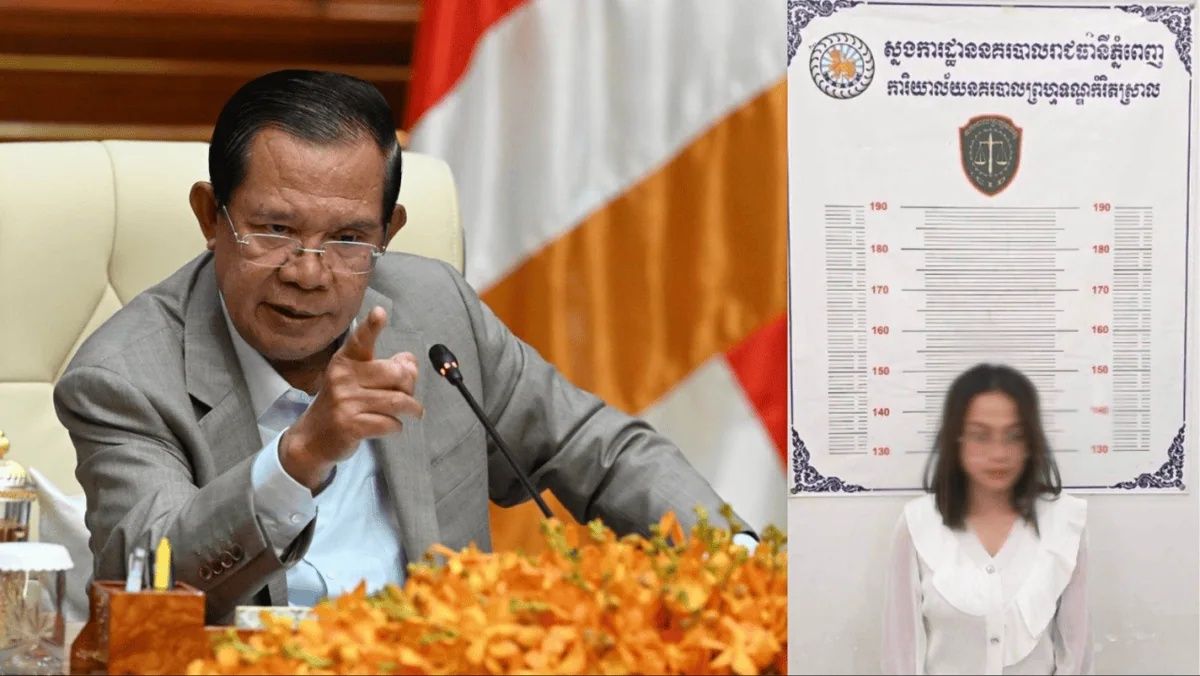
Cambodia's Senate president Hun Sen has directed the country's National Council for Women to initiate prosecutions against individuals accused of using inflammatory language that disparages women and undermines Khmer social values. During discussions with a delegation from the council on Friday, Hun Sen outlined his vision for a coordinated legal and administrative response to what he characterised as a growing problem of degrading speech in public discourse and online platforms.
The initiative stems partly from recent incidents that drew Hun Sen's attention. He referenced an unnamed woman who allegedly used profane language to demean government bodies and their officials, resulting in authorities calling both the woman and her husband to submit written apologies. The directive suggests that such cases, once viewed primarily as matters of personal conduct, may now be treated as issues warranting formal legal intervention under state supervision.
A second case highlighted by Hun Sen involved a woman identified as Chenda Sovannary, who reportedly engaged in a confrontation with a soldier during a transaction dispute over a mobile phone purchase. Hun Sen expressed particular concern about the perceived slight to the military figure, using the incident to illustrate his broader argument about maintaining respect across society. His comments revealed an underlying concern with protecting not just women themselves, but hierarchical respect for state institutions and their representatives.
The semantic framing of the initiative deserves scrutiny. Hun Sen explicitly stated that the measures should not be interpreted as authoritarian restrictions on freedom of expression. Instead, he framed them as defensive actions necessary to preserve the dignity of Khmer women and social cohesion. He drew a parallel to content moderation policies implemented by major social media platforms, which maintain community standards and ethical guidelines. This comparison suggests an attempt to normalise state intervention by reference to private corporate practices that many Cambodians encounter daily through Facebook and other platforms.
The institutional architecture underpinning this initiative reflects significant government ambition. Hun Sen tasked the National Council for Women with working alongside multiple ministries—Interior, Information, Culture and Fine Arts, and Post and Telecommunications—to establish mechanisms for what he termed the protection of Khmer women's dignity and values. This multi-agency approach suggests the government intends to create systematic monitoring and enforcement infrastructure rather than pursue isolated prosecutions.
Social media monitoring appears central to the strategy. Hun Sen specifically instructed authorities to establish dedicated teams to track what he called cursing and insults on Facebook. Given that Facebook remains the dominant social platform among Cambodian users and a primary space for political debate and civic commentary, this focus on online speech carries significant implications for digital discourse. The directive implies that private conversations conducted in semi-public digital spaces may increasingly fall within state scrutiny.
The initiative raises questions about how terms like "social morality" and "women's values" will be defined and applied in practice. These concepts remain vague and subject to interpretation, potentially creating space for selective enforcement based on political considerations or social power dynamics. Individuals with greater resources or connections may navigate such provisions differently than marginalised groups or political opponents of the government.
Cambodia's approach reflects broader regional trends in which Southeast Asian governments have expanded legal frameworks around speech and behaviour. Countries across the region have invoked protection of morality, national dignity, and social stability to justify restrictions on expression. Whether such measures genuinely protect vulnerable populations or primarily serve state control objectives remains contested among observers and civil society advocates.
For Malaysia and other Southeast Asian nations, Cambodia's initiative offers a case study in how protections ostensibly designed to safeguard social values can expand government authority. Malaysian authorities have similarly pursued cases involving alleged insulting speech and disrespect toward institutions, and the Cambodian model may inform ongoing debates here about the appropriate balance between protecting social cohesion and preserving space for open expression and criticism.
Hun Sen's emphasis that these measures protect rather than restrict national dignity suggests the government views the initiative as fundamentally different from censorship. However, the practical mechanics of monitoring social media, directing prosecutions through state-aligned institutions, and establishing multi-agency enforcement mechanisms create the infrastructure for extensive state involvement in regulating citizen speech and behaviour. How Cambodian courts and the National Council for Women ultimately interpret and apply these directives will determine whether the initiative functions primarily as a tool for protecting women and social stability, or as a mechanism for controlling political discourse under new justifications.

