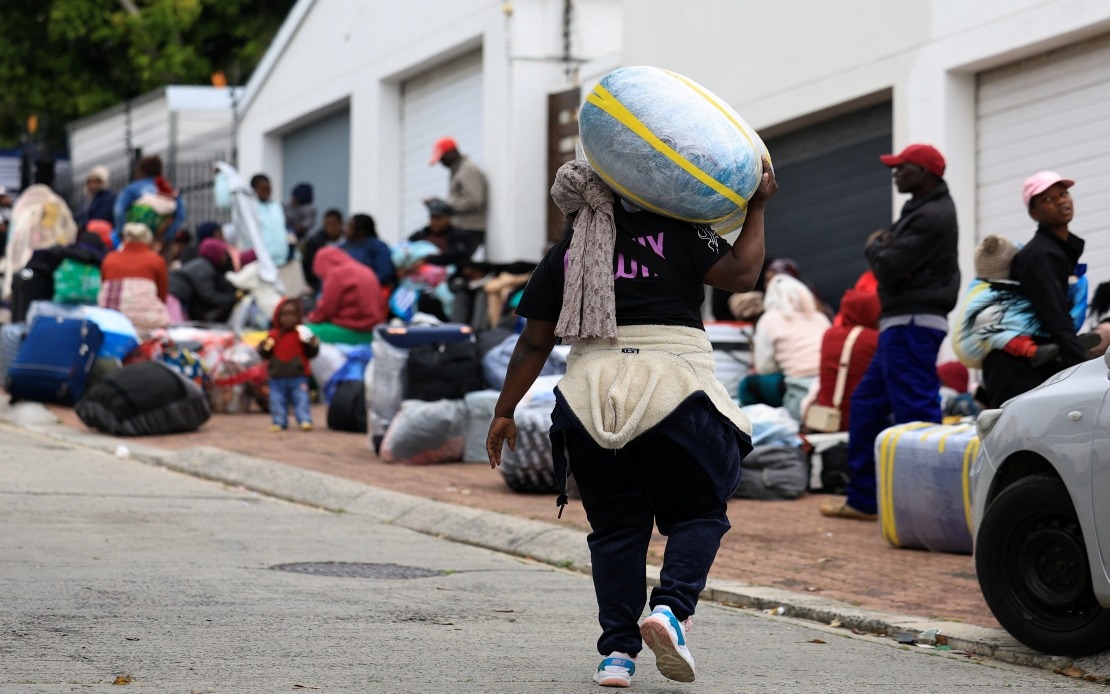
South African immigration authorities commenced a large-scale relocation operation on Saturday, moving hundreds of Zimbabwean nationals and some Malawian citizens from a temporary processing centre in Cape Town to Musina in Limpopo Province. The transfer represents a significant administrative response to mounting tensions surrounding undocumented foreign nationals in the Western Cape, following weeks of anti-immigrant agitation that created an atmosphere of fear and uncertainty among migrant communities.
The Epping processing centre in Cape Town had served as an emergency reception point for migrants seeking government assistance, but officials have now shifted operations to consolidate processing and repatriation efforts in Musina, where thousands of other foreign nationals are already undergoing documentation and preparation for return to their home countries. This centralisation of processing reflects authorities' determination to manage what has become a humanitarian and administrative challenge across South Africa's borders and provinces.
Conditions at the Epping facility have deteriorated as capacity constraints and the pace of arrivals overwhelmed available resources. Humanitarian organisations operating at the site reported that food supplies, shelter, and sanitation facilities remained inadequate despite their continuous efforts to support the migrant population. Several individuals experienced gastrointestinal and respiratory illness, reflecting the overcrowded and unsanitary conditions that inevitably develop when large numbers of vulnerable people congregate in temporary facilities with limited infrastructure.
The situation grew more acute on Saturday as approximately four hundred additional arrivals sought assistance overnight, only to find themselves turned away as the processing centre neared closure. These newly arrived migrants were forced to remain in adjacent areas without immediate access to the services they had travelled considerable distances to obtain, creating scenes of disappointment and desperation as buses were loaded with those already processed and deemed ready for transfer northward.
Personal testimonies underscore the gravity of the crisis unfolding in South Africa's major urban centres. Yekuai Mokoena, a Zimbabwean national who had sought shelter at the Epping site while protecting her two children after earlier camping outside the Zimbabwean consulate in Cape Town, offered a stark assessment of conditions. Her minimal response—"The situation is bad"—conveyed the exhaustion and hopelessness many migrants experienced after enduring weeks of uncertainty and inadequate living conditions.
The broader context driving these relocations stems from anti-immigrant mobilisation that escalated dramatically in recent weeks. An unofficial deadline of June 30 was propagated by anti-immigrant groups demanding that undocumented foreign nationals depart South Africa voluntarily. This unofficial ultimatum created genuine fear within migrant communities, prompting thousands to seek official government assistance and protection. Approximately three thousand people had previously relocated to the Epping site after spending roughly two weeks camped outside the Zimbabwean consulate building, where they hoped authorities might expedite their departure from a country where they increasingly felt unsafe.
The violence and xenophobic sentiment accompanying this mobilisation reflect deeper anxieties within South African society regarding employment, service delivery, and resource competition. Foreign nationals, particularly those from Zimbabwe and other neighbouring countries, have become focal points for public frustration over unemployment and economic pressures. This scapegoating has created humanitarian consequences that ripple across the region, forcing neighbouring governments to anticipate increased return migration and the social challenges accompanying large-scale repatriation.
The transfer to Musina represents both a practical solution and an acknowledgment that Cape Town cannot sustain indefinite processing of migrant populations at its current scale. By consolidating operations in Limpopo Province, authorities seek to streamline documentation, verification, and repatriation processes. However, this approach also raises questions about resource adequacy in Musina and whether facilities there can accommodate thousands of additional arrivals without similarly deteriorating conditions.
For the broader Southern African region, this situation carries significant implications. Zimbabwe, already facing economic challenges and labour migration pressures, must prepare to receive returnees who may face difficulties reintegrating into a domestic economy with limited employment opportunities. Other neighbouring nations similarly affected by anti-immigrant sentiment in South Africa must coordinate responses to prevent destabilisation from sudden return migration flows. The crisis underscores how domestic political tensions in one country create cascading effects across borders and regional stability arrangements.
Authorities have simultaneously urged remaining applicants to bypass Cape Town entirely and travel directly to Musina for processing, essentially closing the Western Cape as an entry point for migrant assistance. This directive, while administratively efficient, places additional burdens on individuals already operating under severe constraints. It assumes migrants possess resources for travel, accurate information about procedures, and documentation sufficient to navigate interstate movement—assumptions that may not align with the precarious circumstances of many undocumented individuals.
The humanitarian organisations providing grassroots support at Epping and other sites remain crucial intermediaries, delivering basic assistance while government capacity struggles to match the scale of need. Their continued presence and advocacy ensure that processing does not occur entirely without oversight and that vulnerable populations, particularly families with children, receive minimum standards of care. Yet relying on charitable organisations to supplement state services reveals fundamental gaps in South Africa's approach to managing migration within the framework of regional movement and established protocols.
As buses depart Cape Town carrying migrants toward processing centres further north, they carry human dimensions of broader policy struggles. For Zimbabweans like Mokoena, navigating these systems means protecting families while responding to circumstances beyond individual control. For South Africa, the challenge involves balancing legitimate immigration enforcement with humanitarian obligations toward people within its territory. For the region, the test lies in managing consequences of xenophobic mobilisation while protecting the mobility rights that regional protocols theoretically guarantee to Southern African citizens.

