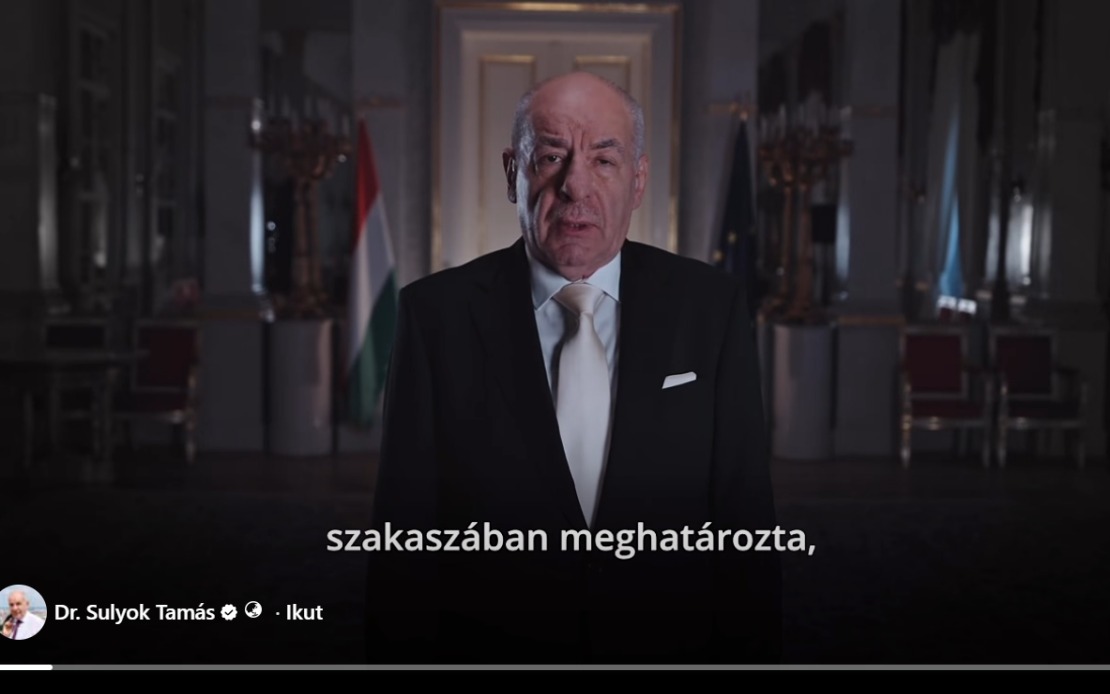
Hungarian President Tamás Sulyok has capitulated to mounting political pressure by agreeing to countersign a constitutional amendment that will effectively terminate his presidency, marking a dramatic reversal in Budapest's power struggle. After initially hesitating, Sulyok announced he would formally countersign the constitutional changes, allowing them to take legal effect and clearing a significant hurdle in Prime Minister Péter Magyar's agenda for sweeping political transformation. The decision came following Magyar's imposition of a five-day ultimatum after parliament passed the amendment, threatening impeachment proceedings should Sulyok refuse to cooperate. With the countersignature now confirmed, Sulyok's office will become vacant starting Monday, enabling a new presidential election within the constitutionally mandated 30-day window.
The constitutional amendment represents the latest chapter in Hungary's turbulent political upheaval following the removal of longtime leader Viktor Orbán and his coalition partners in April. Sulyok himself, an Orbán ally, had been elected to the ceremonial post in May, expected to serve a largely figurative role. However, the incoming Magyar government viewed the presidency as insufficiently aligned with its reform agenda and moved swiftly to change the constitutional framework governing the position. Parliamentary speaker Agnes Forsthoffer will assume presidential powers during the interim period, ensuring continuity of state functions while the two-chamber legislature selects a replacement. Since Hungary's system vests presidential selection in parliament rather than popular vote, the composition of the legislature fundamentally determines who holds the office.
Sulyok's formal acceptance of his own removal came only after exhausting other options, though the president never mounted a serious legal challenge despite expressing reservations about the proceedings. In his public statements, Sulyok conceded that parliament's decision violated the constitution but acknowledged possessing no practical legal avenue to contest it. Constitutional experts had previously indicated that Hungary's constitutional court lacked authority to overturn the parliamentary decision on substantive grounds, though it might theoretically raise procedural objections. This assessment essentially foreclosed Sulyok's options, leaving capitulation as his sole realistic course of action.
The constitutional modifications carry significance extending well beyond the presidency itself, enabling comprehensive political reforms that Magyar's government intends to pursue as part of its break from the Orbán era. Magyar has framed the constitutional changes as restoration of democratic safeguards that the previous administration had systematically dismantled, promising to reestablish institutional checks on executive power and create mechanisms to hold authorities accountable. In a Facebook post, the prime minister declared that these constitutional adjustments would return to Hungarians fundamental assurances that governmental authority remains finite, that public assets can be recovered, and that state institutions exist to serve citizens rather than powerful interests. The sweeping language suggests Magyar envisions using these constitutional powers to pursue broader institutional reorganisation beyond the presidency.
Sulyok's public complaints about his diminished position underscore an emerging constitutional paradox in Hungary. Through a video address, the departing president lamented that any future head of state would effectively operate as a subordinate to the executive and parliamentary majority, stripped of genuine oversight capabilities or independent authority. This characterisation reflects how the constitutional amendments have concentrated power within parliament and the executive branch, fundamentally altering the supposed balance between institutions. Sulyok specifically objected that the presidency has been reduced to a position completely vulnerable to political pressures, lacking any meaningful institutional independence or ability to scrutinise governmental decisions.
For Malaysian readers, Hungary's constitutional crisis offers instructive parallels regarding institutional vulnerability when political consensus fractures. Like many democratic systems, Hungary theoretically established checks and balances, yet demonstrated how rapid political change can overwhelm constitutional protections when a sufficiently determined majority pursues reorganisation. The speed with which Orbán's successors moved to alter presidential powers illustrates how written constitutional frameworks, without underlying commitment to institutional independence, provide limited protection to officeholders deemed obstacles by dominant political forces. This dynamic resonates across Southeast Asia, where several nations have experienced situations where dominant coalitions reshaped institutions to consolidate power or remove perceived threats.
The replacement presidential election scheduled for the coming weeks will definitively establish whether Magyar's government intends to install a pliant figurehead or genuinely intends to restore institutional balance through constitutional reform. The selection process will occur entirely within parliament, ensuring the new president reflects the governing coalition's preferences. Observers will watch whether subsequent constitutional amendments further weaken presidential independence or whether Magyar's government executes genuine democratisation. Hungary's experience suggests that constitutional transformation depends less on written provisions than on political actors' genuine commitment to respecting institutional limits even when possessing power to breach them.
Sulyok's removal also reflects generational and ideological divisions within Hungarian politics, as Magyar's coalition explicitly rejected Orbán-aligned figures and sought to chart alternative directions on European integration, judicial independence, and democratic accountability. The constitutional amendment served simultaneously as a mechanism to remove an ideological adversary and to reshape institutions according to reformist principles. Whether these reforms produce durable constitutional improvements or merely constitute a vehicle for the new government's consolidation of authority remains an open question for Hungary's political future and for observers assessing the resilience of democratic institutions globally.

