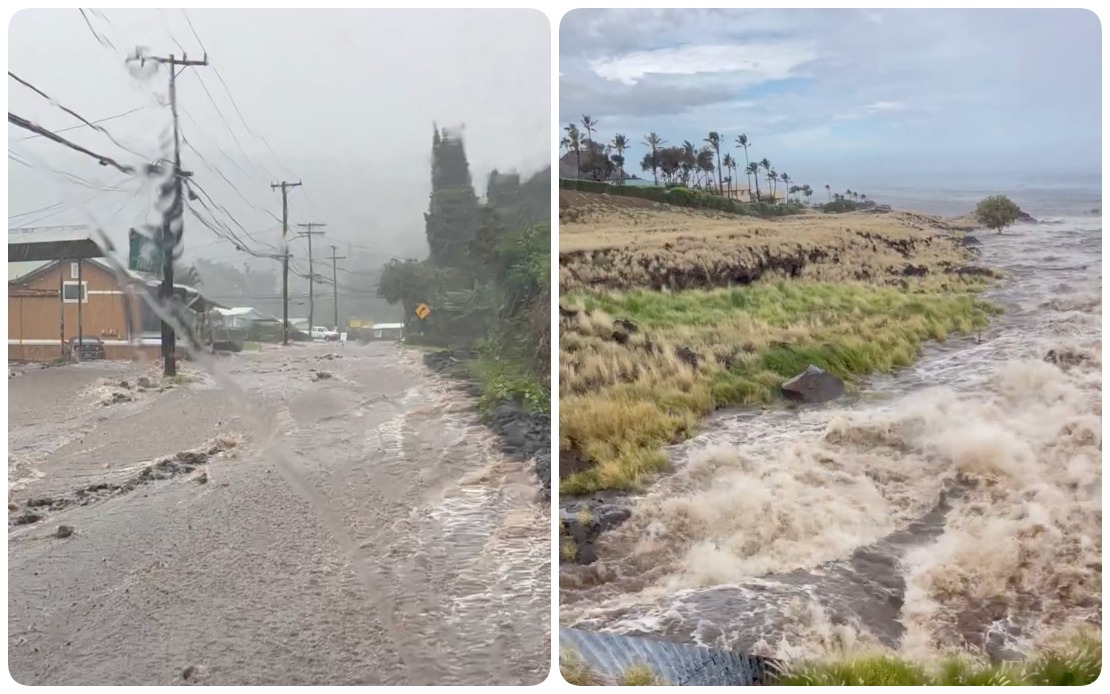
The arrival of Hurricane Lala on August 15 brought severe weather conditions across the Hawaiian Islands, with the storm's track passing just south of Hawaii Island and generating substantial damage across the state's population centers. Governor Josh Green reported that wind speeds peaked on Hawaii Island while several regions documented rainfall exceeding 13 inches, demonstrating the hurricane's formidable intensity. The disturbance continued to affect neighboring regions, with worsening weather observations spreading across Maui County, Oahu, and Kauai, prompting widespread concern among residents and emergency management officials.
The power infrastructure across the islands sustained considerable damage in the immediate aftermath of the hurricane's passage. According to Hawaiian Electric, the utility company serving the region, approximately 88,000 customers had lost electrical service by 7 p.m. local time. The breakdown of outages revealed concentrated impacts on specific islands: Hawaii Island accounted for the largest portion with 63,270 affected customers, while Maui County experienced roughly 15,260 outages and Oahu faced approximately 9,500 disruptions. These figures underscore how the storm's track directly influenced the geographic distribution of infrastructure failure across the islands.
The physical destruction visible throughout the affected areas reflected the hurricane's severe wind speeds and the resulting environmental damage. Wind gusts approaching 90 miles per hour were measured in sections of Hawaii Island, generating the destructive force necessary to topple numerous trees and damage structures across the landscape. Along the Hamakua coast, a continuous 42-mile stretch of transmission lines suffered from downed trees that brought down multiple supporting poles and infrastructure components, explaining the extensive power outages in that region. Hawaiian Electric indicated that customers on both Hawaii Island and Maui would likely remain without electrical power through at least the following morning, as dangerous conditions persisted and prevented repair crews from safely conducting restoration operations.
Flooding emerged as a secondary but equally serious consequence of the hurricane's passage, with multiple road systems becoming impassable due to water accumulation and infrastructure damage. The Hawaii Department of Transportation documented numerous route closures spanning Hawaii Island, Maui, and Oahu, with specific locations on Hawaii Island including Kahikopele Street in the Mountain View area and stretches of Pauahi Street experiencing significant inundation. Footage released by the transportation department captured the severity of conditions, showing swollen waterways overflowing their banks and roads submerged under flowing water. These visual records emphasized the immediate hazard posed to any residents attempting to travel or venture outdoors during the storm's duration.
Local law enforcement agencies catalogued the widespread disruption caused by falling debris and damaged infrastructure throughout Hawaii Island's communities. Mamalahoa Highway faced warnings related to fallen trees and large debris scattered across its path, creating dangerous driving conditions that effectively rendered sections impassable. Downed power lines contributed to additional closures, with Plumeria Street requiring shutdown due to electrical hazards. The cumulative effect of these various hazard types—flooding, wind damage, debris, and electrical dangers—created an environment where officials strongly advised residents to either shelter in place within their homes or relocate to designated emergency facilities until conditions stabilized.
The Hawaii Emergency Management Agency coordinated the official response to the hurricane's aftermath, documenting the full scope of damage across the impacted islands. Their reports consolidated observations of flooding, downed trees, widespread power outages, and dangerous wind conditions into a comprehensive assessment of the disaster's severity. This multi-agency coordination reflected the recognized need for comprehensive emergency response involving transportation authorities, utility companies, law enforcement, and state leadership to address the immediate crisis and prepare for recovery operations.
From a regional perspective, this hurricane event carries implications for Hawaii's infrastructure resilience and emergency preparedness systems. The 88,000 customers without power represents a substantial portion of the islands' population requiring basic services such as refrigeration, climate control, and medical equipment operation. The extended timeline for restoration—lasting at least overnight—signals that damage to the transmission network extended beyond simple line repairs and involved structural replacement along significant distances. For Malaysian and Southeast Asian observers, the episode illustrates how island communities with concentrated populations face compounded vulnerability when major weather events strike, particularly regarding the dependencies on centralized utility networks and the challenges of rapid restoration when infrastructure suffers distributed damage.
The transportation impacts extended beyond individual road closures to represent a broader mobility crisis affecting residents' access to emergency services, medical facilities, and supply distribution. The decision to advise residents to shelter in place, rather than facilitate evacuation, reflected the judgment that remaining in secured locations presented lower risk than traveling through hazardous conditions. This approach, common in hurricane response protocols, prioritizes protection of life over property protection and assumes that most residential structures offer adequate shelter from wind and rain once occupants secure them appropriately.
Governor Green's direct communication regarding worsening conditions across multiple islands reflected the evolving nature of the weather situation as the hurricane system continued its passage through the archipelago. The fact that peak winds on Hawaii Island had already occurred, yet conditions continued deteriorating across other islands, indicated that the hurricane maintained its intensity across a broad geographical area rather than weakening rapidly after passing particular locations. This persistence of dangerous conditions across multiple islands extended the emergency response duration and complicated coordination efforts, as different island communities faced peak impacts at different times.
The utility company's statement about extended outage duration directly related to the safety constraints preventing restoration work during active hurricane conditions. Power line repair operations require field personnel to work near downed lines and in areas where wind gusts could cause additional injury or equipment damage, making such activities impossible until sustained winds and gusts subsided to safer levels. The decision to maintain customers in darkness overnight rather than risking worker safety reflected modern emergency management prioritization of personnel protection alongside public welfare.

