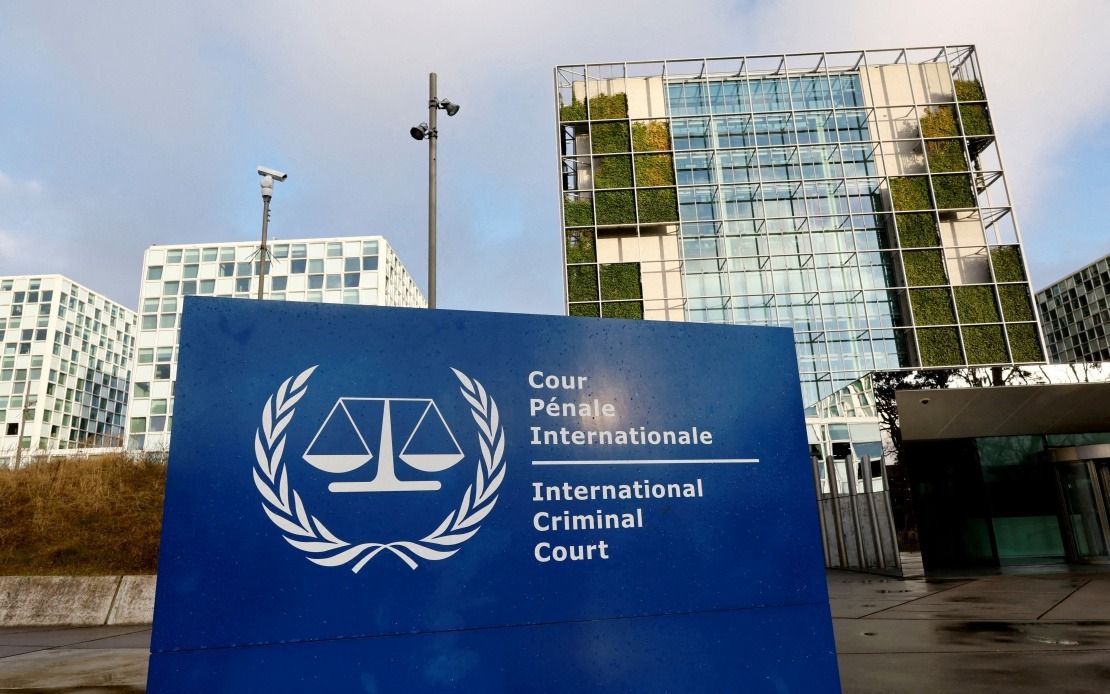
The International Criminal Court issued a forceful rebuke on Wednesday after the United States imposed fresh sanctions against the institution, marking an escalation in Washington's pressure campaign against the The Hague-based tribunal. The move targets ICC President Tomoko Akane of Japan and Abdoulaye Seye of Senegal, who serves as a senior trial lawyer within the Office of the Prosecutor. The court's leadership characterized the designations as fundamentally incompatible with the principles of impartial justice that underpin the international criminal justice system.
With these latest penalties, the scope of American sanctions against ICC personnel has expanded considerably. The court now reports that nine of its 18 judges are subject to US sanctions, alongside both deputy prosecutors, a former prosecutor, and one additional staff member. This breadth of coverage demonstrates a systematic approach by the United States to pressure multiple levels of the institution simultaneously, creating operational and reputational challenges for an organization already stretched thin by the scale of atrocities it investigates worldwide.
The ICC's statement characterised the sanctions regime as fundamentally corrosive to the rule of law, positioning the measures as an attack not merely on the court itself but on the entire architecture of international justice. The institution emphasised that it operates under a mandate granted by its member states, which span multiple continents and represent diverse legal traditions and political systems. By targeting judges and prosecutors for executing their lawful duties, the sanctions undermine the legitimacy of international accountability mechanisms that depend on the perception of impartiality to function effectively.
The court warned that these coercive measures carry profound consequences beyond bureaucratic inconvenience. When victims of mass atrocities turn to the ICC after exhausting domestic remedies and regional justice mechanisms, they do so with the expectation that their cases will be handled by an institution insulated from political pressure. Sanctions targeting the very officials responsible for investigating and prosecuting international crimes send a chilling message to potential witnesses, survivors, and victim advocacy groups considering cooperation with the court.
The timing of the sanctions reflects broader American concerns about ICC investigations that potentially implicate allies or US interests. Previous tensions emerged when the prosecutor opened investigations into situations in Palestine and Ukraine, alongside long-standing American anxiety about the court's potential jurisdiction over American personnel. By systematically targeting the institutional leadership, Washington signals its determination to constrain the court's independence, even as it risks damaging its own standing as a purported defender of the international rules-based order.
The ICC's response demonstrated a resolve to continue its work despite the financial and diplomatic pressure. The institution reaffirmed its commitment to discharging its mandate with full independence and impartiality, operating within the framework of the Rome Statute that established the court in 1998. This assertion takes on particular weight given that the United States itself has never ratified the Rome Statute, limiting its formal say in the institution's governance while allowing it to project power through economic sanctions and diplomatic isolation.
For Southeast Asian readers, the confrontation carries particular significance. Several nations in the region maintain complicated relationships with the ICC. While some countries have acceded to the Rome Statute, others remain outside the system, concerned about potential prosecutions of their own officials or anxious about external judicial oversight. The American pressure campaign against the court potentially signals to regional governments that they need not defer to international accountability mechanisms if sufficiently powerful actors oppose them.
The institution noted that numerous member states, civil society organisations, and international law advocates have publicly expressed support for the ICC's independence and the broader cause of international justice. This coalition reflects a recognition among many quarters that allowing powerful nations to systematically undermine international courts sets a dangerous precedent. If the ICC's independence is eroded through sustained sanctions pressure, the enforceability of international humanitarian law more broadly faces jeopardy.
The controversy also highlights tensions between sovereignty and accountability that persist in international relations. The United States frames its sanctions as legitimate exercises of national interest, protecting American interests from what it views as overreach. The ICC, conversely, argues that genuine international justice requires insulation from the political calculations of any single state, however powerful. This fundamental disagreement about the relationship between power and law will likely continue shaping debates about international accountability for years to come.

