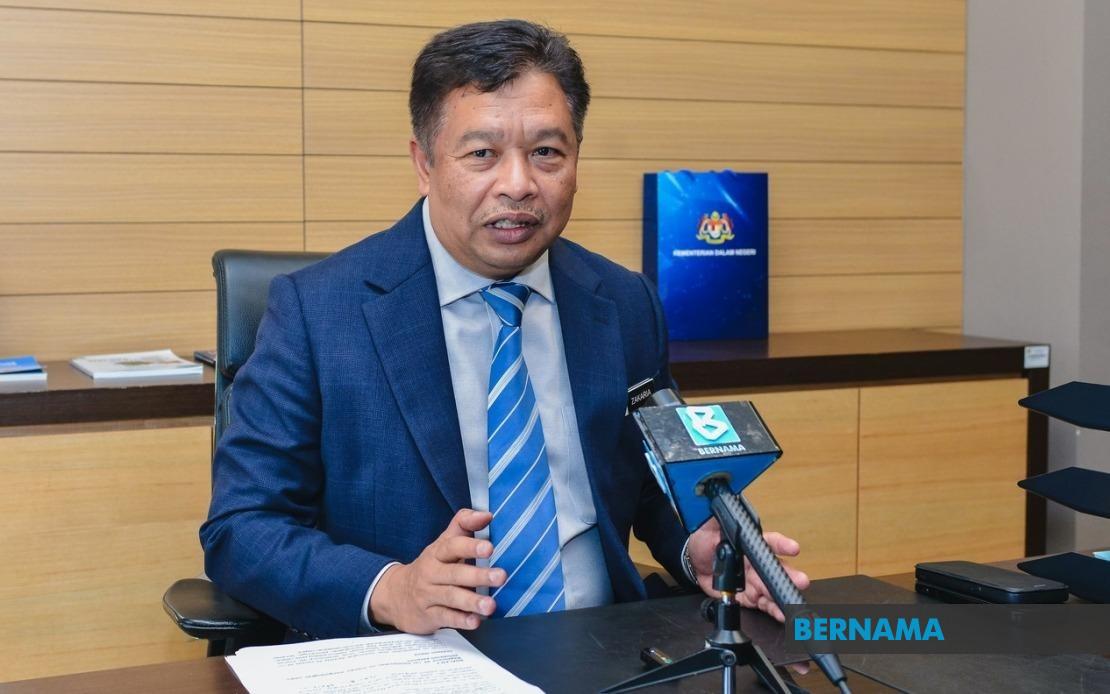
The Immigration Department has elevated its operational readiness to maximum levels ahead of the Johor State Election, positioning itself to handle the anticipated surge in cross-border movement as workers and residents return from Singapore to cast their votes. Immigration Department director-general Datuk Zakaria Shaaban confirmed that inspection systems at the Sultan Abu Bakar Complex and Sultan Iskandar Building are currently functioning without incident, providing the foundation for what officials hope will be a friction-free polling day on July 11.
The two major gateway complexes connecting Johor Bahru with Singapore represent critical infrastructure during election periods. The Sultan Abu Bakar Complex, situated at Tanjung Kupang via the Malaysia-Singapore Second Link, and the Sultan Iskandar Building, which interfaces with JB Sentral and Woodlands, process extraordinary volumes of human traffic under normal circumstances—collectively handling approximately 300,000 travellers daily. During an election cycle, when a subset of these travellers have specific civic obligations to meet, the operational demands become even more pronounced, requiring meticulous planning and coordination.
Datuk Zakaria outlined the department's contingency framework, emphasizing that technical teams have established continuous monitoring protocols to identify and rectify any system disruptions with minimal delay. The Immigration Department is currently operating on existing inspection infrastructure rather than implementing new systems, a deliberate choice that reflects the preference for stability over untested technology during a critical operational window. Should any technical failures occur, backup manual inspection procedures stand ready to ensure that processing continues uninterrupted, preventing queues from building at either crossing point.
The importance of maintaining seamless border operations cannot be overstated for the electoral process in Johor. The state election will feature 172 candidates competing for 56 seats, with polling scheduled for Saturday, July 11, and early voting already underway on July 7. Thousands of Johor residents employed in Singapore represent a significant voting bloc, and their ability to return home without delays or complications directly influences their capacity to participate in democratic processes. Any prolonged wait times or administrative bottlenecks at border checkpoints could effectively disenfranchise otherwise eligible voters through circumstance rather than law.
Home Minister Datuk Seri Saifuddin Nasution Ismail previously reinforced the government's commitment to facilitating voter mobility, assuring the public that his ministry would activate a comprehensive mitigation strategy if system failures occur. This multi-layered approach—combining routine technical maintenance with contingency protocols and ministerial oversight—reflects an understanding that election administration depends not only on voting infrastructure itself but on the entire ecosystem enabling voters to reach polling stations. The cross-border dimension adds complexity absent in purely domestic elections, requiring coordination between federal immigration authorities, customs agencies, and quarantine services operating across both the Sultan Abu Bakar Complex and Sultan Iskandar Building facilities.
The technical infrastructure supporting border crossings has evolved significantly over past decades, but each iteration brings both improvements and potential vulnerabilities. The Immigration Department's decision to maintain existing systems rather than deploy new technology during the election cycle reflects pragmatic risk management. Seasoned operators understand that unfamiliar systems can produce unexpected failures, no matter how thoroughly they have been tested in controlled environments. The continuous monitoring approach allows technical teams to detect emerging issues before they cascade into systemic failures, addressing problems at the earliest possible stage.
For Malaysian readers, particularly those working in Singapore, this operational commitment carries direct relevance. The guarantee of manual backup procedures ensures that even if computer networks experience disruptions, physical inspection stations can continue processing travellers through conventional documentation checks. This redundancy is essential for maintaining the integrity of border security while ensuring that legitimate travellers—including returning voters—face minimal delays. The commitment also signals that election administration extends beyond the polling station itself to encompass the entire journey that voters must undertake to participate.
The Malaysia-Singapore border represents one of the world's most heavily trafficked international crossing points, a distinction that brings both opportunity and logistical challenge. The volume of daily movement—300,000 people on ordinary days—means that even marginal efficiency gains translate into significant time savings for thousands of individuals. Conversely, relatively small system disruptions can cascade into substantial delays. The Immigration Department's emphasis on round-the-clock monitoring reflects an appreciation for this dynamic; proactive identification and resolution of technical issues prevents the exponential growth of queues that can occur when processing capacity dips during peak-demand periods.
The Johor State Election occurs within the context of Malaysia's broader electoral calendar and the nation's ongoing efforts to demonstrate institutional capacity and democratic legitimacy. Elections depend fundamentally on voter access, and voter access depends on functional infrastructure and competent administration. The Immigration Department's transparent communication about its preparations—publicly confirming system functionality and articulating backup procedures—contributes to public confidence in the electoral process. When citizens understand that authorities have deliberately planned for contingencies and are monitoring operations proactively, they can approach the polling experience with greater assurance.
Looking beyond the immediate election, the operational protocols being implemented in July establish precedent and institutional memory for future electoral cycles. As Malaysia continues to refine its election administration practices, the coordination demonstrated across immigration, customs, and quarantine agencies at the Johor border represents a model for integrated inter-agency operations. The decision to privilege system stability over technological novelty, combined with comprehensive contingency planning, reflects lessons learned from previous elections and demonstrates institutional maturation in electoral administration.

