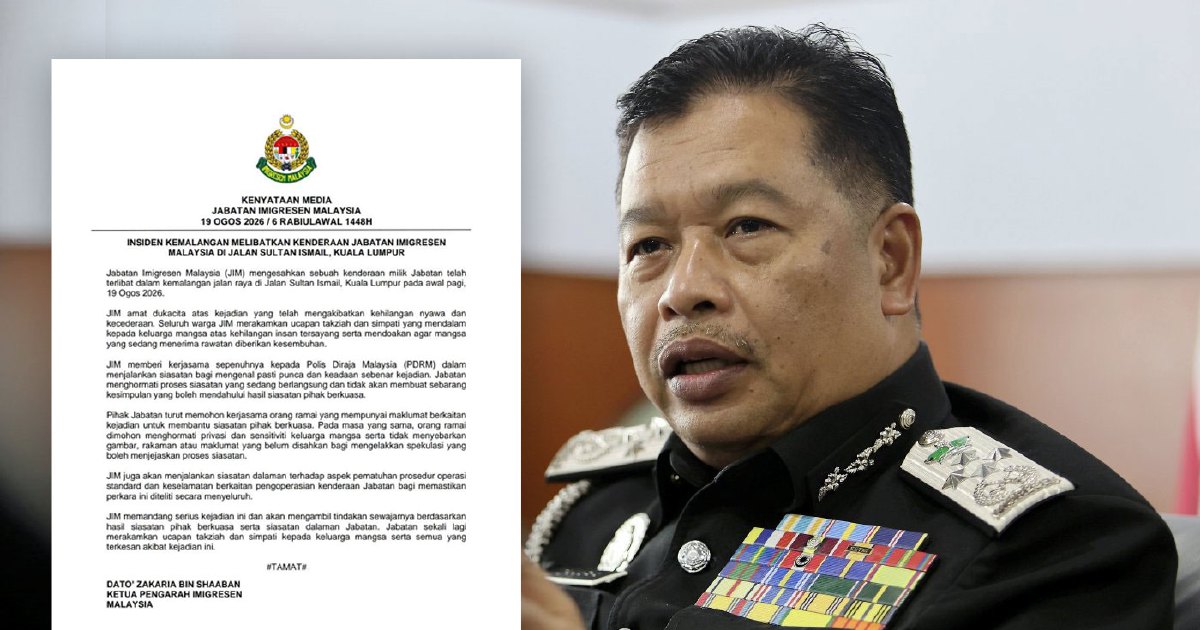
Malaysia's Immigration Department has announced it will conduct a comprehensive internal investigation into the circumstances surrounding a fatal traffic accident involving one of its vehicles on Jalan Sultan Ismail in Kuala Lumpur in the early hours. The probe will focus on whether departmental staff adhered to established operating procedures and implemented appropriate safety measures at the time of the incident.
The collision marks a significant incident for the government agency, raising immediate questions about vehicle maintenance standards, driver protocols, and operational safety across its fleet. The decision to launch an internal review reflects the department's recognition that the matter warrants scrutiny beyond routine accident reporting, suggesting elements of the incident may have involved procedural or safety compliance issues.
Jalan Sultan Ismail is a major arterial route in central Kuala Lumpur, connecting the city's commercial and administrative districts. The busy thoroughfare experiences substantial traffic volume throughout the day and night, making accident prevention and driver vigilance particularly critical for vehicles operating in the area. The early morning timing of the crash adds another investigative dimension, as it may relate to fatigue management, visibility conditions, or nighttime operational standards.
Internal departmental investigations of this nature typically examine multiple dimensions of operations. Beyond the immediate circumstances of the collision, reviewers generally assess whether drivers received adequate training, whether vehicles underwent timely maintenance checks, and whether fatigue management policies were being followed. Documentation of these procedures becomes central to understanding how the accident occurred and identifying systemic improvements.
For the Immigration Department specifically, vehicle safety holds particular importance given the agency's operational mandate. Staff regularly use departmental vehicles for fieldwork, enforcement operations, and transport of individuals in custody. Ensuring these vehicles meet safety standards and that drivers operate them responsibly protects not only departmental personnel but also the public sharing roads with immigration vehicles.
The timing of such investigations carries weight within Malaysian government administration. Agencies demonstrating proactive accountability through internal reviews often face less external scrutiny and can implement corrective measures more swiftly than those perceived as defensive or evasive. The Immigration Department's immediate announcement of the probe therefore carries strategic administrative value alongside any genuine commitment to operational improvement.
This incident occurs within a broader context of road safety concerns across Malaysia. Government agencies, including transport ministries and road authorities, have repeatedly highlighted the nation's persistent challenges with traffic fatalities. Any accident involving a government vehicle inevitably draws attention to whether state agencies are meeting the safety standards they expect from the public.
The investigation's scope will likely determine its credibility and usefulness. A superficial review that merely documents the immediate cause risks missing deeper systemic issues, whereas a thorough examination might reveal training gaps, maintenance lapses, or procedural weaknesses affecting multiple departments or vehicles. How transparently the Immigration Department shares its findings will signal its genuine commitment to learning from the incident.
Staff welfare implications also merit consideration. Government employees involved in or witnessing workplace accidents require appropriate support and counselling. The department will need to balance its investigative processes with duty of care toward affected personnel, ensuring the review does not become a purely punitive exercise but contributes to genuine safety culture improvement.
For Malaysian readers and residents, this incident underscores the importance of institutional accountability within government operations. When state agencies operate vehicles on public roads, all road users have a legitimate interest in ensuring those operations meet rigorous safety standards. Internal investigations, when conducted thoroughly and reported transparently, serve public interest beyond their administrative purpose.
The broader implications extend to questions about fleet management across Malaysian government agencies. If the Immigration Department identifies procedural gaps or safety deficiencies through this investigation, those findings might prompt similar reviews in other departments operating substantial vehicle fleets. Systemic improvements in government vehicle operations could contribute meaningfully to national road safety objectives.
As the investigation proceeds, attention will likely focus on whether the Immigration Department implements visible changes to its operational protocols and communicates those changes to the public. Agencies that demonstrate responsiveness to safety incidents by implementing demonstrable improvements strengthen public confidence in their operations and management competence. Conversely, investigations that conclude without observable follow-through risk appearing performative rather than substantive.

