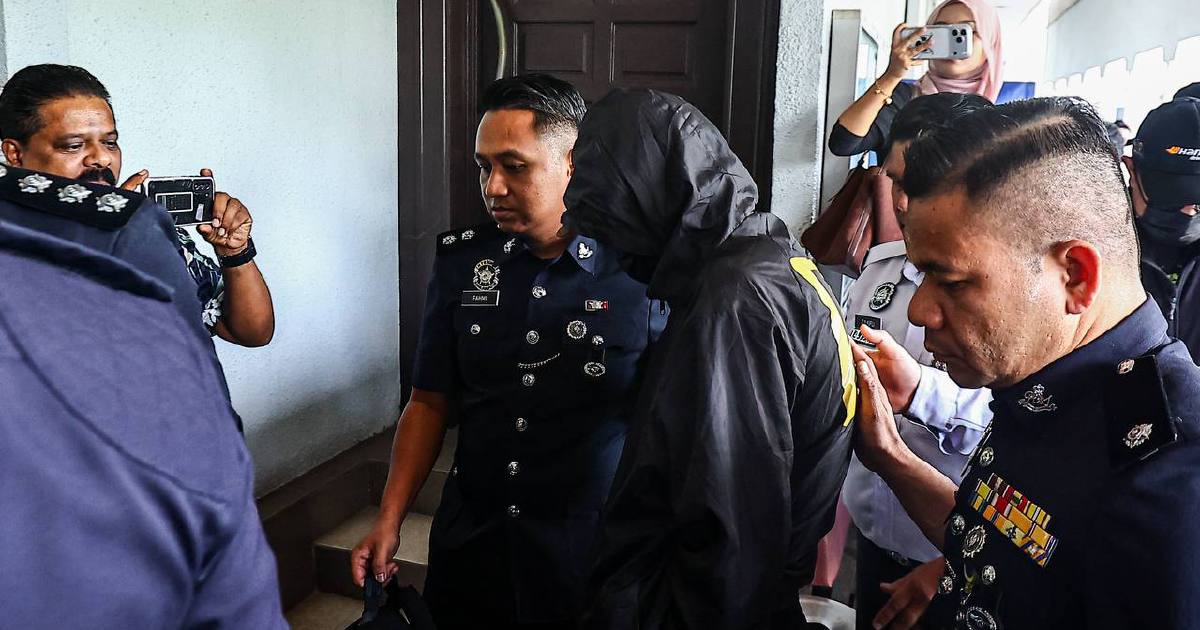
The operator of an Immigration Department lorry, whose vehicle collided fatally with another on Kuala Lumpur's central business thoroughfare Jalan Sultan Ismail, arrived at the magistrates' court under substantial police protection today. The incident had occurred the previous day along one of the capital's most congested corridors, drawing immediate attention from authorities and the public alike. The arrival of the accused driver, flanked by officers, highlighted the gravity with which the judiciary and enforcement agencies are treating the matter.
Jalan Sultan Ismail remains one of Kuala Lumpur's busiest commercial and transit routes, carrying thousands of vehicles daily between the Golden Triangle business district and other major employment and residential zones. The corridor has been subject to ongoing concerns about traffic management and safety protocols, with periodic updates to traffic patterns designed to accommodate the volume and variety of vehicles using the road. Incidents of this nature raise fresh questions about enforcement measures and whether existing safety infrastructure adequately protects the mixing of heavy vehicles and regular commuter traffic on urban thoroughfares.
Fatalities involving large commercial vehicles in urban settings typically attract intensive investigation by the Road Transport Department and police traffic divisions. The decision to place the driver under substantial police escort during the court journey underscores the seriousness attributed to the case, particularly given the department's public-facing role and the potential for heightened public and political scrutiny. Court proceedings for vehicular collision cases generally examine whether negligence, mechanical failure, or other contributing factors played a role in the outcome.
The Immigration Department has not issued immediate public statements regarding the incident or its protocols for operating vehicles within the civil service motor pool. Government agencies operating vehicles in urban environments typically carry comprehensive insurance and may face institutional liability questions alongside driver-level responsibility. The involvement of a government department's vehicle adds an administrative dimension to what would otherwise be a standard traffic investigation.
Road safety advocates in Malaysia have repeatedly emphasised that collisions involving heavy vehicles demand particular attention, as the mass differential between lorries and passenger vehicles results in disproportionate casualty rates. Urban design experts have pointed to mixed-traffic corridors like Jalan Sultan Ismail as inherently challenging environments, where speed management, lane discipline, and vehicle detection systems become critical safety factors. The incident contributes to ongoing conversations within Kuala Lumpur's transport planning community about whether further segregation of heavy vehicles or enhanced traffic calming measures warrant consideration.
The magistrates' court hearing represents an early procedural stage in what may become a protracted legal process. Malaysian traffic courts typically first address bail and remand questions, followed by the filing of formal charges that might range from dangerous driving causing death under the Penal Code to vehicle-related offences under the Road Transport Act. The outcome of today's hearing will signal whether the driver faces immediate custody or is released on bail pending further investigation.
Family members of the deceased or injured parties may be present during proceedings, and victim support mechanisms typically come into play during the judicial process. The police escort arrangement also reflects security protocols designed to manage potential public reaction or media attention, particularly in high-profile incidents occurring on major urban routes where numerous witnesses may have observed the collision.
The circumstances surrounding the collision remain under investigation by traffic specialists who will examine vehicle condition reports, sight line assessments, and witness statements. Whether mechanical failure, human error, visibility constraints, or the behaviour of other road users contributed to the outcome will form part of the factual matrix upon which charges and sentencing recommendations are ultimately based. Post-incident vehicle examination reports typically consume several weeks to complete.
This incident occurs within a broader context of concern about commercial vehicle safety in Malaysian urban areas. The Land Public Transport Agency and the Road Safety Council have previously coordinated awareness campaigns targeting both professional drivers and the motoring public, emphasising mutual responsibility for maintaining safe conditions. The prominence of government vehicles in such incidents occasionally prompts policy reviews within relevant ministries regarding driver training standards and vehicle maintenance protocols.
Southeast Asian road fatality rates remain elevated compared to developed nations, and Malaysia's performance on this metric continues to attract attention from international transport safety bodies. Incidents involving government vehicles may carry heightened symbolic significance, as public sector operations serve as models that private sector operators observe and potentially emulate. The court process unfolding today will ultimately contribute to the body of precedent and practice informing how Malaysian courts approach culpability in fatal vehicular collisions.

